
Soups & Stews
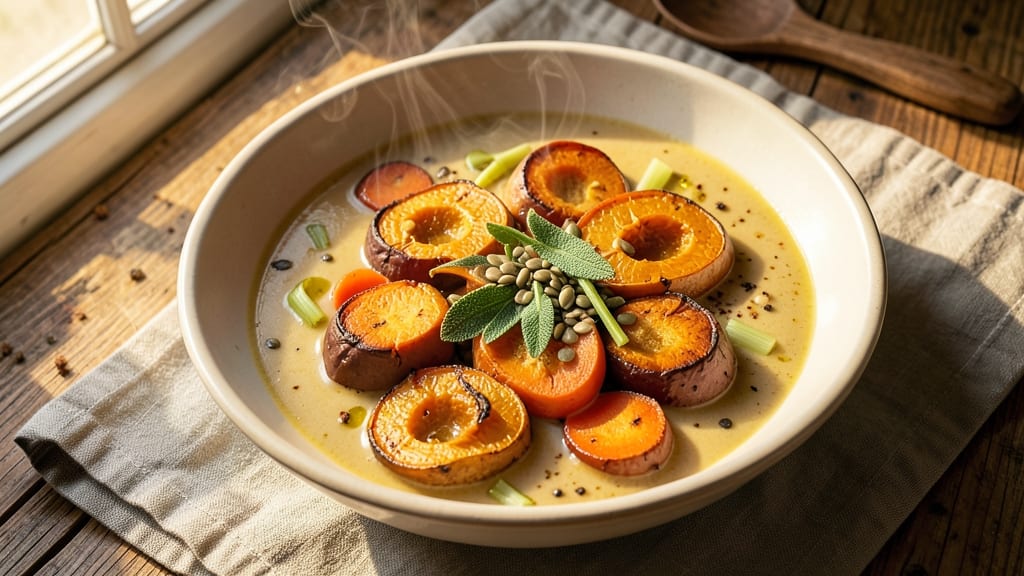
This acorn squash and sweet potato soup transforms humble ingredients into a velvety, spiced masterpiece with deep caramelized notes. The secret lies in roasting the squash first—this step unlocks natural sweetness and rich depth that no blending could replicate.
I developed this recipe during autumn after realizing store-bought soups lacked that homemade warmth and complexity.
The process is straightforward yet transformative: aromatic vegetables sauté until fragrant, roasted squash and sweet potatoes simmer into a luscious broth, then everything blends into silky smoothness with just the right balance of sweetness and earthy warmth.
A touch of apple cider vinegar brightens the flavors while keeping the soup from becoming too heavy.
What you'll end up with is a soup that's rich yet light, perfectly seasoned with cinnamon and nutmeg, and topped with crispy toasted pumpkin seeds for texture contrast.
The roasting technique ensures every spoonful carries that caramelized magic, while the blending creates a texture that's impossibly smooth yet still substantial.
Ready in about 1 hour with minimal active time, this soup becomes the centerpiece of cozy autumn dinners—whether served with crusty bread or as a standalone meal. The flavors develop even better the next day, making it ideal for meal prep. Let's create this comforting classic.
Ingredients for acorn squash and sweet potato soup
Roasted squash and sweet potatoes form the heart of this velvety autumn masterpiece.
| Ingredient | Amount | Notes |
|---|---|---|
| Acorn Squash 🎃 | 1 whole | Medium-sized, halved and seeded |
| Sweet Potatoes 🍠 | 2 medium | Peeled and cubed |
| Yellow Onion 🧅 | 1 whole | Medium, chopped |
| Garlic Cloves 🧄 | 4 cloves | Fresh, minced |
| Carrots 🥕 | 3 medium | Peeled and chopped |
| Celery Stalks 🌿 | 3 whole | Chopped |
| Vegetable Stock 💧 | 4 cups | Low-sodium preferred |
| Extra-Virgin Olive Oil 🫒 | ½ cup | For roasting and sautéing |
| Apple Cider Vinegar 🍋 | 1 tbsp | For brightness |
| Ground Cinnamon 🌶️ | 1 tsp | Ceylon preferred |
| Ground Nutmeg 🌶️ | ½ tsp | Freshly grated preferred |
| Salt 🧂 | 1 tsp | Diamond Crystal preferred |
| Black Pepper 🌶️ | ½ tsp | Freshly ground |
| Pumpkin Seeds 🥜 | ¼ cup | Toasted for garnish |
| Fresh Thyme Leaves 🌿 | ¼ cup | Chopped for garnish |
The acorn squash is the star here—its natural sweetness transforms during roasting into deep caramelized notes. Look for squash with a firm stem and no soft spots; the smaller the better for even cooking. Sweet potatoes should be vibrant orange, firm to the touch. Whole Foods or local farmers' markets often carry heirloom varieties with superior flavor. For the best results, use organic produce when possible, as conventional sweet potatoes can be wax-coated, which affects texture. The vegetable stock is non-negotiable—low-sodium brands like Pacific Foods or homemade ensure your soup isn't overwhelmed by salt.
No acorn squash? Butternut squash works beautifully—just increase roasting time by 10 minutes. Sweet potatoes can be swapped for regular potatoes, though the flavor will be less sweet. The pumpkin seeds should be raw and unsalted—Trader Joe's or bulk bins at Whole Foods offer the best quality. Fresh thyme is ideal, but dried thyme at one-third the amount works in a pinch. For the vinegar, Bragg's apple cider vinegar adds subtle fruit notes, but any good-quality vinegar will suffice. The cinnamon and nutmeg should be freshly ground if possible—Penzeys Spices offers excellent whole spices for grinding at home.
Roasted squash and sweet potatoes keep well in the fridge for 3 days before blending. The finished soup reheats beautifully but may require thinning with broth if it thickens. For meal prep, store in airtight containers with a layer of olive oil on top to preserve freshness. The toasted pumpkin seeds should be stored in a sealed container at room temperature for up to 2 weeks. Freeze the soup in portions for up to 3 months—it actually develops deeper flavor when reheated the next day.
Why You'll Love This Recipe
- Here’s what sold me: it uses ingredients I already have. Onions, garlic, carrots, and seasonal squash? Check. No fancy swaps, no last-minute grocery runs. Plus, the sweet potatoes stretch the filling factor—perfect for feeding a family without breaking the bank.
- One-Pot Magic: I swear by this recipe when I’m too tired to wash another dish. Roast the squash and sweet potatoes together—same pan, same oven—then blend with the caramelized onions and garlic. That’s it. No separate pots, no extra cleanup.
- Sweet & Savory Balance: The acorn squash brings this deep, nutty warmth, while the sweet potatoes add that velvety sweetness. Add a splash of coconut milk or cream, and suddenly it’s like hugging a bowl—rich, satisfying, and just a little bit indulgent without trying too hard.
- Meal Prep Hero: Between us, this soup begs to be made in bulk. The flavors actually get better the next day—honestly. I make a big batch on Sundays, freeze half, and pull it out for lazy nights or when unexpected guests show up. (Yes, even on a Tuesday night.)
Step-by-step instructions for acorn squash and sweet potato soup
Transform humble vegetables into a rich, velvety soup with deep roasted flavors and aromatic spice.
Roast the Vegetables for Maximum Flavor
Preheat your oven to 400°F and line two baking sheets with parchment paper. Cut the 1 whole Acorn Squash in half lengthwise, remove seeds, and scoop out the fibrous membrane. Place squash halves cut-side down on one sheet. On the second sheet, toss the 2 medium Sweet Potatoes, 3 medium Carrots, and 3 whole Celery Stalks with 2 tablespoons of the 0.5 cup Extra-Virgin Olive Oil.
Roast for 30-35 minutes until the squash is tender when pierced with a knife and the edges are deep golden brown. The sweet potatoes should be caramelized in spots. Meanwhile, in a small bowl, toss 1 whole Yellow Onion (cut into wedges) with 1 tablespoon of the remaining olive oil, 1 tsp Salt, and 0.5 tsp Black Pepper. Add to the baking sheet and roast for the final 10 minutes of the vegetable roasting time.
Build the Soup Base with Roasted Aromatics
Transfer all roasted vegetables to a large pot. Add the 4 cloves Garlic Cloves (minced), 4 cups Vegetable Stock, and 1 tbsp Apple Cider Vinegar. Bring to a gentle boil over medium-high heat, then reduce to a simmer for 15 minutes to meld the flavors.
Using an immersion blender, purée until completely smooth. If using a countertop blender, work in batches and return puréed soup to the pot. Stir in 1 tsp Ground Cinnamon and 0.5 tsp Ground Nutmeg. Taste and adjust seasoning with additional salt and pepper as needed. The soup should be richly spiced but not overpowering.
Refine the Texture and Finish with Garnishes
Return the soup to a gentle simmer and cook uncovered for 10-15 minutes to reduce slightly and deepen the flavors. The soup should coat the back of a spoon with a silky consistency. If it becomes too thick, whisk in 1-2 tablespoons of warm vegetable stock to reach your desired texture.
For the garnish, heat a dry skillet over medium heat and toast the 0.25 cup Pumpkin Seeds for 3-4 minutes until golden and fragrant. In a small bowl, combine the 0.25 cup Fresh Thyme Leaves with 1 teaspoon of the remaining olive oil and gently warm through. Ladle soup into bowls and top with toasted pumpkin seeds and thyme oil.
Pro Tips For Making Acorn Squash And Sweet Potato Soup
- CHAR THE SQUASH FIRST: The acorn squash’s tough skin and fibrous center need a head start—roast it whole at 400°F (200°C) for 30 minutes before scooping out the flesh. This softens it faster than raw and prevents a gummy texture when blended.
- PEEL SWEET POTATOES AFTER COOKING: I used to peel them raw, but now I wait until after roasting or boiling—it’s easier to handle and saves time. Just rub off the skins with a paper towel once they’re tender.
- SAUTÉ ONIONS UNTIL GOLDEN: Don’t rush the onions—cook them low and slow until they’re deep amber, not just translucent. This builds flavor that cuts through the soup’s natural sweetness without needing extra sugar.
- BLITZ THE ROASTED GARLIC: After roasting whole garlic cloves with the squash, smash them with the flat side of a knife before blending. The burst of caramelized flavor is worth the extra 30 seconds—trust me, it’s noticeable.
Storing and reheating your leftovers
Fridge Storage Secrets
Let your soup cool to room temperature (90°F or below) before storing to prevent bacterial growth. Transfer to airtight glass containers—I recommend Le Parfait containers—and refrigerate for up to 4 days.
The flavors actually deepen overnight as the spices meld together. For best texture, stir in 1-2 tablespoons warm vegetable stock before reheating if it thickens. 💪
Freezer Magic
This soup freezes beautifully for up to 3 months without losing its velvety texture. Portion into quart-sized freezer bags (leave 1-inch headspace for expansion) and seal tightly to prevent freezer burn.
I like to label each bag with the date—trust me, you'll thank yourself later when you're craving a quick meal. Thaw overnight in the fridge before reheating. ❄️
Reheating Like a Pro
For stovetop reheating, transfer soup to a pot and warm over medium-low heat for 10-15 minutes, stirring occasionally. Add ¼ cup warm vegetable stock if it's too thick. Microwave reheating works too: Cover with a damp paper towel and heat in 1-minute intervals at 70% power until steaming hot.
Always check internal temperature reaches 165°F for food safety. 🔥
Garnish Freshness
Toasted pumpkin seeds lose their crunch when refrigerated, so store them separately in an airtight container at room temperature. Fresh thyme leaves should be stored in a sealed container with a damp paper towel in the fridge for up to 5 days.
For extra flavor, add a pinch of Ceylon cinnamon or freshly cracked black pepper when reheating. The right garnish makes all the difference! ✨
Make-Ahead Prep
Roast all your vegetables ahead of time and store them in the fridge for up to 3 days before blending. This is my favorite time-saver—just pop them in the oven while you prep other dinner components.
For meal prep Sundays, I double the batch and freeze half. The soup reheats beautifully, making it perfect for busy weeknights. Plan for 15 minutes of active prep on busy days. 💡
Texture Tips
If your soup becomes too thick after reheating, thin it with warm vegetable stock or a splash of coconut milk for extra creaminess. For a rustic touch, blend only half the soup and leave the other half chunky.
The contrast between smooth and textured elements adds depth to every spoonful. I often save a few roasted sweet potato cubes to top the soup before serving for that perfect bite. 🌟
Nutrition facts
Frequently asked questions
Can I make this soup without roasting the squash and sweet potatoes?
Roasting is key for maximum flavor, but you can sauté them instead. Toss chopped squash and sweet potatoes in olive oil, then cook in a skillet over medium heat for 15-20 minutes until tender. The result will be less caramelized but still delicious—just stir in extra spices to compensate for the missing depth.
What if my soup turns out too thick after blending?
Don't worry—this happens often! Thin with 2-3 tablespoons of warm vegetable stock or coconut milk. For extra creaminess, stir in a splash of heavy cream or cashew cream. The ideal texture should coat the back of a spoon but still be pourable.
Can I substitute butternut squash for acorn squash?
Butternut works beautifully and is often easier to find. Just increase roasting time by 5-10 minutes since it has a thicker skin. For extra richness, add ½ cup coconut milk when blending. The flavor will be slightly sweeter but just as comforting.
How can I make this soup vegan?
Swap the olive oil for vegan butter, use vegetable stock, and replace the pumpkin seeds with toasted sunflower seeds. For creaminess, stir in ¼ cup coconut milk or cashew cream instead of dairy. The spices and roasted vegetables will still shine through beautifully.
Why does my soup taste bland even after adding salt?
Roasted vegetables lose some flavor when refrigerated, so always use fresh stock and add a splash of apple cider vinegar or lemon juice for brightness. For extra depth, stir in ½ teaspoon smoked paprika or a pinch of cayenne. The spices should be added gradually—start with half the recipe's amount and taste as you go.