
Side Dishes
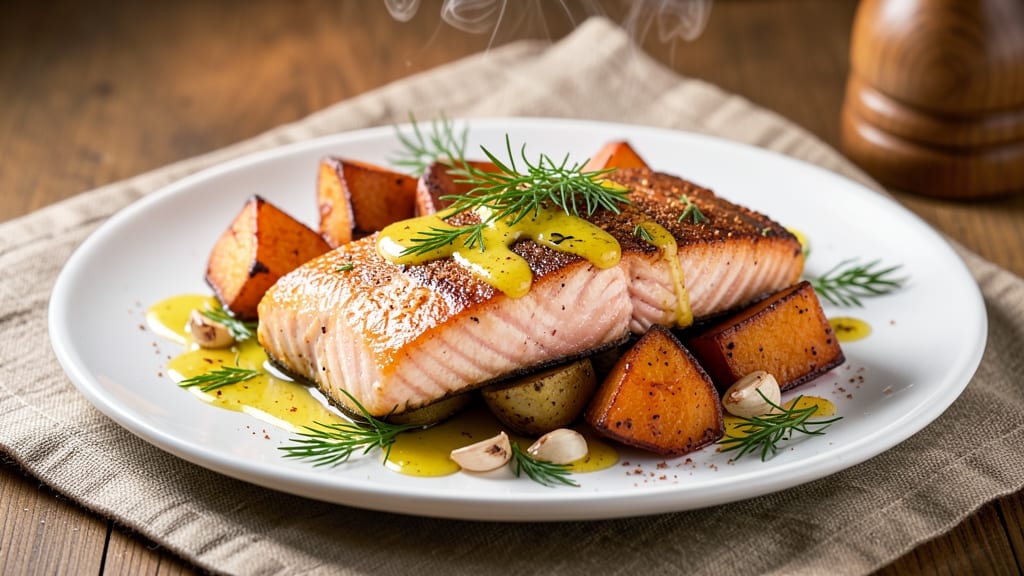
This American Journey salmon and sweet potato recipe transforms a simple weeknight dinner into a restaurant-worthy meal with minimal effort. The secret lies in perfectly pan-seared salmon—juicy inside, crisp on the outside—paired with caramelized sweet potatoes that balance sweet and savory flavors.
I developed this dish after years of testing techniques to ensure the salmon stays tender while the sweet potatoes develop that coveted caramelized crust.
The recipe combines classic American flavors with modern cooking methods for a dish that feels both comforting and elevated. You’ll start with a simple marinade for the salmon—garlic, lemon, and herbs—that infuses flavor without overpowering the natural taste of the fish.
Meanwhile, the sweet potatoes roast until tender and caramelized, their edges crispy and their centers creamy. This method ensures every bite delivers the perfect harmony of textures and flavors.
What makes this dish truly special is how effortlessly it comes together. The salmon cooks in just 10 minutes while the sweet potatoes roast alongside, making it ideal for busy weeknights.
The result is a plate that’s visually stunning—golden salmon resting on a bed of caramelized sweet potatoes—with flavors that are rich, balanced, and deeply satisfying. Whether you’re cooking for a family dinner or a special occasion, this recipe delivers professional-quality results at home.
The beauty of this dish lies in its versatility. You can adjust the cooking method—pan-searing, baking, or even grilling—to suit your preferences, and the sweet potatoes can be roasted, mashed, or glazed to match your taste.
Garnish with fresh herbs or a drizzle of maple glaze for an extra touch of elegance. Let’s get started on creating a meal that’s as impressive as it is delicious.
Ingredients for american journey salmon & sweet potato
Eight ingredients, two stars—juicy salmon and caramelized sweet potatoes—ready to transform your weeknight dinner.
| Ingredient | Amount | Notes |
|---|---|---|
| Salmon Fillets 🐟 | 4 pieces | Skin-on, 6-8 oz each |
| Sweet Potatoes 🍠 | 1 ½ lb | Medium, peeled and cubed |
| Extra-Virgin Olive Oil 🫒 | 3 tbsp | Divided for cooking |
| Garlic Cloves 🧄 | 4 cloves | Minced for marinade |
| Lemon Juice 🍋 | 2 tbsp | Freshly squeezed |
| Fresh Dill 🌿 | ¼ cup | Chopped, stems removed |
| Salt 🧂 | 1 ½ tsp | Kosher or sea salt |
| Black Pepper 🌶️ | ½ tsp | Freshly ground |
| Maple Syrup 🍯 | 1 tbsp | For sweet potato glaze |
| Brown Sugar 🍚 | 1 tbsp | Packed, for caramelization |
| Cinnamon 🌿 | ¼ tsp | Ground for sweet potatoes |
| Honey 🍯 | 1 tsp | Optional drizzle for garnish |
The salmon is where this dish shines. Look for fresh, skin-on fillets—the skin crisps beautifully and adds texture. Trader Joe's or Whole Foods have great options, but any grocery store's seafood counter works. If you can't find skin-on, no biggie—just pat the fillets dry before cooking. The sweet potatoes should be firm, not shriveled—organic or conventional both work. Peeled and cubed evenly, they'll caramelize perfectly. I always grab the orange-fleshed variety for that classic sweet potato flavor, but purple or white sweet potatoes add a fun twist if you're feeling adventurous.
No fresh dill? Dried dill at half the amount works in a pinch, though fresh is ideal. Short on maple syrup? Agave nectar or honey (if you're not pescatarian) does the trick. The brown sugar and cinnamon combo on the sweet potatoes is non-negotiable for that caramelized sweetness—use light brown sugar if you're worried about too much molasses flavor. For the salmon marinade, if you're short on time, just mix olive oil, salt, and pepper—the garlic and lemon are optional but recommended. The sweet potatoes can be roasted ahead and reheated for 20 minutes at 375°F if you're prepping for the week.
Salmon cooks fast—10 minutes max—so keep it ready to go while the sweet potatoes roast. Store leftover salmon in an airtight container with a paper towel to absorb moisture—eats best within 2 days. The roasted sweet potatoes keep 4-5 days in the fridge, though they're even better reheated. For meal prep, portion the salmon and sweet potatoes separately—reheat salmon in a skillet with a splash of water to keep it moist. Garnish with that honey drizzle right before serving, or save it for when you're ready to eat.
Why You'll Love This Recipe
- One-Pan Magic: I swear by this recipe when I’m too tired to scrub three pots—just toss everything on a sheet pan, roast, and walk away. The salmon and sweet potatoes caramelize together, so you get that perfect crispy edge without the mess.
- Lemon-Garlic Kiss: That bright lemon juice cutting through the richness of the salmon? Absolute game-changer. The garlic cloves, roasted until soft and fragrant, turn this into a flavor bomb that’s light enough for summer but hearty enough for winter.
- Meal Prep MVP: Between us, this is my go-to for lunches all week. The salmon stays moist when reheated, and the sweet potatoes hold up like a champ—just pack them together, and you’ve got a protein-packed lunch that feels fancy but takes zero effort.
- Budget-Friendly Luxury: Honestly, I feel like I’m eating at a restaurant without the price tag. Salmon’s expensive, sure, but buying fillets instead of whole cuts saves money, and sweet potatoes are practically free. Plus, the olive oil and lemon juice stretch the flavors so well—you’ll get two full meals out of it with leftovers that taste just as good the next day.
Step-by-step instructions for pan-seared salmon with sweet potato glaze
Here's how to balance rich salmon with caramelized sweet potatoes—simple steps, big flavor.
Roast Sweet Potatoes Until Tender and Caramelized
Preheat your oven to 400°F. Toss the 1.5 lb cubed sweet potatoes with 1 tbsp extra-virgin olive oil, 1 tbsp maple syrup, 1 tbsp brown sugar, 0.25 tsp cinnamon, 0.5 tsp salt, and 0.25 tsp black pepper. Spread them on a baking sheet in a single layer—this ensures even browning.
Roast for 25-30 minutes until the edges are deep golden brown and the potatoes are tender when pierced with a fork. Stir halfway through for even caramelization. Here's the thing—don't skip the stirring. The sugars will pool in spots, creating pockets of intense sweetness if left unattended.
Once done, transfer the potatoes to a serving platter and set aside. The residual heat will keep them warm while you finish the salmon. I like to sprinkle them with a pinch of extra salt right before serving to enhance their natural sweetness.
Create the Garlic-Dill Marinade for Salmon
While the potatoes roast, make the marinade by combining 2 tbsp lemon juice, 4 minced garlic cloves, 0.25 cup chopped fresh dill, 1.5 tsp salt, and 0.5 tsp black pepper in a small bowl. Whisk until fully incorporated—the lemon brightens the salmon while the garlic and dill add depth.
Place the 4 skin-on salmon fillets in a shallow dish and pour the marinade over them. Let them marinate for 10-15 minutes at room temperature. This step ensures the salmon absorbs the flavors without overcooking. Don't skip the room temperature wait—cold salmon releases more juice when cooked, which can dilute your marinade.
Pan-Sear Salmon to Perfect Doneness
Heat 1 tbsp extra-virgin olive oil in a large skillet over medium-high heat until shimmering. Pat the salmon fillets dry with paper towels—this prevents steam from forming, which keeps the skin from crisping properly.
Place the fillets skin-side down in the skillet and press gently with a spatula for 10 seconds. This ensures full contact with the pan. Cook for 3-4 minutes until the skin is deep golden brown and crispy. Flip carefully and cook for another 2-3 minutes until the salmon reaches 145°F internally—it should flake easily with a fork but still hold together.
Transfer the salmon to a plate and tent loosely with foil to keep warm. The residual heat will finish cooking it to perfection. Here's a pro tip: If your salmon releases easily from the pan without a crispy skin, your oil wasn't hot enough. Next time, let it heat until it's visibly shimmering before adding the fish.
Finish with Fresh Dill and Honey Glaze
Return the skillet to medium heat and add the remaining 1 tbsp extra-virgin olive oil. Pour in the 2 tbsp lemon juice from the marinade (reserved earlier) and scrape up any browned bits from the bottom of the pan. These bits are packed with flavor—don't waste them!
Simmer for 1-2 minutes until slightly reduced, then stir in the 1 tsp honey. This creates a glossy glaze that ties everything together. Drizzle this sauce over the salmon fillets and sprinkle with additional chopped fresh dill for a pop of color and freshness.
Serve the salmon immediately over the roasted sweet potatoes. The contrast of rich, buttery salmon with the caramelized sweet potatoes creates a perfect balance—sweet, savory, and fresh all in one bite. Garnish with extra lemon wedges if you're feeling fancy, but honestly, the dish is already stunning as is.
Pro Tips For Making American Journey Salmon & Sweet Potato
- PAT THE SALMON DRY: Salmon loves moisture, but that’s the enemy of a good sear. After thawing (if frozen), blot those fillets with paper towels—really press hard. I used to skip this and end up with sad, steamed salmon instead of crisp edges. Works for skin-on or skinless, but skin-on needs extra drying time.
- CUT SWEET POTATO TO ½-INCH: Thin slices cook faster and get that caramelized, fork-tender texture without turning to mush. Use a mandoline if you’re brave, or a sharp knife with a ruler for evenness. Thicker slices? They’ll stay undercooked inside while the edges burn. (Yes, I’ve learned this the hard way.)
- SALT THE GARLIC FIRST: Toss minced garlic in a pinch of salt and let it sit for 5 minutes before hitting the pan. This breaks down the cells, releasing more flavor—no more tasting bland garlic even when you used a whole clove. Works especially well with the lemon juice in this recipe.
- REST SALMON UNDER FOIL: Pull it from the pan when the internal temp hits 125°F (it’ll climb to 130°F while resting). Tent loosely with foil for 5-10 minutes—this keeps it juicy while you finish the sweet potatoes. I used to serve it straight off the plate, and it’d flake apart like overcooked fish. (Your knife will thank you.)
Flavor customization for these flavors
Sweet Heat Adjustments
For a smoky kick, add ½ tsp smoked paprika to the sweet potato marinade before roasting. This complements the salmon beautifully while adding depth. If you love spice, toss in ¼ tsp cayenne pepper—just enough to warm things up without overpowering.
I’ve found that 1 tsp of hot honey drizzled over the finished dish adds a perfect balance of sweet and spicy heat. 🌶️
Citrus Brightness
Swap lemon juice for orange juice or grapefruit juice in the salmon marinade for a tropical twist. The acidity remains, but the citrus notes brighten the dish with a zesty, almost floral quality.
Pair this with 1 tsp orange zest in the sweet potato glaze for a vibrant, sun-kissed flavor. Trust me, it’s a game-changer for summer meals.
Herb Variations
Swap fresh dill for thyme or rosemary in the salmon marinade for a more earthy, aromatic profile. If you’re feeling adventurous, try ½ tsp fennel seeds lightly toasted and ground into the marinade—they add a subtle licorice note that pairs surprisingly well with salmon.
For the sweet potatoes, ½ tsp ground ginger adds warmth and complexity.
Glaze Alternatives
Replace the honey glaze with balsamic reduction for a tangy twist. Simmer 2 tbsp balsamic vinegar with 1 tsp brown sugar until thickened, then drizzle over the salmon.
Another favorite? A maple-mustard glaze—mix 1 tbsp Dijon mustard with 1 tbsp maple syrup and 1 tsp apple cider vinegar for a sharp, sweet contrast.
Smoky Grilled Twist
For a smoky flavor, grill the salmon instead of pan-searing. Brush the fillets with ½ tsp chipotle powder mixed into the marinade before grilling. Serve the sweet potatoes with a sprinkle of crumbled bacon and a drizzle of smoked maple syrup for a bold, smoky-sweet combo.
This works especially well for a weekend brunch or BBQ-inspired dinner. 🔥
Nutrition facts
Frequently asked questions
Can I use frozen salmon for this recipe?
Yes, but thaw it properly first. Place frozen salmon fillets in a sealed bag and submerge in cold water for 30-45 minutes or use the refrigerator's thaw setting overnight. Pat dry thoroughly before cooking to ensure crispy skin. Never thaw at room temperature—this promotes bacterial growth.
How do I know when the sweet potatoes are done?
They're ready when a fork pierces them easily with no resistance and the edges are deep golden brown. For extra assurance, check internal temperature with a meat thermometer—205°F is perfect. If they're still firm after 30 minutes, cover with foil and roast 10 more minutes.
Can I make this recipe in the air fryer?
Cook the salmon in the air fryer at 375°F for 8-10 minutes (skin-side down first), flipping halfway. For sweet potatoes, toss cubes with oil and spices, then air fry at 400°F for 12-15 minutes, shaking the basket every 5 minutes for even browning.
What's the best way to reheat leftovers?
Reheat salmon gently in a skillet with 1 tbsp butter over low heat for 2-3 minutes per side. For sweet potatoes, cover with foil and warm at 350°F for 10-15 minutes. Microwaving works too—just add 1 tbsp water to the plate and cover for 1 minute intervals.
Why did my salmon skin not crisp up?
This usually happens when the pan isn't hot enough or the salmon isn't dry. Next time, heat your skillet until oil shimmers, then pat fillets completely dry with paper towels. Press gently with a spatula for 10 seconds when adding to ensure full contact with the pan.