
Side Dishes
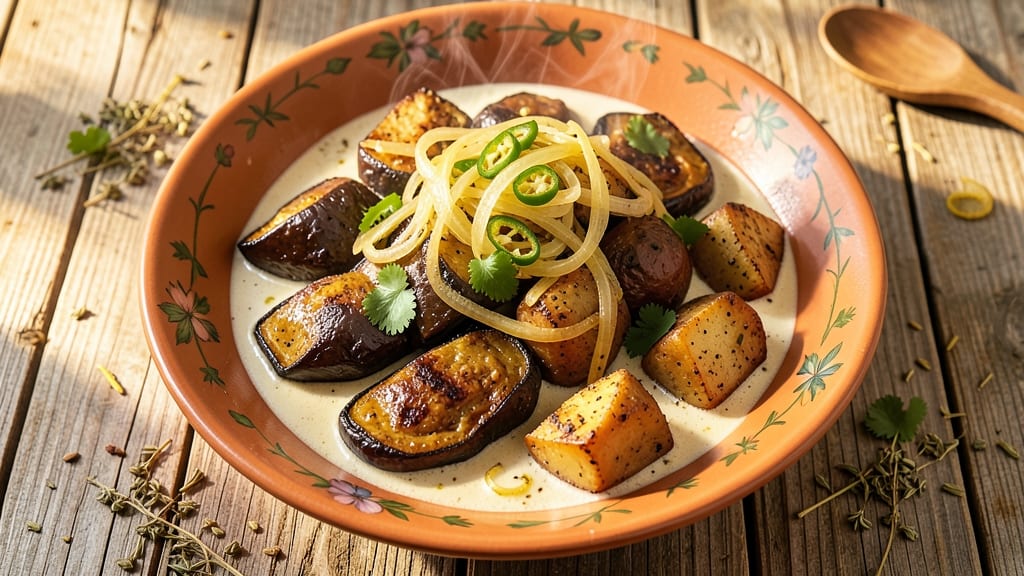
This aubergine and potato curry recipe transforms humble vegetables into a restaurant-worthy dish with smoky depth and velvety coconut richness. The secret lies in charring the spices and aubergine first—this caramelization unlocks layers of flavor that simmer into a harmonious, aromatic sauce.
I developed this recipe after years of experimenting with Indian curries, and it’s now my go-to for hearty vegetarian meals that impress even meat lovers.
The technique is straightforward but transformative: sear the spices until fragrant, then char the aubergine slices to deepen their flavor before simmering in coconut milk. The potatoes absorb the spiced sauce beautifully, creating tender, flavorful bites.
This curry balances heat, sweetness, and earthiness—perfect for those who love bold flavors without overwhelming spice.
What you’ll end up with is a smoky, velvety curry that’s rich enough to stand alone but pairs beautifully with basmati rice or warm naan. The coconut milk adds a subtle sweetness that rounds out the spices, while the charred edges of the aubergine bring a satisfying texture contrast.
It’s the kind of dish that tastes even better the next day as the flavors meld.
Whether you’re serving a family dinner or bringing a dish to a potluck, this curry delivers depth and satisfaction in every bite. The recipe is designed to be adaptable—swap in chickpeas for extra protein or adjust the spice level to your preference. Let’s get cooking!
Ingredients for aubergine and potato curry
Charred spices and smoky coconut milk transform simple vegetables into restaurant-worthy curry magic.
| Ingredient | Amount | Notes |
|---|---|---|
| Aubergine 🍆 | 1 ½ lb | Sliced lengthwise into 1/4-inch pieces |
| Russet Potatoes 🥔 | 1 ½ lb | Cut into 1-inch chunks, peeled |
| Coconut Milk 🥥 | 1 can | Full-fat, unsweetened (13.5 oz can) |
| Yellow Onion 🧅 | 1 whole | Thinly sliced, about 1 cup |
| Garlic Cloves 🧄 | 6 cloves | Minced, about 1 tbsp |
| Fresh Ginger Root 🌿 | 1 ½ tbsp | Grated, about 1 inch piece |
| Tomato Paste 🍅 | 2 tbsp | Smooth, not chunky |
| Ground Cumin 🌿 | 1 ½ tsp | Toasted for deeper flavor |
| Ground Coriander 🌶️ | 1 tsp | Freshly ground preferred |
| Turmeric Powder 🌿 | ½ tsp | Bright yellow, not orange |
| Garam Masala 🌶️ | 1 tsp | Store-bought or homemade blend |
| Smoked Paprika 🌶️ | ½ tsp | For authentic smoky depth |
| Salt 🧂 | 1 tsp | Kosher or sea salt |
| Black Pepper 🌶️ | ½ tsp | Freshly ground preferred |
| Olive Oil 🫒 | ½ cup | Extra-virgin for richness |
The aubergine is where the magic happens—look for glossy, deep purple skins at Whole Foods or your local farmers market. They should feel firm, not mushy. For the potatoes, Russets or Yukon Golds work best—they hold their shape while absorbing flavor. The coconut milk? Full-fat only—the richness is non-negotiable here. I always grab Thai Kitchen brand from the Asian aisle; it's consistently creamy. Fresh ginger and garlic? Buy extra—you'll want them for future curries too. The key is to char the spices and aubergine first—this caramelization builds layers of flavor that simmer into something extraordinary.
No smoked paprika? Regular paprika plus a pinch of liquid smoke gets you close, though nothing beats the real thing. Fresh ginger too fibrous? Substitute with 1 tsp ground ginger, but you'll lose that bright, fresh punch. The tomato paste can be those little squeeze tubes from Trader Joe's—no waste, easy to store. Running low on garam masala? Mix 1/2 tsp each of cinnamon, cardamom, cloves, and cumin as a quick substitute. The potatoes can be baby potatoes if you prefer—just halve them for even cooking. And if you're worried about the aubergine being bitter, salt and drain them first—it removes excess moisture and mellows the flavor.
This curry tastes even better the next day—flavors meld beautifully when reheated. Store in an airtight container in the fridge for 4-5 days or freeze portions for 3 months. I always make double batches because it disappears fast. The sauce thickens as it cools, so add a splash of water or coconut milk when reheating. Pairs perfectly with basmati rice or warm naan, which you can prep ahead too. The leftovers reheat beautifully in a skillet with a little extra oil to keep everything moist.
Why You'll Love This Recipe
- One-Pot Magic: I swear by this recipe—just chop, simmer, and forget about it. The potatoes soften while the aubergine soaks up all that rich coconut milk, and honestly? No extra pots to wash.
- Garlic-Glazed Bliss: That moment when the onions caramelize and the garlic hits? Pure satisfaction. The curry’s got this perfect balance—creamy from the coconut, tangy from the tomatoes, and just enough heat to make it ridiculously good.
- Leftover Legend: Between us, this curry only gets better after a day or two. The flavors meld overnight, and reheating it with a splash of water keeps it luscious. I make a double batch just so I can eat it for lunch the next two days.
- Budget-Friendly Feast: Russet potatoes and aubergines are cheap, and coconut milk stretches far. Plus, it’s the kind of dish that makes you feel like you’ve ordered takeout—without the takeout price tag. (Yes, even on a Tuesday night.)
Step-by-step instructions for aubergine and potato curry
Here's how to create a rich, velvety curry with perfectly charred spices and tender vegetables.
Char the Spices and Sauté Aromatics
Heat a heavy-bottomed pot or Dutch oven over medium-high heat with 0.5 cup olive oil. Add the 1 whole yellow onion and cook until golden brown on all sides, about 8-10 minutes. Remove and set aside, keeping the oil in the pot.
In the same pot, add the 6 cloves garlic cloves and 1.5 tbsp fresh ginger root, cooking for 1-2 minutes until fragrant but not browned. Immediately add the 1.5 tsp ground cumin, 1 tsp ground coriander, 0.5 tsp turmeric powder, 0.5 tsp smoked paprika, and 1 tsp salt. Toast for 30 seconds until the spices release their aroma and darken slightly. This charring deepens the smoky flavor that defines this curry.
Cook the Aubergine and Potatoes
Add the 1.5 lb aubergine and 1.5 lb russet potatoes to the pot, stirring to coat evenly with the spiced oil. Cook for 5-7 minutes until the aubergine begins to soften and the potatoes show slight color. Pour in 2 tbsp tomato paste and stir well, letting it caramelize slightly for 1 minute to build depth of flavor.
Add 1 cup water (from the can of coconut milk) and bring to a gentle simmer. Cover and cook for 10 minutes, stirring occasionally, until the vegetables begin to soften but aren't fully tender. This step ensures they don't become mushy in the coconut milk later.
Build the Creamy Coconut Base
Open the 1 can coconut milk and pour in half (about 7 oz) of the thick cream from the top. Stir well and simmer uncovered for 5 minutes until the sauce begins to thicken slightly. The coconut cream will create a luxurious texture while the remaining water keeps the sauce velvety.
Add the remaining coconut milk (including the watery part) and stir in the 1 tsp garam masala and 0.5 tsp black pepper. Bring to a gentle simmer and cook for 15-20 minutes until the vegetables are fork-tender and the sauce has thickened to a creamy consistency. The curry should coat the back of a spoon but remain spoonable.
Finish and Rest for Perfect Texture
Taste and adjust seasoning with additional salt if needed. Remove from heat and let the curry rest for 5 minutes. This resting period allows the flavors to meld and the sauce to thicken further. Stir in the reserved charred onions just before serving to add a sweet, caramelized contrast to the rich coconut sauce.
Serve immediately with steamed basmati rice or warm naan bread. The curry should have a luxurious, velvety texture with a balance of smoky, spiced, and creamy flavors. Each bite should deliver tender vegetables in a rich coconut sauce that coats the palate beautifully.
Pro Tips For Making Aubergine And Potato Curry
- CHAR THE AUBERGINE FIRST: Skip the raw slices—cut the eggplant into ½-inch chunks and sear them in oil over medium-high heat until deeply browned (about 8-10 minutes). The bitterness fades and the texture turns tender. I learned this the hard way after serving a curry where the eggplant tasted like rubber.
- PEEL POTATOES AFTER COOKING: Russets hold their shape better raw, but peeling them after boiling (when they’re soft) saves time and prevents bruising. Toss the boiled potatoes in cold water, then rub off skins with your fingers—no knife required. Sounds weird, but it works, and you’ll avoid cutting into the flesh.
- SIMMER COCONUT MILK LOW: High heat turns coconut milk into a greasy mess. Once you add it, drop the heat to a gentle simmer (just small bubbles) and let it infuse for at least 10 minutes. My grandmother swore by this, and she was right: the curry stays creamy, not split.
- SALT THE POTATOES EARLY: Add a pinch of salt to the potato water when you boil them—it seasons from the inside out. Skipping this means you’re left chasing flavor later with extra spices. Trust me, your curry will taste richer if the potatoes are already salty before they hit the sauce.
Troubleshooting this recipe
Sauce Too Thin?
If your curry turns out watery, simmer uncovered for an extra 5-10 minutes to reduce the sauce. For a quicker fix, stir in 1 tbsp cornstarch mixed with 2 tbsp water—this creates a smooth, velvety consistency without altering the flavor.
I’ve also had success adding ½ cup mashed potatoes to thicken while keeping the dish creamy. 🥄
Vegetables Undercooked?
Potatoes and aubergine need 15-20 minutes total simmering time after adding coconut milk. If they’re still firm, cover the pot and cook for another 5 minutes.
For extra insurance, parboil the potatoes for 5 minutes before adding them to the curry—this jumpstarts their cooking and prevents a mushy texture. 🍽️
Spices Too Overpowering?
Balance heat by adding ½ cup plain yogurt or ½ cup coconut milk to cool the spices. A splash of lemon juice (about 1 tbsp) brightens the dish and cuts through the richness.
I also recommend reducing the smoked paprika to ¼ tsp if you’re sensitive to smoky flavors. 🌶️
Aubergine Too Bitter?
Salt the sliced aubergine with 1 tsp kosher salt and let it sit for 10 minutes before rinsing and patting dry. This removes excess moisture and mellows the bitterness.
For an extra step, char the aubergine slices directly over a gas flame for 1-2 minutes per side before adding them to the curry—this caramelizes the edges and deepens the flavor. 🔥
Curry Tastes Bland?
Boost flavor by toasting the spices longer—aim for 45-60 seconds until they darken slightly. Add a pinch of asafetida (hing) (about ⅛ tsp) for an umami depth, or stir in 1 tsp soy sauce for a savory kick.
I also like finishing with fresh cilantro or mint leaves just before serving. 💫
Leftover Sauce Too Thick?
Reheat with 2 tbsp water or coconut milk per 2 cups of curry, stirring gently over low heat until creamy. For a smoother texture, blend ½ cup of the curry and mix it back in.
Store leftovers in an airtight container—the sauce will thicken further as it cools, so add extra liquid when reheating. ❄️
Nutrition facts
Frequently asked questions
Can I substitute sweet potatoes for regular potatoes?
Yes, but expect a slightly sweeter flavor and softer texture. Sweet potatoes hold up well in curries, though they may absorb more of the coconut sauce. For best results, reduce the cooking time by 3-5 minutes since they soften faster. The natural sweetness pairs beautifully with the smoky spices—just adjust salt to taste at the end.
How do I make this curry less spicy?
Reduce the smoked paprika to ¼ tsp and omit the cayenne if using. For extra mildness, stir in ½ cup plain yogurt or ½ cup coconut milk at the end, or add 1 tbsp lemon juice to brighten flavors without heat. Children or sensitive eaters can enjoy the base sauce without the spiced vegetables.
Can I make this curry in a slow cooker?
Sauté the onions, garlic, ginger, and spices as directed, then transfer everything to a 6-quart slow cooker. Add the remaining ingredients and cook on Low for 6-7 hours or High for 3-4 hours, stirring occasionally. The slow cooking enhances the smoky depth while keeping the vegetables tender. Add a splash of water if the sauce gets too thick.
What's the best way to store and reheat leftovers?
Store in an airtight container in the fridge for 4-5 days or freeze for 3 months. Reheat gently on low heat with 2 tbsp water or coconut milk per 2 cups of curry to restore creaminess. For best texture, avoid microwaving—use a skillet instead. The flavors actually improve overnight as the spices meld!
Can I add protein to this curry?
Yes! Tofu, chickpeas, or paneer work wonderfully. For tofu, press and cube 1 block before adding with the potatoes. Chickpeas add heartiness—simmer 1 can (drained) for the last 10 minutes. For paneer, add 1 cup cubed during the final 5 minutes to prevent it from becoming rubbery. The coconut sauce complements all three beautifully.