Side Dishes
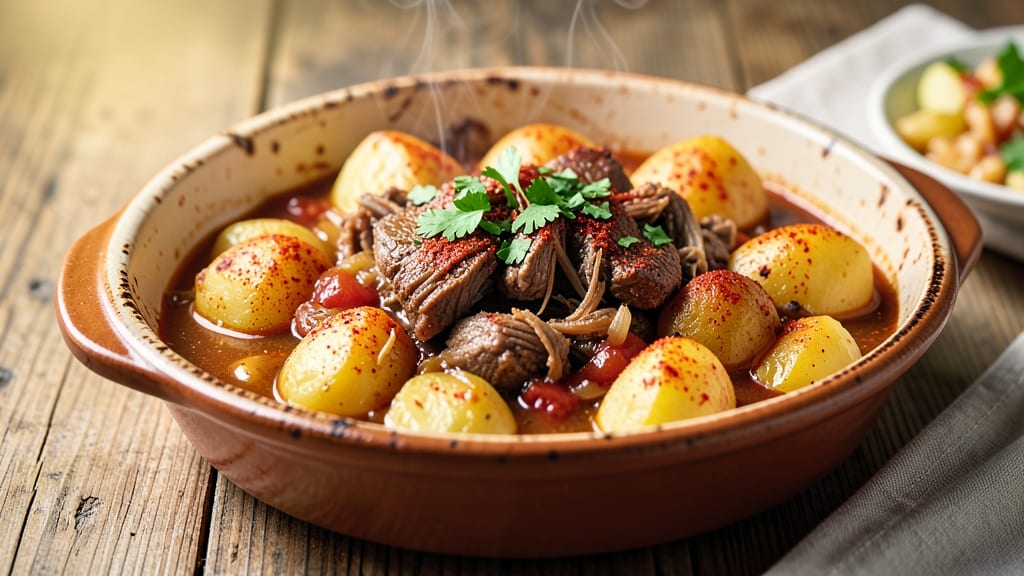
This Austrian potato goulash recipe delivers the deep, smoky flavors of Alpine tradition in every hearty bite. 🔥 The secret lies in slow-cooked beef, caramelized onions, and sweet paprika that transform simple ingredients into a dish rich with history and comfort.
What makes it special is the balance of tender potatoes, savory meat, and a sauce so flavorful it tastes like a homecoming. The process begins with browning beef in a Dutch oven, creating a rich foundation for the dish.
Caramelized onions and sweet paprika infuse the meat with layers of flavor, while potatoes absorb the smoky goodness as they simmer. This isn’t just a side—it’s a complete meal, perfect for cold evenings or family gatherings.
By the time it’s done, you’ll have a deeply aromatic stew with tender beef, perfectly cooked potatoes, and a sauce that clings to every spoonful. The caramelized onions add sweetness, while the paprika brings that signature smoky warmth that defines Austrian cuisine.
Serve with crusty bread or over buttered noodles for the full experience. Here’s how to make it authentically delicious.
Ingredients for austrian potato goulash
These hearty ingredients come together for a deeply aromatic Austrian potato goulash with smoky depth and tender beef.
| Ingredient | Amount | Notes |
|---|---|---|
| Beef Chuck Roast 🥩 | 2 lb | Cubed into 1-inch pieces |
| Yellow Onions 🧅 | 3 whole | Sliced into 1/4-inch rounds |
| Russet Potatoes 🥔 | 2 lb | Cut into 1-inch cubes |
| Sweet Paprika 🌶️ | 2 tbsp | Smoked preferred for depth |
| Garlic Cloves 🧄 | 6 cloves | Minced for even distribution |
| Tomato Paste 🍅 | ½ cup | No added salt preferred |
| Beef Broth 💧 | 3 cups | Low-sodium preferred |
| Bay Leaves 🌿 | 2 whole | Removed before serving |
| Black Peppercorns 🌶️ | 1 tsp | Freshly cracked |
| Thyme Leaves 🌿 | 1 tbsp | Fresh preferred |
| Olive Oil 🫒 | ¼ cup | Extra-virgin for richness |
| Salt 🧂 | 1 ½ tsp | Kosher or sea salt |
| Carrots 🥕 | 2 whole | Cut into 1-inch pieces |
| Red Wine 🍷 | ½ cup | Dry red preferred |
| All-Purpose Flour 🌾 | 2 tbsp | For thickening sauce |
The beef chuck roast is the foundation—look for well-marbled cuts at Whole Foods or your local butcher. Costco often has it pre-cubed, which saves time. Caramelizing the onions low and slow is key; don't rush this step. Sweet paprika should be smoked if possible—it adds that authentic Alpine warmth. The potatoes need to be starchy russets for that perfect creamy texture when cooked. If you can't find smoked paprika, a mix of regular sweet paprika and a pinch of cayenne gets close.
No red wine? Beef broth with extra tomato paste works perfectly. Fresh thyme is ideal, but dried at one-third the amount is fine in a pinch. The tomato paste can be from a squeeze tube—Trader Joe's makes great ones that last months. For the carrots, baby carrots are convenient, but whole carrots cut into chunks add more rustic flavor. The flour is just for thickening at the end—don't skip it if your sauce needs body, but don't overdo it or it'll get gluey. Bay leaves should be removed before serving unless you're a fan of chewing them.
This goulash tastes even better the next day as flavors meld. Store in an airtight container in the fridge for up to 5 days. Freezes beautifully for 3 months—portion into containers so you can grab a ready meal. The sauce thickens as it cools, so you might need to add a splash of broth when reheating. Serve with crusty bread to soak up every last bit of that smoky, paprika-rich goodness.
Why You'll Love This Recipe
- One-Pot Magic: I swear by this recipe because it’s literally one pan—no chopping boards, no extra dishes. Just brown the beef, toss in the onions and potatoes, add the paprika and garlic, and let it simmer. My counter stays cleaner than my kitchen after a baking day.
- Paprika Powerhouse: That sweet paprika isn’t just a garnish—it’s the star. It gives this goulash a deep, slightly sweet warmth that pairs perfectly with the rich beef and buttery potatoes. Honestly, the first time I skipped it, I regretted it immediately.
- Leftovers That Win: This dish begs to be made in bulk. The flavors only get better the next day, and it reheats like a dream—no soggy potatoes here. I freeze half the batch and pull it out for lazy Sundays. My kids argue over who gets the second helping.
- Budget Beef Boost: Chuck roast is cheap, but it feels like a fancy meal. The slow-cooked beef practically falls apart, and the potatoes soak up all that smoky, garlicky goodness. Between us, this is my go-to when I need a hearty dinner without breaking the bank.
Step-by-step instructions for Austrian potato goulash
Master this hearty stew with rich caramelized onions and tender beef.
🔥 Step 1: Sear the Beef Chuck Roast
Heat the 0.25 cup olive oil in a large Dutch oven over medium-high heat. Working in batches to avoid crowding, add the 2 lb beef chuck roast cubed into 1-inch pieces and sear for 3-4 minutes per side until deeply browned. This step builds deep flavor through the Maillard reaction.
Remove the beef from the pot and set aside. If the oil isn't hot enough to sizzle vigorously, wipe out the pot and start over—you want maximum browning for that authentic goulash depth. Don't drain the oil; we'll use it to caramelize the onions next.
🍳 Step 2: Caramelize Onions and Cook Vegetables
Add the 3 whole yellow onions sliced into ¼-inch rounds to the Dutch oven. Cook over medium heat for 15-20 minutes, stirring occasionally, until deeply golden brown and caramelized. This process takes patience—don't rush it.
Add the 2 whole carrots cut into 1-inch pieces and the 2 lb russet potatoes cubed into 1-inch pieces. Stir to coat with the caramelized onions, then sprinkle with 1.5 tsp salt and 1 tbsp thyme leaves. Cook for another 5 minutes to let the potatoes begin softening.
🍳 Step 3: Build the Flavor Base
Stir in the 2 tbsp sweet paprika and 6 cloves garlic cloves minced. Cook for 1 minute until fragrant. Pour in the 0.5 cup red wine and scrape up any browned bits from the bottom of the pot—this releases all the flavor locked in the caramelized onions.
Add the 0.5 cup tomato paste and stir until fully incorporated. Pour in the 3 cups beef broth and add the 2 whole bay leaves and 1 tsp black peppercorns. Return the browned beef to the pot and bring to a simmer.
⏰ Step 4: Slow Cook Until Tender
Cover the Dutch oven and transfer to a 350°F oven. Let it cook for 2 hours, stirring occasionally, until the beef is fork-tender and the potatoes are fully cooked. The sauce should thicken naturally as it simmers.
If the sauce seems too thin after 1.5 hours, remove the lid and simmer uncovered for 10-15 minutes to reduce it. For extra thickness, mix the 2 tbsp all-purpose flour with 2 tablespoons water to make a slurry, then stir it into the goulash during the last 15 minutes of cooking.
🍽️ Step 5: Finish and Serve
Remove the bay leaves before serving. Taste and adjust seasoning with additional salt if needed. The goulash should be rich, smoky, and deeply flavorful with tender beef and potatoes that hold their shape.
Serve immediately with crusty bread to soak up the delicious sauce. The flavors will continue to meld as it sits, making it even more flavorful the next day when reheated gently.
Pro Tips For Making Austrian Potato Goulash
- Sear the Chuck Hard: Don’t just brown the beef—push it until it’s deep caramelized, almost crusty in spots. I learned this the hard way: skipping this step means your goulash will taste more like stew than the rich, layered flavor you’re after. Use a heavy pot and let it hit 350°F (175°C) before adding oil—high heat is non-negotiable here.
- Soak the Paprika: Mix the sweet paprika with a splash of hot water (about 1 tablespoon) before adding it to the pot. This stops it from clumping and lets it bloom into the sauce properly. I was skeptical until I tried it—now I swear by it for that silky, even distribution.
- Add Potatoes Late: Toss the Russets in only after the beef and onions have cooked down for at least 45 minutes. They’ll absorb all the flavor and stay creamy without turning to mush. If you’re worried about overcooking, slice them slightly thicker than usual—about ½-inch chunks.
- Deglaze with Beer (or Vinegar): After searing the onions and beef, scrape up every last bit with a wooden spoon, then splash in ½ cup of dark beer (or sub with apple cider vinegar if you’re avoiding alcohol). This lifts all the stuck-on flavor and gives the sauce depth. Skip the water—it’s too bland for this dish.
Storing and reheating this austrian potato goulash
Fridge Storage Tips
Let your goulash cool to room temperature before transferring to an airtight container—I use glass Pyrex with snap-on lids for best results. Store in the fridge at 40°F or below for up to 5 days, though I find the flavors deepen after 24 hours.
The sauce thickens as it cools, so you might need to add ¼ cup beef broth when reheating to restore consistency. 🥣
Freezer Prep Guide
For long-term storage, portion goulash into quart-sized freezer bags or glass containers, leaving 1 inch of headspace for expansion. Seal tightly to prevent freezer burn and label with the date—this stew stays delicious for 3 months.
Thaw overnight in the fridge before reheating for even texture. If you're short on time, reheat directly from frozen on low heat with an extra ½ cup broth. ❄️
Stovetop Reheating
This is my preferred method because it preserves the dish's rich texture. Transfer goulash to a heavy-bottomed pot and heat over medium-low heat for 10-15 minutes, stirring occasionally. Add ¼ cup beef broth if the sauce seems too thick.
Taste and adjust seasoning—goulash often needs a pinch of salt or a dash of smoked paprika after reheating. 🔥
Microwave Shortcuts
For quick meals, use a microwave-safe dish and cover with a damp paper towel. Heat on 50% power in 2-minute intervals, stirring between each, until reaching 165°F internal temperature.
Add 2 tablespoons broth if the goulash appears dry. This method works best for single servings and takes about 5 minutes total.
Sauce Thickening Hacks
If your reheated goulash is too thin, mix 1 tablespoon flour with 1 tablespoon cold water to form a slurry. Stir it into the pot and simmer for 3-5 minutes until thickened.
For extra richness, stir in 1 teaspoon butter at the end. This trick works wonders for restoring that restaurant-quality texture you crave. 💡
Serving Leftovers
Goulash makes an even better meal the next day—its flavors meld beautifully overnight. Serve with crusty bread or buttered egg noodles to soak up the sauce. For a modern twist, top with shredded cheese or fresh parsley before serving.
I love pairing leftovers with a crisp white wine like Sauvignon Blanc to cut through the richness. 🍷
Nutrition facts
Frequently asked questions
Can I substitute beef with another protein in this Austrian potato goulash?
For a lighter option, use chicken thighs (bone-in for flavor) or pork shoulder. If you prefer plant-based, mushrooms or lentils work well—they absorb the smoky paprika beautifully. Just adjust cooking time: beef needs 2 hours, while chicken takes about 45 minutes to tenderize.
Why does my goulash sauce turn out watery? What can I fix it?
Watery sauce usually means the potatoes released too much starch or the broth wasn't reduced enough. For immediate fixes, simmer uncovered for 10-15 minutes to evaporate excess liquid. For long-term solutions, use waxy potatoes (like Yukon Gold) instead of russets, or thicken with a slurry of 1 tbsp flour + 1 tbsp cold water, simmering for 3-5 minutes.
How do I make this goulash in a slow cooker?
Brown the beef first in a skillet, then transfer everything (including caramelized onions) to the slow cooker. Add all ingredients except flour, then cook on low for 7-8 hours or high for 4-5 hours. Stir in flour slurry during the last 30 minutes to thicken. The slow cooker's gentle heat makes the potatoes extra tender—perfect for busy days!
What's the difference between Austrian and Hungarian goulash?
Austrian goulash is richer and creamier, often including potatoes and carrots as primary veggies, while Hungarian goulash focuses on paprika-forward sauce with fewer potatoes and sometimes sour cream. Austrian versions also use more beef broth and less tomato paste. Both are delicious—choose based on whether you want a hearty stew (Austrian) or a spicier sauce (Hungarian).
Can I make this goulash gluten-free?
Yes! Simply replace the all-purpose flour with cornstarch or gluten-free flour for thickening. Use the same ratio (2 tbsp per 2 tbsp water), and simmer for 5 minutes until the sauce reaches your desired consistency. Check labels on broths and tomato paste to ensure they're gluten-free too.