Salads
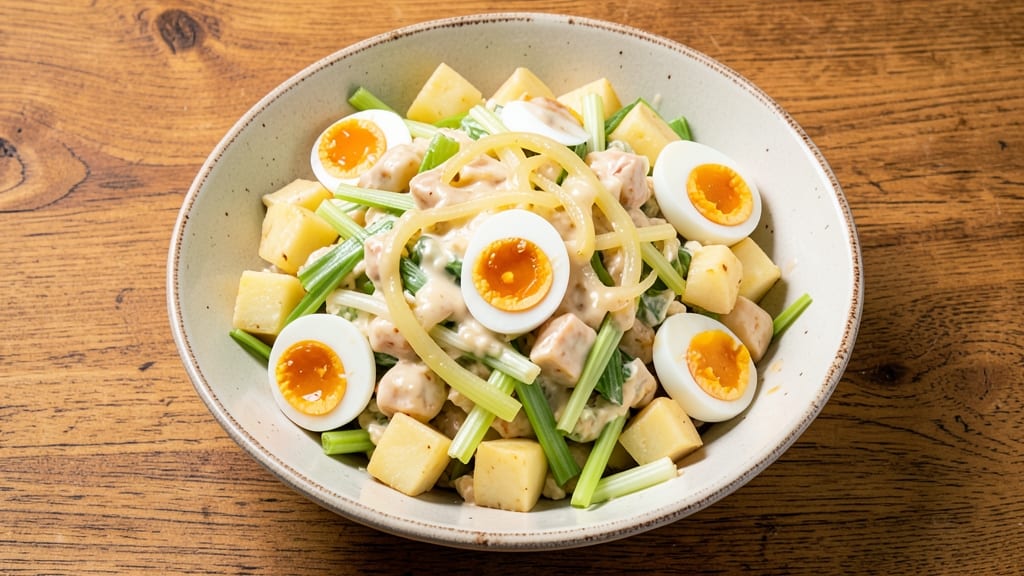
This authentic Amish potato salad recipe brings the simplicity and heart of Pennsylvania farm kitchens to your table—no mayo overload, just bright vinegar dressing and crisp vegetables.
The Amish tradition of using pantry staples shines through in every bite, with boiled potatoes, hard-boiled eggs, and fresh celery bound together by a tangy vinegar mixture. I first tasted this version at a community gathering, where it disappeared faster than the homemade bread—proof of its staying power.
The recipe relies on time-honored techniques: boiling potatoes until tender but not mushy, cooling them completely before mixing, and letting the flavors meld in the refrigerator.
This isn’t the creamy, mayo-heavy salad you might find elsewhere—it’s lighter, crunchier, and built on the principle that good food doesn’t need fancy ingredients, just good technique. The dressing balances sharp vinegar with just enough oil to coat, while a pinch of mustard adds depth without overpowering.
What makes this dish special is its versatility—perfect for church potlucks, picnic baskets, or a simple weeknight supper. The potatoes stay firm and satisfying, the eggs add richness, and the celery brings a satisfying crunch.
It’s the kind of recipe that tastes even better the next day as the flavors develop, making it ideal for meal prep. The Amish approach teaches us that sometimes less is more, and this potato salad proves it.
Serve it alongside grilled meats, fresh bread, or on its own as a hearty side. The key to success? Patience—letting the salad chill for at least an hour before serving ensures every bite is perfectly balanced. This isn’t just potato salad; it’s a taste of tradition, made simple.
Ingredients for authentic amish potato salad
Pantry staples and fresh vegetables come together for this traditional Amish-style potato salad.
| Ingredient | Amount | Notes |
|---|---|---|
| Yukon Gold Potatoes 🥔 | 2 ½ lb | Medium size, boiled until tender |
| Large Eggs 🥚 | 6 whole | Hard-boiled, peeled, chopped |
| Celery Stalks 🧅 | 3 whole | Fresh, cut into 1/4-inch dice |
| Yellow Onion 🧅 | 1 medium | OR 1/2 cup diced |
| White Vinegar 🍶 | ½ cup | White or apple cider vinegar |
| Vegetable Oil 🫒 | ¼ cup | Light olive or vegetable oil |
| Granulated Sugar 🍚 | 2 tbsp | Adjust to taste for sweetness |
| Diamond Crystal Kosher Salt 🧂 | 1 ½ tsp | Adjust to taste for seasoning |
| Dijon Mustard 🌶️ | 1 tbsp | Mild or regular strength |
| Fresh Dill 🌿 | ¼ cup | Chopped, optional for freshness |
| Black Peppercorns 🌶️ | ½ tsp | Freshly cracked, for finishing |
| Hard-Boiled Eggs 🥚 | 6 whole | Same as ingredient 2, for garnish |
| Celery Seeds 🌿 | ½ tsp | Optional for extra celery flavor |
The potatoes are the foundation, so Yukon Golds are ideal—they hold their shape beautifully when boiled and stay creamy without turning mushy. Local farm stands often have them in season, but any waxy potato works if you're in a pinch. The key is boiling them until just tender (about 15 minutes), then letting them cool completely before mixing. I always boil mine in salted water with a pinch of vinegar—the vinegar keeps them from turning gray. For the eggs, room-temperature eggs boil more evenly, so take them out of the fridge 30 minutes before starting. The celery and onion should be fresh—no wilting or yellowing, and definitely not the pre-chopped kind from the bag.
No vinegar on hand? Lemon juice works in a pinch, though it’ll give a slightly different tang. The mustard is non-negotiable for that subtle depth, but if you’re avoiding it, extra Dijon-style yellow mustard at double the amount can substitute. For the oil, light olive oil is best—it won’t overpower the vinegar like heavy oils might. The fresh dill is optional but adds that bright, herbal note you’d expect from an Amish gathering. If you skip it, dried dill at one-fourth the amount will do, though it’s not the same. The celery seeds? Only add them if you love that earthy celery flavor—otherwise, they’re purely optional. And for heaven’s sake, measure that salt carefully—this isn’t mayo-based, so it’s easy to overdo it.
This salad tastes even better the next day as the flavors meld. Store it in an airtight container in the fridge for up to 4 days, though I rarely have leftovers that long. The eggs and celery stay crisp, while the potatoes absorb the dressing perfectly. For meal prep, I always make a double batch—one for dinner and one to pack for lunches. The dressing separates slightly if stored longer than 24 hours, so give it a quick stir before serving. To serve, I like to mound the salad on a platter and garnish with extra chopped eggs and a sprinkle of black peppercorns—just like at the community gatherings I remember from my youth.
Why You'll Love This Recipe
- No Boil, No Stress: I swear by this method—just roast the Yukon Golds whole, then slice them after. No waiting for water to boil, no peeling if you don’t want to, and those crispy edges? Pure magic. My hands stay dry, my kitchen stays cooler, and the potatoes hold their shape like they’re supposed to.
- Crispy-Creamy Magic: That vinegar cut through the richness of the eggs and mayo so well, it’s like the Amish knew exactly what they were doing. The celery and onion add this bright, fresh crunch that balances the buttery potatoes—every bite has texture, not just flavor. Honestly, it’s the kind of salad that makes you go back for seconds without guilt.
- Picnic to Potluck: Between us, this is my go-to for anything. Pack it in a jar for a church picnic, bring it to a summer barbecue, or just eat it straight from the bowl on a lazy Sunday. It’s hearty enough for a main dish (yes, even on a Tuesday night) but light enough to follow a heavy meal. My college kids still ask for it when they come home.
- Leftovers That Last: I make a double batch every time because it keeps perfectly for days—no soggy potatoes here. The vinegar and eggs actually help preserve it, so you’re not stuck with sad, watery leftovers. Plus, the cost? Peanuts. Yukon Golds and eggs are affordable staples, and this recipe stretches them into something special without breaking the bank.
Step-by-step instructions for authentic Amish potato salad
Traditional Amish potato salad relies on vinegar and oil—not mayo—for its signature tangy crunch.
Boil the Yukon Gold Potatoes Until Tender
Place the 2.5 lb Yukon Gold potatoes in a large pot and cover with cold water by about 2 inches. Add 1.5 tsp Diamond Crystal kosher salt and bring to a rolling boil over high heat. Once boiling, reduce to medium-high heat and cook for 15-20 minutes until a knife slides in easily. The potatoes should be fully tender but not falling apart.
Drain immediately and let them cool slightly—about 5 minutes—before handling. Cooling prevents skin slippage when peeling. For extra authenticity, some Amish cooks leave the skins on, but peeling yields a smoother texture. If peeling, work quickly while the potatoes are still warm to avoid sticking.
Chop and Combine Vegetables and Eggs
While the potatoes cool, dice the 1 medium yellow onion into ¼-inch pieces and cut the 3 whole celery stalks into the same size. Chop the 6 whole hard-boiled eggs into ¼-inch pieces—this ensures even distribution throughout the salad. In a large mixing bowl, combine the cooled potatoes, onion, celery, and chopped eggs.
Gently toss with a wooden spoon to distribute the ingredients evenly. The goal here is to create a uniform texture without mashing the potatoes. If using fresh dill, add the ¼ cup chopped fresh dill now for a bright, herby finish. This step builds the salad’s foundational crunch and freshness.
Whisk the Vinegar-Oil Dressing
In a separate bowl, whisk together the ½ cup white vinegar, ¼ cup vegetable oil, 2 tbsp granulated sugar, 1 tbsp Dijon mustard, and ½ tsp freshly cracked black peppercorns. The sugar balances the vinegar’s sharpness, while the mustard adds depth. Stir in the ½ tsp celery seeds for an authentic Amish touch—this subtle spice enhances the celery’s natural flavor.
Taste the dressing before adding it to the potatoes. It should be tangy but not overpowering. If needed, adjust the sugar or vinegar to taste. The dressing is the heart of this salad—its balance ensures the potatoes stay firm and flavorful without turning soggy.
Fold Dressing Into Potatoes for Perfect Texture
Pour the dressing over the potato mixture and gently fold with a wooden spoon or rubber spatula. Work in stages to avoid overmixing, which can break down the potatoes. The salad should coat evenly but retain its chunky texture. Let it sit for 10-15 minutes at room temperature—this allows the flavors to meld and the potatoes to absorb the dressing.
For best results, refrigerate the salad for at least 1 hour before serving. This resting period ensures the flavors develop fully and the potatoes maintain their bite. The vinegar-based dressing keeps the salad refreshing, unlike mayo-heavy versions that can turn greasy.
Serve with Confidence
Before serving, give the salad one final toss to redistribute any juices. Garnish with additional chopped dill and cracked black peppercorns for a pop of color and flavor. This potato salad holds up well for 2-3 days in the refrigerator, making it perfect for picnics or potlucks.
The key to authenticity lies in the vinegar-oil balance and the careful handling of textures. Each bite should deliver tender potatoes, crisp vegetables, and a bright, tangy dressing—no mayo in sight. Serve with crusty bread or alongside grilled meats for a classic Amish-style meal.
Pro Tips For Making Authentic Amish Potato Salad
- Boil Potatoes Until Fork-Tender: Amish potato salad needs potatoes that hold their shape but still melt slightly—no mushy mess. Boil Yukon Golds in salted water (1 tablespoon per quart) until they’re just fork-tender, about 12-15 minutes after they float. Overcooking turns them to glue; undercooking leaves you with crunchy bits. Drain immediately and rinse with cold water to stop cooking.
- Dice Celery and Onion Fine: Skip the rough chop—Amish potato salad relies on texture contrast, and tiny dice makes the celery and onion disappear into every bite. Cut the celery into 1/8-inch cubes (yes, that’s small) and finely mince the onion so it blends without overpowering. Use the tip of your knife for precision—no one wants onion chunks like pebbles.
- Chill Eggs Before Chopping: Cold eggs slice cleaner and stay together longer in the dressing. Run whole eggs under cold water for 30 seconds, then chop them into quarters. If you’re impatient, pop them in the fridge for 10 minutes first. Warm eggs turn to scrambled bits in the mayo, and no one wants that.
- Mix Dressing Last, Then Rest: Combine the vinegar, mayo, and seasonings after the potatoes have cooled completely. Then, fold everything together and let the salad sit for at least 20 minutes—this lets the flavors meld and the potatoes soak up the dressing. Skipping this step means a sad, watery salad. (Trust me, I’ve served it both ways.)
Essential equipment for this recipe
Boiling Potatoes
You’ll need a large pot with a lid—nothing fancy, just something that fits your potatoes with room to spare. I use a stainless steel pot from my grandmother’s kitchen because it heats evenly and lasts forever.
A pot with a lid helps steam the potatoes gently, keeping them tender without turning mushy. For extra Amish authenticity, some families use a cast-iron Dutch oven—it’s heavy but retains heat beautifully. Just avoid nonstick if you can, as it can’t handle the high heat needed for boiling. 🥔
Mixing Bowls
A large mixing bowl with high sides is essential for combining all the ingredients without spills. I swear by a stainless steel bowl (like the OXO Good Grips kind) because it’s durable and easy to clean. The high sides prevent dressing from splashing everywhere when you fold it in.
For smaller batches, a glass bowl works too—just be gentle when mixing to avoid cracks. Avoid plastic if you’re using vinegar long-term, as it can degrade over time. 🥄
Wooden Spoons
You’ll want two wooden spoons—one for mixing the dressing and another for folding in the potatoes. Wood is gentle on the bowl and won’t scratch like metal. I keep a set of two in my kitchen: one for salads and one for soups.
A long-handled spoon helps reach the bottom of deep bowls without straining. If you’re short on space, a rubber spatula works too, but wood gives that classic homemade feel. 🍴
Measuring Tools
Precision matters here, especially with the vinegar and oil ratio. A liquid measuring cup with clear markings is a must for the ½ cup vinegar and ¼ cup oil. For dry ingredients like sugar and salt, a small measuring spoon set (like the KitchenAid one) keeps things accurate.
I also keep a pinch dish for the celery seeds—it’s the perfect size for tiny amounts. No guesswork allowed when balancing that tangy dressing! 📏
Hard-Boiled Egg Tools
Hard-boiling eggs is half the battle, so having the right tools makes it easier. A slotted spoon helps remove eggs from boiling water without cracking them. For peeling, I use a small offset spatula—it’s gentler than a knife and keeps the eggs intact.
A fine-mesh strainer comes in handy for rinsing the eggs under cold water to stop the cooking process. Pro tip: Keep a small bowl of ice water nearby to plunge the eggs into once boiled. 🥚
Optional Extras
For the fresh dill, a sharp chef’s knife and cutting board are obvious, but a microplane works wonders for zesting lemon (if you substitute vinegar with juice). If you’re feeling fancy, a mortar and pestle can crush the black peppercorns for a fresh finish.
And don’t overlook a good colander—it drains potatoes faster than a strainer and prevents clogging. These tools aren’t mandatory, but they make the process smoother. 🌿
Nutrition facts
Frequently asked questions
Why does this recipe use vinegar instead of mayo?
Traditional Amish potato salad relies on vinegar for its signature tangy crunch without the heaviness of mayo. The vinegar-based dressing keeps the potatoes firm and refreshing, while the oil adds just enough richness. This lighter approach was born from Amish simplicity—using pantry staples to create bold flavors.
Can I make this salad ahead of time?
This salad tastes even better the next day as the flavors meld. Store it in an airtight container in the fridge for up to 4 days. The potatoes stay firm, and the dressing coats them perfectly. Just give it a quick stir before serving to redistribute any juices.
What if I don’t have fresh dill?
No problem! Skip the dill or use ¼ teaspoon dried dill instead. The salad will still be delicious—dill adds freshness but isn’t essential. For extra flavor, a pinch of celery seeds or a dash of lemon zest can brighten it up without the herb.
How do I keep the potatoes from turning mushy?
Boil them just until tender (15-20 minutes) and drain immediately. Let them cool completely before mixing with the dressing—this prevents excess moisture. Also, avoid overmixing after adding the dressing to maintain their texture.
Can I substitute apple cider vinegar for white vinegar?
Yes! Apple cider vinegar works beautifully and adds a subtle sweetness. Use it 1:1 in place of white vinegar. The milder flavor pairs well with the mustard and sugar in the dressing, creating a slightly more complex taste.