
Salads
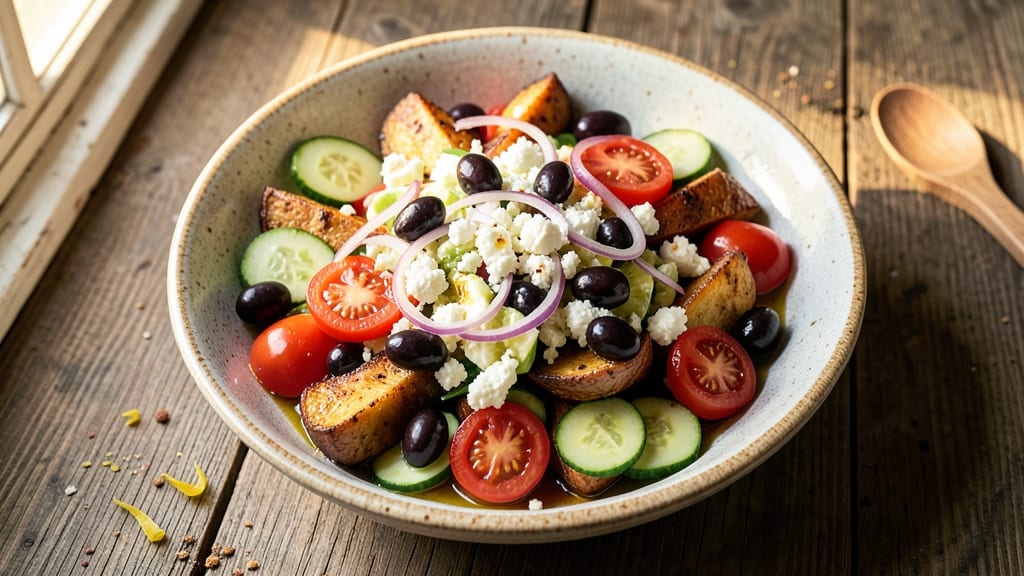
This authentic Greek salad recipe with potato salad brings the flavors of Mediterranean summers to your table—crisp vegetables, briny olives, and creamy feta balanced by tangy lemon and rich olive oil.
I first tasted this combination in a tiny taverna on Santorini, where the owner insisted it was "the real Greek way," and I've been perfecting it ever since in my Boston kitchen. The key is letting flavors develop while keeping everything bright and fresh.
The beauty of this dish lies in its simplicity and authenticity. You'll need classic Greek salad ingredients—ripe tomatoes, crisp cucumbers, Kalamata olives, and crumbled feta—paired with a traditional potato salad that uses boiled potatoes, tangy mayo, Dijon mustard, and fresh dill.
The potato salad adds heartiness without overpowering the lighter Greek elements, creating a meal that's both satisfying and true to its roots.
What makes this recipe special is how the two salads complement each other perfectly. The Greek salad brings bright acidity and freshness, while the potato salad adds a creamy, comforting element that makes it feel like a complete meal.
Together, they create a balance of textures—crisp, creamy, and tender—that's impossible to resist. The flavors are bold yet harmonious, with each bite offering a taste of Greece.
This dish is ideal for summer gatherings, picnics, or a light yet filling dinner. The preparation is straightforward, but the result is anything but ordinary—it's the kind of meal that makes you feel like you've traveled to the Mediterranean without leaving your kitchen.
Let's get started on this authentic Mediterranean feast.
Ingredients for authentic greek salad recipe with potato salad
Classic Mediterranean ingredients meet Boston pantry staples for a dish that tastes like summer vacation.
| Ingredient | Amount | Notes |
|---|---|---|
| Ripe Red Tomatoes 🍅 | 3 large | Heirloom preferred for sweetness |
| English Cucumbers 🥒 | 2 whole | Peeled, sliced lengthwise |
| Kalamata Olives 🫒 | 1 cup | Pitted, brined variety |
| Red Onion 🧅 | 1 medium | Thinly sliced, white part only |
| Crumbled Feta Cheese 🧀 | 1 ½ cups | Aged, salty feta preferred |
| Extra-Virgin Olive Oil 🫒 | ½ cup | Fruity, peppery variety |
| Fresh Lemon Juice 🍋 | ¼ cup | Freshly squeezed |
| Fresh Oregano Leaves 🌿 | ¼ cup | Chopped, not dried |
| Large Russet Potatoes 🥔 | 3 lbs | Boiled, chilled, cubed |
| Mayonnaise 🥫 | 1 cup | Dijon-infused preferred |
| Fresh Dill 🌿 | ¼ cup | Finely chopped, stems removed |
| Dijon Mustard 🍯 | 1 tbsp | High-quality, smooth |
| Diamond Crystal Kosher Salt 🧂 | 1 ½ tsp | For seasoning, not iodized |
| Freshly Ground Black Pepper 🌶️ | ½ tsp | Coarse grind preferred |
The tomatoes and cucumbers are non-negotiable—heirloom varieties pack the most flavor, but any ripe reds work. I grab mine from Whole Foods in late summer when they're at their peak, but the regular grocery store usually has decent ones too. English cucumbers stay crisp longer than Persian types, which is key for that perfect crunch. For the olives, Kalamata is traditional, but Manzanilla works in a pinch. The feta? Block form is a must—pre-shredded gets soggy fast. Look for aged feta with visible crystals (that's the good salt).
No heirloom tomatoes? Cherry tomatoes halved work surprisingly well. The mayo in the potato salad can be swapped for Greek yogurt mixed with olive oil for a lighter version. Fresh dill is ideal, but dried dill at one-third the amount gets you close. The oregano should be fresh if possible—dried has a stronger, less nuanced flavor. For the olive oil, any fruity, peppery variety will do, but avoid the cheap stuff. The potatoes? Russets are perfect—they hold their shape when boiled and chilled.
The Greek salad holds up for 2 days in the fridge if you keep the dressing separate, but the potato salad is best eaten fresh. Portion the feta and olives separately if you're serving it buffet-style—people always take too much. Both salads reheat beautifully, but the Greek salad is at its peak the day it's made. The potato salad can be prepped a day ahead, though I like to add the dill fresh right before serving. Store the dressing in a sealed jar with the olive oil layer on top to keep it fresh for up to 1 week.
Why You'll Love This Recipe
- Here’s what sold me: This salad improves overnight. The flavors meld, the feta gets even saltier, and the potatoes (if you add them) soak up the dressing like a dream. Double the batch for dinner, and you’ve got a no-fuss lunch the next day—zero reheating, zero sad wilted greens. Just grab and go.
- No-Chop Shortcuts: I swear by the "big chop, small chop" trick—slice the cucumbers and tomatoes into thick half-moons first (no peeling!), then just halve the olives and crumble the feta. That’s it. The red onion? Toss it raw—no cooking, no tears, just that sharp bite to cut through the richness.
- Salty-Sweet Magic: Between us, the Kalamata olives and feta alone make this dish dangerously addictive. But add those ripe tomatoes—juicy, bursting with acid—and the red onion’s slow caramelized kick? It’s the kind of flavor that makes you pause mid-bite, like, "Wait, why is this so good?" (Answer: The olives’ briny punch against the creamy feta.)
- Picnic-to-Party Flex: Honestly, this salad works everywhere. Pack it in a jar for a beach day (toss everything in layers so it doesn’t get soggy), serve it as a side for grilled meats, or let it be the star of a lazy Sunday spread. Even my picky uncle—who turns up his nose at "fancy salads"—asks for seconds when it’s on the table.
Step-by-step instructions for authentic Greek-inspired potato salad
This Mediterranean twist combines traditional Greek flavors with creamy potato salad perfection.
Prepare the Potato Base
Begin by boiling the 3 lbs large russet potatoes in salted water until fork-tender, which should take about 15-20 minutes. Drain immediately and transfer to a large mixing bowl while still warm. Let them cool slightly—this helps them absorb the dressing better.
While the potatoes cool, whisk together the 1 cup mayonnaise, 1 tbsp Dijon mustard, 1.5 tsp kosher salt, and 0.5 tsp black pepper in a separate bowl. This forms the creamy foundation of your salad. The Dijon mustard adds a subtle tang that balances the richness of the mayonnaise, a hallmark of authentic Greek-inspired dishes.
Assemble the Greek-Inspired Toppings
In the same bowl with the cooled potatoes, gently fold in the 1 cup Kalamata olives, 1 medium red onion (thinly sliced), and 0.25 cup fresh dill. The olives add a briny depth, while the onion and dill bring freshness. Use a wooden spoon to mix carefully—you want to combine without mashing the potatoes, which keeps their texture intact.
Next, stir in the 0.5 cup extra-virgin olive oil and 0.25 cup fresh lemon juice. The olive oil enhances the Mediterranean flavor profile, while the lemon juice brightens everything up. Taste and adjust the seasoning if needed—this is where you can really customize the balance of saltiness and acidity to your preference.
Incorporate the Greek Salad Elements
Add the 3 large ripe red tomatoes (chopped), 2 whole English cucumbers (peeled and sliced lengthwise), and 1.5 cups crumbled feta cheese. The tomatoes and cucumbers bring a refreshing crunch, while the feta adds that signature salty tang. Fold these ingredients gently into the potato mixture, being mindful not to overmix—you want to preserve the individual textures.
Finally, sprinkle in the 0.25 cup fresh oregano leaves and toss everything together one last time. The oregano ties all the flavors together with its earthy, aromatic notes. This step is where the salad truly becomes authentic—it’s the oregano that bridges the gap between classic potato salad and Mediterranean-inspired cuisine.
Chill and Serve
Cover the bowl and refrigerate the salad for at least 1 hour before serving. This chilling time allows all the flavors to meld together perfectly, ensuring a cohesive taste in every bite. The potatoes will absorb the dressing more evenly, and the feta will soften slightly, creating a creamy, rich texture.
When ready to serve, give the salad one final gentle toss to redistribute all the ingredients. The contrast of warm, creamy potatoes with cool, crisp vegetables and briny olives makes this salad a standout dish. Serve it alongside grilled meats or as a refreshing side for a Mediterranean feast.
Pro Tips For Making Authentic Greek Salad Recipe With Potato Salad
- Toss Last Thing: Let the tomatoes and cucumbers sit in the bowl for 10 minutes after adding everything else—no tossing. Their juices will soften the onion and olives just enough to make the salad taste cohesive, not disjointed. I used to mix it all right away, and the salad always felt like a pile of ingredients instead of a unified bite.
- Peel Onions Wet: Run the red onion under cold water while peeling to keep the layers from sticking together. Thin slices will cling less to the knife and stay crisp longer in the salad. Trust me, you’ll regret dry onion skins in your dressing.
- Drain Olives Twice: Rinse Kalamata olives in a colander, then let them drain for 5 minutes before adding to the salad. The extra brine makes the dressing watery fast—this step keeps the flavors balanced. I learned this after serving a salad where the olives drowned the tomatoes.
- Feta First, Then Dressing: Add the feta cheese right before serving, not when you first mix the salad. The dressing will make it soggy in minutes, turning your crumbly masterpiece into a sad, greasy lump. Sprinkle it on top and let everyone dig in with their own fork.
Serving suggestions for this dish
Plating Like a Taverna
Serve this salad in wide, shallow bowls or directly on a platter to showcase the vibrant colors. I like to mound the potato salad in the center and scatter the Greek salad ingredients around it—think halved tomatoes, cucumber ribbons, and feta crumbles fanned out like a sunburst.
A drizzle of extra-virgin olive oil and a sprinkle of fresh oregano right before serving adds that final Mediterranean touch. 🌞
Grilled Meat Pairings
This salad shines alongside grilled lamb chops or skewered chicken. The smoky char of grilled meat contrasts beautifully with the bright acidity of the lemon and the creaminess of the potato salad.
For a vegetarian option, serve with grilled halloumi or marinated eggplant. I always keep a platter of warm pita bread on hand for soaking up any extra juices. 🍖
Beverage Recommendations
A crisp Assyrtiko white wine from Greece complements the salad perfectly with its citrus notes. For non-alcoholic options, try sparkling water with a splash of lemon juice and a pinch of salt.
A cold ouzo or tsipouro (if you're feeling adventurous) adds a refreshing herbal note that pairs wonderfully with the oregano and dill. 🍷
Summer Picnic Setup
Pack individual portions in glass mason jars with the potato salad at the bottom, followed by the Greek salad ingredients layered on top. This keeps everything fresh and separated until you're ready to serve. Add a small container of extra dressing on the side.
For a picnic, bring along a woven basket lined with a cloth napkin to hold everything together. The presentation will make it feel like a true Mediterranean feast. 🧺
Leftovers Reinvented
Use leftover potato salad as a filling for stuffed bell peppers or open-faced sandwiches with crusty bread. The Greek salad ingredients can be repurposed into a quick feta and tomato bruschetta or tossed into wraps with grilled chicken.
I also love adding both salads to a grain bowl with quinoa or couscous for a heartier meal. 🍽️
Nutrition facts
Frequently asked questions
Why mix Greek salad with potato salad?
This combination creates a perfect balance of textures and flavors! The creamy, hearty potato salad provides richness and substance, while the bright, crisp Greek salad adds freshness and acidity. It's a Mediterranean-inspired twist that transforms a classic potato salad into something more exciting and well-rounded.
Can I make this without feta cheese?
Yes, but you'll lose that signature salty tang. Try aged halloumi or crumbled goat cheese instead. For a dairy-free version, use marinated artichoke hearts or extra Kalamata olives to maintain the briny flavor profile.
How do I keep the Greek salad ingredients from getting soggy?
Keep the dressing separate until serving! Store the tomatoes, cucumbers, and onions in one container with a paper towel to absorb moisture, and keep the dressing (olive oil, lemon juice, oregano) in a separate jar. Mix just before serving to maintain that perfect crunch.
What's the best way to reheat leftovers?
For the potato salad portion, warm gently in a skillet over low heat with a splash of water to prevent drying. The Greek salad ingredients should never be reheated—they're best enjoyed fresh. Instead, use leftover veggies in wraps or grain bowls.
Can I use sweet potatoes instead of russets?
Sweet potatoes add natural sweetness that pairs beautifully with the Mediterranean flavors. Boil them until tender (about 25 minutes longer than russets) and follow the same assembly steps. The texture will be slightly softer but equally delicious.