
Side Dishes
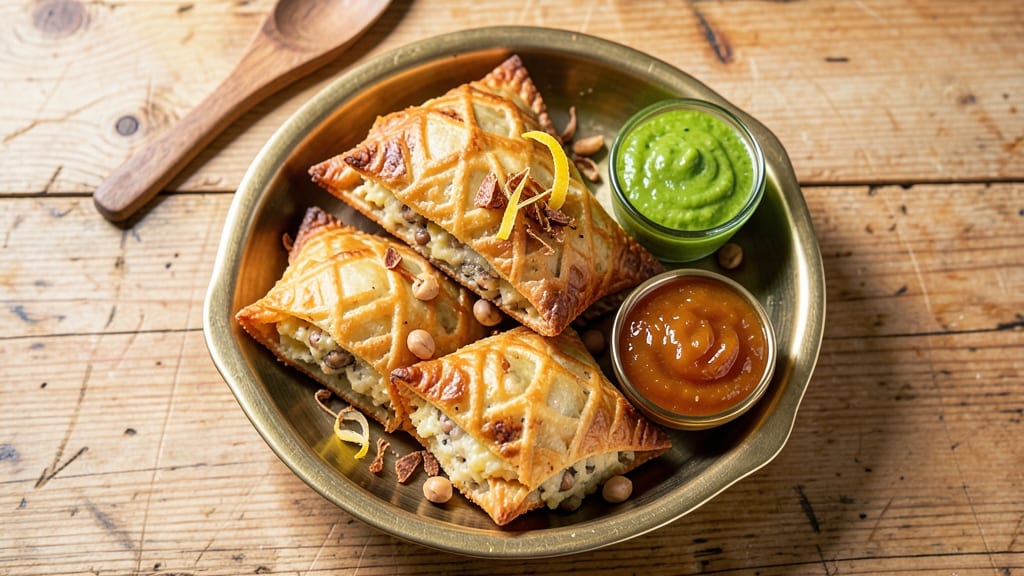
This baked potato samosa recipe delivers the perfect fusion of crispy lattice shells and spiced, creamy fillings—no frying required. The secret lies in a sturdy dough that holds its shape while baking, creating that signature golden crunch without the mess. I've perfected this version after countless trials, ensuring the filling stays moist and flavorful while the pastry achieves that irresistible crispness.
The dough is simple yet essential—just flour, water, oil, and salt—but the resting time is critical. Let it rest for at least 30 minutes to develop gluten, which prevents cracking during baking. Meanwhile, the filling combines mashed baked potatoes with aromatic spices, herbs, and a touch of chickpeas for texture.
The result? A filling that’s creamy yet sturdy enough to hold its shape in the lattice.
Assembling the samosas is where the magic happens. The lattice pattern isn’t just decorative—it creates those crispy, airy pockets that make every bite satisfying. Bake until golden brown, and you’ll have samosas that are crisp on the outside, tender on the inside, and packed with flavor.
The aroma alone will have everyone asking for seconds.
Serve warm with a tangy mint chutney or a cooling yogurt dip to balance the richness. These samosas are perfect for appetizers, snacks, or even a hearty side dish. Let’s get started—your taste buds will thank you.
Ingredients for baked potato samosa
Flour, butter, and spices meet spiced mashed potatoes for crispy, golden samosas.
| Ingredient | Amount | Notes |
|---|---|---|
| All-Purpose Flour 🌾 | 3 cups | Plus 2 tbsp for dusting |
| Unsalted Butter 🧈 | ½ cup | Cold, cubed for dough |
| Water 💧 | ¾ cup | Cold, for dough |
| Salt 🧂 | ½ tsp | Fine sea salt |
| Large Russet Potatoes 🥔 | 4 whole | Baked, peeled, mashed |
| Canned Chickpeas 🌱 | 1 can | Drained, rinsed, mashed |
| Green Chilies 🌶️ | 2 whole | Finely chopped |
| Fresh Cilantro 🌿 | ¼ cup | Chopped, stems removed |
| Garam Masala 🌶️ | 1 tsp | Ground, toasted |
| Ground Cumin 🌿 | ½ tsp | Toasted for depth |
| Ground Coriander 🌿 | ½ tsp | Freshly ground preferred |
| Turmeric Powder 🌶️ | ¼ tsp | Vibrant yellow color |
| Plain Yogurt 🥛 | ¼ cup | Full-fat for creaminess |
| Lemon Juice 🍋 | 1 tbsp | Freshly squeezed |
The dough is all about texture—all-purpose flour from King Arthur or Bob’s Red Mill works best for that tender yet sturdy crumb. If your kitchen’s humid, chill the dough for an extra 30 minutes before rolling. For the filling, russet potatoes are non-negotiable—their fluffy texture holds up better than waxy varieties. Bake them until fork-tender for the creamiest mash. Canned chickpeas from Woodstock or Bush’s save time, but rinse them well to cut down on sodium. The green chilies? Jalapeños work, but serrano peppers add more heat—adjust to taste. Fresh cilantro brightens everything up, so don’t skip it if you’ve got it.
No garam masala? Mix 1/4 tsp each of cinnamon, cardamom, cloves, and black pepper—it’s a close substitute. Short on yogurt? Greek yogurt or sour cream works in a pinch, but full-fat plain yogurt gives the best creaminess. The lemon juice is key—it balances the richness of the potatoes and keeps the filling from getting too heavy. If you’re prepping ahead, make the dough and filling a day in advance—resting the dough longer improves texture, and the filling flavors meld better overnight. For the lattice pattern, cut slits with a sharp knife—don’t tear the dough, or it’ll crack during baking.
Dough keeps wrapped in plastic for up to 3 days in the fridge or 3 months frozen. The filling can be stored separately for 2 days in the fridge—just reheat gently before assembling. Baked samosas are best served warm, but they reheat beautifully in a 350°F oven for 10-15 minutes. For a crowd, double the dough and filling—these disappear fast! Leftovers? Store in an airtight container for 2 days, but honestly, they’re so good you’ll eat them all before then.
Why You'll Love This Recipe
- No-Fuss Dough: I swear by this recipe because the dough is ridiculously simple—just flour, butter, water, and salt. No yeast, no resting overnight, no fuss. My hands get floury, but the result is light, flaky layers that hold up perfectly when deep-fried or baked.
- Creamy Crispy Magic: The star? Russet potatoes, baked until tender and mashed into a velvety filling. That buttery crust seals in the warmth, giving you the best of both worlds: a crispy exterior and a melt-in-your-mouth center. Honestly, it’s the kind of bite that makes people pause mid-conversation.
- Party or Pantry: These samosas are my secret weapon for gatherings—no one ever guesses they’re potato-based. But here’s the real win: they reheat like a dream, so I make a big batch on Sundays. Leftovers? Still crispy when warmed in the oven, and they freeze surprisingly well too.
- Budget Stretch: Between us, this recipe is my go-to for stretching a meal without breaking the bank. Potatoes are cheap, butter adds richness without costing a fortune, and the dough uses pantry staples. I’ve fed six people for under $10 with this—plus, the leftovers turn into next-day breakfast hash. Solid.
Step-by-step instructions for baked potato samosa
Let's create these golden, crispy samosas with a flaky lattice crust and spiced potato filling.
Prepare the Spiced Potato-Chickpea Filling
First, preheat your oven to 400°F and bake the 4 whole large russet potatoes for 45-50 minutes until fork-tender. Let them cool, then peel and mash them in a large bowl. You want smooth, lump-free mashed potatoes for the best texture.
In a separate pan, lightly toast the 0.5 tsp ground cumin, 0.5 tsp ground coriander, and 0.25 tsp turmeric powder for 30 seconds until fragrant. Add the drained and rinsed 1 can chickpeas and mash them thoroughly. Mix this with the mashed potatoes, then stir in the 2 finely chopped green chilies, 0.25 cup chopped cilantro, 1 tsp garam masala, 0.25 cup plain yogurt, and 1 tbsp lemon juice.
Season generously with the 0.5 tsp salt and mix well. The filling should be flavorful but not overly wet—if it's too loose, chill it for 15 minutes to firm up slightly. This spiced mixture will become the heart of your samosas, so don't skimp on seasoning.
Make the Samosa Dough and Roll It Out
In a stand mixer fitted with the paddle attachment, combine the 3 cups all-purpose flour and 0.5 tsp salt. Cut in the 0.5 cup cold cubed unsalted butter using your fingers or a pastry cutter until the mixture resembles coarse crumbs with pea-sized butter pieces.
Gradually add the 0.75 cup cold water while mixing on low speed until the dough just comes together. Knead for 2-3 minutes until smooth and elastic. Wrap it in plastic wrap and refrigerate for 30 minutes to rest. This resting time is crucial for developing gluten and preventing shrinking when rolled out.
On a lightly floured surface, roll the dough into a 12-inch circle about ⅛-inch thick. Use the extra 2 tbsp flour for dusting as needed. The dough should be smooth and pliable—if it cracks, let it rest another 10 minutes before trying again. A well-rolled dough is essential for that perfect crispy lattice.
Cut and Assemble the Samosa Shells
Using a sharp knife or pizza cutter, divide the rolled dough circle into 12 equal wedges, cutting from the center outward to the edge. Each wedge should be about 3 inches wide at the base. You'll use these as your samosa shells.
Place 1-2 tablespoons of the spiced potato filling onto the wide end of each wedge, leaving a 1-inch border around the edges. Fold the sides inward, then fold the pointed end up to form a triangle. Press the edges firmly to seal, creating a neat package.
Here's the key to crispiness: brush the folded samosas lightly with cold water using a pastry brush. This helps create steam during baking, which gives you that beautiful golden lattice pattern. Arrange them seam-side down on a parchment-lined baking sheet, leaving 1 inch between each.
Create the Lattice Pattern and Bake
Using a sharp knife, make ¼-inch deep cuts across the top of each samosa, creating a lattice pattern. Lift every other section and fold it back to form the classic diamond pattern. Brush the exposed dough with cold water again to ensure crispiness.
Bake in the preheated 400°F oven for 20-25 minutes until the samosas are deep golden brown and crispy. You'll know they're done when they sound hollow when tapped on the bottom. If they brown too quickly, tent with foil to prevent burning while they finish cooking.
Let them cool for 5 minutes before serving—this helps them set and makes them easier to handle. The result should be a perfect balance of crispy, flaky pastry and flavorful, spiced filling in every bite. Serve warm with mint chutney or tamarind sauce for the ultimate experience.
Pro Tips For Making Baked Potato Samosa
- BOIL POTATOES UNTIL SOFT: Russets take longer than you’d think—aim for a fork-tender center, not just a dent. Overcooked mash is gluey; undercooked bites are a nightmare. Test one first, then adjust boiling time (usually 15-20 minutes).
- CHILL THE DOUGH: Roll it out when it’s cold, or the butter will melt into a greasy mess. Wrap the dough in plastic and refrigerate for 30 minutes—it’s the only way to get crisp layers instead of a sad, soggy wrap.
- SALT THE MASH: Skip this, and your filling will taste bland no matter how much you season later. Mix in ½ teaspoon salt per potato while mashing—it balances the richness of the butter.
- SEAL THE EDGES: Brush the dough edges with water before folding, then press firmly to trap steam. No seal? Your samosa will puff up like a balloon and collapse into a greasy pile when cutting. (Yes, I’ve done this.)
Make-ahead tips for this baked potato samosa
Dough Prep Ahead
Make the dough 1-2 days in advance for better flavor and texture. Wrap it tightly in plastic and refrigerate—this extended rest time develops gluten, making the dough easier to roll and preventing cracks during baking.
For even longer storage, freeze the dough in a quart freezer bag for up to 3 months. Thaw overnight in the fridge before using. 🥖
Filling Make-Ahead
The spiced potato filling can be prepped 2 days ahead and stored in an airtight container in the fridge. The flavors deepen over time, and the filling firms up slightly, making assembly easier. If it’s too wet after chilling, add 1-2 tbsp extra flour to bind it.
For freezing, portion the filling into ice cube trays, freeze, then transfer to a bag for up to 1 month. Thaw completely before using.
Assembled Samosas
Assemble the samosas 1 day ahead and refrigerate them uncovered on a wire rack. This prevents sogginess and helps them crisp up faster when baking. Brush the lattice cuts with cold water just before baking to ensure maximum crispiness.
For freezing, bake the samosas first, then cool completely. Store in a single layer in an airtight container with parchment paper between them. Reheat in a 350°F oven for 10-15 minutes until crispy again. ✨
Batch Baking Tips
If making a large batch, bake the samosas in two batches to avoid overcrowding. Use the same baking sheet for both batches—residual heat helps maintain even cooking. For extra crispiness, bake the second batch for 1-2 minutes less than the first.
Keep the finished samosas warm in a 200°F oven while you bake the rest. This ensures they stay crispy and ready to serve. 🔥
Fridge Storage
Store baked samosas in an airtight container at room temperature for up to 2 days, but they’re best served warm. To reheat, place them on a baking sheet and warm in a 350°F oven for 5-7 minutes until crispy.
Avoid the microwave—it makes the pastry soggy. For longer storage, freeze the baked samosas for up to 1 month. Thaw overnight in the fridge before reheating. 💫
Nutrition facts
Frequently asked questions
Why does the dough crack when I roll it out?
The dough cracks most often when it's too warm or hasn't rested long enough. Always chill the dough for at least 30 minutes before rolling, and work on a lightly floured surface. If it cracks while rolling, let it rest another 10 minutes to relax the gluten. Cold butter in the dough also helps prevent cracking during baking.
Can I make these samosas without a lattice pattern?
Skip the lattice cuts and simply brush the folded samosas with cold water before baking. They'll still be delicious with a smooth, golden crust. For extra crispiness, make shallow cuts along the top before baking to create steam pockets. The lattice adds visual appeal but isn't required for flavor.
How do I prevent the filling from leaking out?
Proper sealing is key—press the edges firmly when folding the samosas to create an airtight seal. Chill the assembled samosas for 15 minutes before baking to help the filling firm up. If the filling is too wet, add 1-2 tablespoons flour to bind it. Brushing with cold water before baking also helps create a stronger crust.
What's the best way to reheat leftover samosas?
Never microwave them—they'll lose their crispiness! Instead, place samosas on a baking sheet and warm in a 350°F oven for 5-7 minutes until golden and crispy again. For extra crunch, broil for 1-2 minutes at the end. The oven method maintains that perfect texture better than any other method.
Can I use sweet potatoes instead of russets?
While possible, russet potatoes work best because their fluffy texture holds up better to the spices and baking process. Sweet potatoes are denser and may make the filling too moist. If you must use them, roast until very tender and drain excess liquid from the mash. You may need to add 1 extra tablespoon flour to the filling to absorb moisture.