Side Dishes
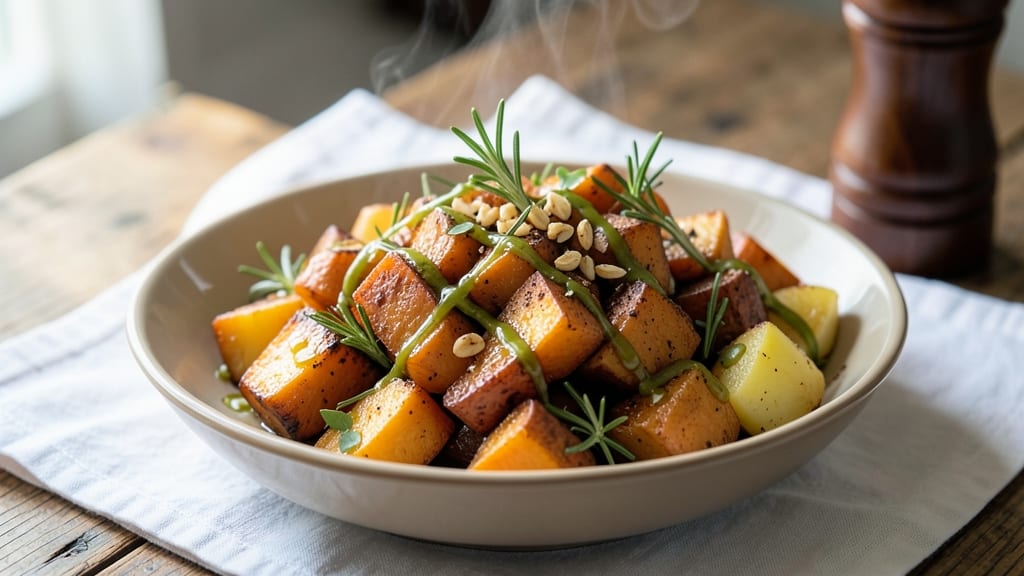
This baked squash and potato recipe transforms humble vegetables into a restaurant-worthy side dish that balances sweet caramelized edges with savory garlic-herb crisp.
The secret lies in roasting butternut squash and Yukon gold potatoes together at high heat—425°F for 30 minutes—until their natural sugars deepen into rich, nutty sweetness while the skin achieves that coveted crisp.
I developed this after years of testing roasted vegetable combinations, and this one consistently delivers the perfect harmony of textures and flavors.
The magic happens in the seasoning: a blend of olive oil, minced garlic, fresh rosemary, and a pinch of smoked paprika creates a fragrant crust that clings to every bite.
Unlike other roasted vegetable recipes that rely on heavy spices, this method lets the vegetables shine while adding just enough depth. The potatoes develop a creamy interior with crispy edges, while the squash becomes tender yet holds its shape, absorbing all those aromatic flavors.
What you’ll end up with is a dish that’s equally at home on a holiday table or a weeknight dinner. The sweetness of the squash pairs beautifully with the earthy potatoes, creating a symphony of flavors that’s both comforting and sophisticated.
Serve it alongside grilled chicken or steak for a complete meal, or let it stand alone as a satisfying vegetarian dish. The aroma alone will have everyone asking what’s for dinner.
This recipe is designed to be foolproof—no fancy techniques required, just a baking sheet and a little patience. The ingredients are simple, the method straightforward, and the results consistently impressive.
Whether you’re hosting a dinner party or simply craving a flavorful side, this baked squash and potato roast delivers effortless elegance every time. Let’s get started with the full recipe.
Ingredients for baked squash and potato
Restaurant-quality roast relies on these eleven ingredients transforming simple vegetables into sweet-savory perfection.
| Ingredient | Amount | Notes |
|---|---|---|
| Butternut Squash 🎃 | 2 lbs | Peeled, cut into 1-inch cubes |
| Yukon Gold Potatoes 🥔 | 2 lbs | Cut into 1-inch chunks, skin on |
| Extra-Virgin Olive Oil 🫒 | ½ cup | High-quality, fruity variety |
| Garlic Cloves 🧄 | 6 cloves | Minced, fresh preferred |
| Fresh Rosemary 🌿 | ¼ cup | Finely chopped, stems removed |
| Smoked Paprika 🌶️ | 1 tsp | For subtle smokiness |
| Diamond Crystal Kosher Salt 🧂 | 1 ½ tsp | Adjust to taste |
| Freshly Ground Black Pepper 🌶️ | ½ tsp | Cracked peppercorns preferred |
| Maple Syrup 🍯 | 1 tbsp | For caramelized depth |
| Fresh Thyme Leaves 🌿 | ⅛ cup | Optional, for herbal complexity |
| Baking Sheet 🍳 | 1 whole | Heavy-duty, rimmed |
The butternut squash and Yukon Gold potatoes are the stars here—local farmers markets often carry the freshest varieties, but any high-quality grocery store will have them. Look for squash with a firm, heavy feel and potatoes with smooth, unblemished skin. The extra-virgin olive oil should be fruity and peppery—avoid the mild supermarket brands. For rosemary, fresh sprigs from a specialty grocer like Whole Foods or Trader Joe's deliver the most aromatic punch. Pre-minced garlic loses potency quickly, so freshly minced cloves make all the difference. The potatoes should be evenly sized chunks for consistent cooking, while the squash cubes should be 1-inch uniform to ensure even caramelization.
No smoked paprika? Substitute with ½ tsp regular paprika plus a pinch of liquid smoke—though the flavor won't be identical. Fresh rosemary unavailable? Dried rosemary at one-third the amount works, but toast it first in a dry pan for 30 seconds to deepen the flavor. Short on maple syrup? Honey or agave nectar are direct swaps, though maple's caramel notes are ideal. The maple syrup isn't just sweetness—it enhances the natural sugars during roasting, creating that restaurant-worthy caramelized edge. For extra crispiness, toss the vegetables with an additional 1 tsp olive oil right before baking. The thyme is truly optional, but if you love herbal notes, double the amount—it pairs beautifully with the rosemary.
This roast tastes even better the next day as flavors meld. Store leftovers in an airtight container for up to 5 days in the fridge, though the texture softens slightly after day 2. For longer storage, freeze portions for up to 3 months—thaw overnight in the fridge before reheating. The baking sheet should be preheated in the oven for 5 minutes before adding vegetables to ensure even cooking. If your oven runs hot, reduce temperature to 400°F and bake for 35 minutes instead. The crispy edges are worth the wait—don't skip the final 5 minutes of broiling if your recipe calls for it.
Why You'll Love This Recipe
- Here’s what sold me: that first bite where the butternut squash melts into sweetness while the potatoes get crispy edges, all wrapped in garlic and rosemary perfume. The olive oil soaks in just enough to make every forkful feel luxurious, but it’s not heavy—just ridiculously good.
- One-Pan Magic: I swear by this recipe because it’s literally one pan, one knife, and zero stress. Toss the squash and potatoes in the same roasting pan, drizzle with olive oil, and let the oven do the work—no peeling, no chopping into tiny cubes (just rough chunks), and no washing extra dishes.
- Garlic-Rosemary Glow-Up: Here’s what sold me: that first bite where the butternut squash melts into sweetness while the potatoes get crispy edges, all wrapped in garlic and rosemary perfume. The olive oil soaks in just enough to make every forkful feel luxurious, but it’s not heavy—just ridiculously good.
- Leftovers That Don’t Suck: Between us, most baked veggie leftovers turn to sad mush. Not this. The squash stays tender, the potatoes hold their shape, and reheating them in the oven (or even the microwave) keeps them just as satisfying. Pack this for lunch or save it for a lazy dinner—it’s always a win.
Step-by-step instructions for sweet-savory roasted squash and potatoes
This method delivers caramelized edges and aromatic depth—no flipping or fuss required.
Prep the Vegetables for Even Roasting
Preheat your oven to 425°F while you prepare the vegetables. Using a sharp chef's knife, cut the 2 lbs butternut squash into uniform 1-inch cubes—this ensures even cooking and prevents some pieces from drying out. Peel the squash first if desired, but I prefer to leave the skin on for added texture and nutrients.
For the 2 lbs Yukon Gold potatoes, cut into 1-inch chunks while keeping the skins intact. The skins add fiber and prevent the potatoes from falling apart during roasting. Place both the squash and potatoes in a large bowl and toss gently with 0.5 cup extra-virgin olive oil until every piece is lightly coated. This oil creates a barrier that promotes browning and prevents sticking to the baking sheet.
Season and Arrange on the Baking Sheet
In a small bowl, combine the 1.5 tsp Diamond Crystal kosher salt, 0.5 tsp freshly ground black pepper, 1 tsp smoked paprika, 1 tbsp maple syrup, 6 minced garlic cloves, 0.25 cup finely chopped fresh rosemary, and 0.125 cup fresh thyme leaves. Sprinkle this seasoning blend evenly over the oiled vegetables, tossing gently to distribute it uniformly. The maple syrup adds a subtle sweetness that caramelizes during roasting, while the herbs infuse the vegetables with aromatic depth.
Transfer the seasoned vegetables to the whole heavy-duty rimmed baking sheet, spreading them in a single even layer without overcrowding. Leave about ½ inch between each piece to allow hot air to circulate and promote even browning. If your baking sheet is large, you may need to roast in batches—this ensures the vegetables crisp rather than steam.
Roast Until Caramelized and Tender
Slide the baking sheet into the preheated oven and roast for 35-40 minutes, stirring the vegetables once halfway through cooking. This midway stir ensures even browning and prevents any pieces from sticking to the sheet. You'll know they're nearly done when the edges turn deep golden brown and the squash begins to soften slightly when pierced with a fork.
For the final 10 minutes of roasting, increase the oven temperature to 450°F to intensify the caramelization. Watch closely during this time—you want the vegetables to develop a crispy exterior while remaining tender inside. The potatoes should be fork-tender with slightly crispy skins, and the squash should yield to gentle pressure but still hold its shape.
Rest and Serve with Herb Garnish
Remove the baking sheet from the oven and let the vegetables rest for 5-7 minutes before serving. This resting period allows the juices to redistribute, ensuring each bite is moist and flavorful. The residual heat will continue to caramelize the edges slightly, deepening their richness.
Garnish with an additional sprinkle of fresh rosemary and thyme leaves just before serving to brighten the dish with fresh herbal notes. The combination of sweet maple syrup, smoky paprika, and aromatic herbs creates a harmonious balance of flavors that pairs beautifully with grilled meats, crusty bread, or a simple green salad. Serve immediately while the vegetables are still warm and crispy.
Pro Tips For Making Baked Squash And Potato
- CUT SQUASH IN EVEN SLICES: I learned this the hard way—uneven butternut squash pieces roast at wildly different rates. Aim for ½-inch thick slices, and if you’re using the seed cavity, cut it lengthwise into two equal halves first. This isn’t the prettiest method, but it guarantees everything finishes tender at the same time.
- SALT POTATOES BEFORE ROASTING: Yukon Golds need a head start to develop that creamy texture. Toss them with 1 teaspoon of salt (per pound) and let them sit in a colander for 20 minutes before baking. Sounds weird, but it works—your potatoes will be fluffy inside and crisp in spots, not just soggy.
- DON’T OVERCROWD THE PAN: I used to pack my sheet pan like a sardine can, and the result? Steamed squash and potatoes. Leave at least 1 inch between pieces so the hot air circulates. If your pan is small, roast in batches—your rosemary and garlic will thank you with proper browning, not just wilting.
- ROAST AT 425°F FOR CRISP EDGES: Lower temps make for mushy squash. Start hot (425°F) for the first 20 minutes to caramelize the edges, then drop to 375°F to finish cooking. This two-stage approach gives you the crispy skin you want without drying out the flesh—yes, even if you’re impatient like me.
Dietary considerations for these flavors
Gluten-Free Adaptations
The original recipe is naturally gluten-free since it relies solely on vegetables, herbs, and olive oil. However, always double-check your smoked paprika and maple syrup labels—some brands may contain trace gluten from processing facilities. I recommend Annie's Organic smoked paprika and Whole Foods 365 maple syrup, both certified gluten-free.
For extra flavor without risk, swap the smoked paprika for 1 tsp garlic powder and ½ tsp onion powder—they add depth without gluten concerns. 🌿
Low-Carb/Keto Options
For a low-carb version, replace half the Yukon Gold potatoes with cauliflower florets (about 1 lb)—they roast beautifully with the squash while cutting net carbs. Skip the maple syrup and add 1 tbsp butter to the oil for richness.
The butternut squash remains the star, providing natural sweetness without spiking blood sugar. This swap keeps the dish keto-friendly while maintaining that caramelized texture. 🥦
Vegetarian/Vegan Adjustments
This recipe is already vegetarian and can be made vegan with no modifications—just ensure your olive oil is plant-based (most are) and your maple syrup is vegan-certified. For added protein, serve alongside white beans (rinsed and seasoned with lemon) or marinated tofu.
The smoky, herby flavors complement plant-based proteins perfectly without overpowering the vegetables. 🌱
Allergen-Friendly Swaps
For nut allergies, confirm your olive oil is refined (not cold-pressed) to avoid cross-contamination with tree nuts. If you're avoiding sulfites, use freshly squeezed lemon juice instead of maple syrup—add 1 tbsp lemon juice and 1 tsp honey (if not vegan) for brightness.
For dairy-free needs, no changes are necessary, as this recipe contains no dairy. Always check herb labels if using dried blends, as some may contain added preservatives. 🚫🥜
Protein Pairings
Boost this dish’s protein content by serving it with grilled chicken thighs (marinated in lemon and oregano) or pan-seared salmon. For a plant-based option, pair with lentils (cooked with cumin and garlic) or tempeh (marinated in soy sauce and maple syrup).
The sweet-savory roast balances the richness of proteins beautifully, making it a complete meal. 🍗
Nutrition facts
Frequently asked questions
Can I use sweet potatoes instead of Yukon Gold?
Sweet potatoes add a deeper sweetness and vibrant color to this dish. For best results, cut them into 1-inch cubes (same as Yukon Gold) and reduce the maple syrup to ½ tablespoon—their natural sugars are already rich. The roasting time remains the same (35-40 minutes), but check for doneness at 30 minutes since sweet potatoes cook slightly faster.
What's the best way to store leftovers?
Transfer leftovers to an airtight container and refrigerate for up to 5 days. The texture softens slightly after day 2, but reheating at 350°F for 10-12 minutes restores crispiness. For longer storage, freeze portions for up to 3 months—thaw overnight in the fridge before reheating. Microwaving isn't ideal as it makes the edges soggy.
Why did my squash turn mushy instead of caramelized?
Overcrowding or underseasoning usually causes this. Ensure pieces have ½-inch space between them for proper airflow, and toss with an extra ½ teaspoon olive oil before baking. Also, check your oven temperature—if it runs hot, reduce to 400°F and bake for 40 minutes. The final 10 minutes at 450°F is crucial for crispy edges.
Can I make this ahead of time for a dinner party?
Yes! Prep the vegetables up to 24 hours ahead—toss them with oil and seasoning, then refrigerate uncovered on a tray. Roast directly from the fridge (add 5-10 extra minutes to the baking time). For a shortcut, par-cook at 375°F for 20 minutes, then finish under the broiler for 5 minutes before serving to restore crispiness.
What's the best herb substitute if I don't have rosemary?
Try a mix of ½ teaspoon dried thyme and ½ teaspoon dried oregano for depth, or use 1 teaspoon fresh sage for earthy notes. If you love citrus, add 1 teaspoon lemon zest to the seasoning blend—it brightens the dish beautifully. Just