
Side Dishes
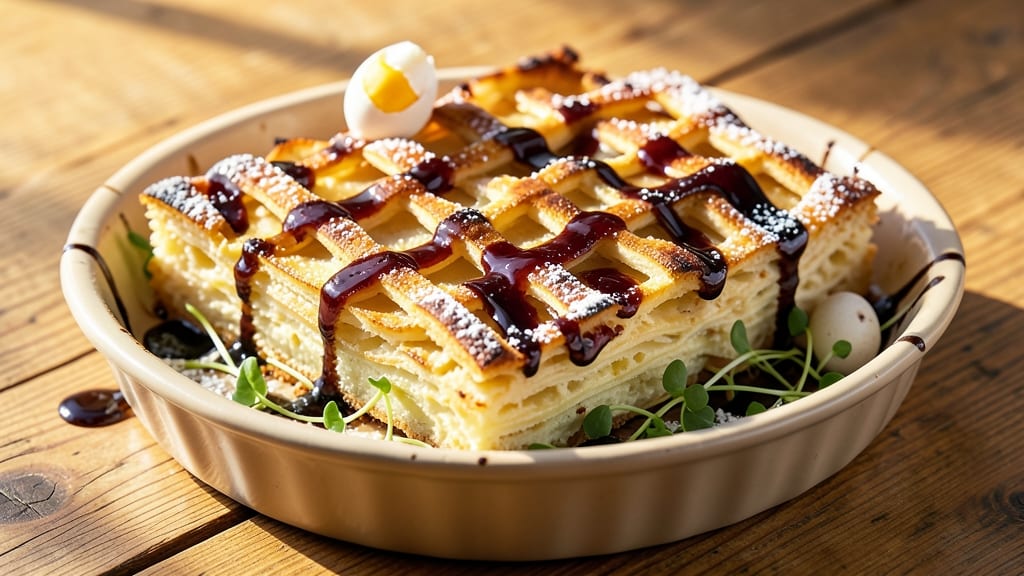
This balsamic potato torte recipe transforms humble spuds into a showstopping side dish with crispy golden layers and a sweet-tangy balsamic glaze that elevates any meal.
The secret lies in alternating thin layers of mashed potatoes with a light custard base, baked until the edges are caramelized and the top crackles with texture.
I developed this recipe after years of experimenting with potato-based casseroles, and the balsamic reduction makes all the difference—it cuts through the richness while adding depth that lingers on the palate.
What sets this torte apart is the balance of textures: tender potato layers hold their shape while the custard binding creates a delicate, almost custardy interior. The crispy top forms naturally from the baking process, and the balsamic glaze ties everything together with its glossy finish and perfect sweet-sour contrast.
Unlike traditional potato dishes that can turn soggy, this torte stays firm and impressive even when reheated, making it ideal for holiday tables or special occasions.
The baking process is straightforward but requires patience—you'll need to layer the potatoes and custard carefully, then bake at a precise temperature to achieve that signature crispy top without overcooking the interior.
The final drizzle of reduced balsamic glaze adds both visual appeal and that signature tangy brightness that makes this torte unforgettable. Once you try it, you'll never serve plain mashed potatoes again.
Perfect for pairing with roasted meats, grilled fish, or even as a vegetarian main course, this torte delivers restaurant-quality results with minimal effort. The key is in the technique: thin, even layers and proper baking times ensure consistent texture throughout.
Let's get started on creating your new go-to side dish that will have everyone asking for seconds.
Ingredients for balsamic potato torte
Six ingredients transform simple potatoes into a restaurant-worthy torte with crispy layers and balsamic brilliance.
| Ingredient | Amount | Notes |
|---|---|---|
| Russet Potatoes 🥔 | 3 lb | Peeled and sliced paper-thin |
| Large Eggs 🥚 | 4 whole | Room temperature for custard |
| Heavy Cream 🥛 | 1 ½ cups | Full-fat for richness |
| Unsalted Butter 🧈 | ½ cup | Cold, cubed for custard |
| Balsamic Vinegar 🍷 | 1 cup | Aged, not white |
| Granulated Sugar 🍚 | ¼ cup | For custard balance |
| Diamond Crystal Kosher Salt 🧂 | 1 ½ tsp | Fine grain preferred |
| Freshly Ground Black Pepper 🌶️ | ½ tsp | Freshly cracked |
| All-Purpose Flour 🌾 | ¼ cup | For custard thickening |
| Extra-Virgin Olive Oil 🫒 | 2 tbsp | For brushing layers |
| Fresh Thyme Leaves 🌿 | 1 tbsp | Chopped, for garnish |
The potatoes are the foundation—Russets are ideal for their starch content, but Yukon Golds work too if you prefer creamier texture. Peel them first, then slice as thinly as possible using a mandoline (or carefully with a knife). Trader Joe's sells pre-sliced potatoes for lazy days, but fresh-cut gives the best texture. For the custard, full-fat heavy cream is non-negotiable—it's what creates that velvety interior. I always use Plugrá butter for its high fat content, but any good-quality brand works. The balsamic vinegar should be aged (look for 'extra aged' labels)—it's sweeter and richer than regular balsamic, which makes all the difference in the glaze.
No balsamic vinegar? Substitute with 2 tbsp red wine vinegar plus 1 tbsp honey, though it won't have the same depth. Fresh thyme is ideal, but dried thyme at half the amount works in a pinch. For the custard, if you're worried about it being too rich, reduce the butter to 0.25 cup and add an extra egg yolk. The flour is just for thickening—don't skip it, but don't overmix either. For the crispy top, olive oil is key—it helps create that caramelized crust. If you're feeling fancy, use a mix of olive oil and melted butter for brushing.
This torte reheats beautifully—just cover with foil and warm at 350°F for 15-20 minutes. It keeps well for 4 days in the fridge, though the top loses its crispiness after day 2. For longer storage, freeze the assembled (unbaked) torte in portions—bake straight from frozen, adding 10-15 extra minutes. The balsamic glaze can be made ahead and stored in the fridge for up to 2 weeks. I always make extra glaze—it's perfect for drizzling over roasted vegetables or even as a salad dressing.
Why You'll Love This Recipe
- One-Pan Magic: I swear by this—no chopping boards, no extra pots. Just peel those Russets, slice ‘em thick, and let the oven do the work while you mix the custard. That balsamic glaze? Two minutes in the microwave, and suddenly you’ve got restaurant-worthy depth without the fuss.
- Rich & Tangy: The balsamic doesn’t just drizzle—it caramelizes into a glossy, slightly sweet-sour crust that cuts through the creamy potato layers. Honestly, the first time I tasted it, I thought, “Wait, this is dessert?” (It’s not, but you’ll want it for both.)
- Meal Prep MVP: This torte holds up like a champ—slice it for breakfast, pack it for lunch, or reheat it straight from the fridge. Between us, I’ve served it at brunch, potlucks, and even as a “fancy” side for dinner guests. The heavy cream keeps it luscious even after a day.
- Budget-Friendly Luxe: Russets and eggs are cheap, but the butter and cream make it feel indulgent. I’ll be real: I’ve stretched this recipe for a crowd by adding extra potatoes and doubling the balsamic glaze. Leftovers? They disappear faster than my willpower on a lazy Sunday.
Step-by-step instructions for balsamic potato torte
This layered dessert combines silky potato slices with a tangy balsamic custard—here's how to build it perfectly.
Prepare the Potato Layers
Preheat your oven to 375°F and line a 9x13-inch baking dish with parchment paper, leaving an overhang for easy removal. Peel the 3 lb Russet Potatoes and slice them paper-thin using a mandoline or sharp knife. I like to dip the slices in cold water for 5 minutes to prevent browning before arranging them in the dish.
Layer the potato slices in a staggered brick pattern, overlapping slightly like shingles. Brush each layer generously with 2 tbsp Extra-Virgin Olive Oil—this creates a crispy, golden top. Sprinkle each layer with ½ tsp Diamond Crystal Kosher Salt and ¼ tsp Freshly Ground Black Pepper. The oil and salt will caramelize beautifully during baking, giving you that perfect crispy texture you're after.
Bake the Potato Base
Bake the potato layers for 30-35 minutes until they're tender when pierced with a knife and the edges are deep golden brown. Real talk: don't overbake here—you want the potatoes to hold their shape but still be slightly firm. If the top isn't brown enough, broil for 2-3 minutes at the end, watching closely to avoid burning.
Let the baked potatoes cool completely in the dish. This resting step prevents the custard from turning watery later. While they cool, you'll prepare the balsamic custard—this is where the magic happens. The contrast between the crispy potato layers and the silky custard is what makes this torte so special.
Make the Balsamic Custard
In a medium saucepan, combine the 1.5 cups Heavy Cream, 0.5 cup Unsalted Butter, 0.25 cup Granulated Sugar, and 1 cup Balsamic Vinegar. Bring to a gentle simmer over medium heat, stirring occasionally until the butter melts completely. Here's the thing—you want the mixture to be hot but not boiling, or the eggs will scramble.
In a separate bowl, whisk together the 4 whole Large Eggs, 0.25 cup All-Purpose Flour, and remaining 1 tsp Diamond Crystal Kosher Salt. Slowly pour the hot cream mixture into the eggs while whisking constantly. This tempering step is crucial—it prevents the eggs from curdling. Return the mixture to the saucepan and cook on low heat, stirring constantly with a wooden spoon, until it thickens enough to coat the back of the spoon (5-7 minutes).
Assemble and Bake the Torte
Once the custard is thickened, carefully spread it evenly over the cooled potato layers in the baking dish. The custard should cover all surfaces completely—this ensures every bite has that perfect balance of sweet-tangy flavor. Here's where it gets fun: sprinkle the 1 tbsp Fresh Thyme Leaves evenly over the top for a fragrant finish.
Bake at 350°F for 25-30 minutes until the custard is set and the top is lightly golden. You'll know it's done when the center barely jiggles—it should be firm but still slightly wobbly. Let it cool completely before slicing, or the custard will run everywhere. This waiting step is worth it for clean slices that hold their shape.
Chill and Serve
Transfer the torte to the refrigerator and chill for at least 4 hours or overnight. The custard will firm up beautifully, creating that perfect creamy texture. When ready to serve, carefully lift the torte out using the parchment overhang. Slice into 6 equal portions—each slice should reveal those crispy potato layers beneath the silky custard.
Garnish with additional thyme leaves if desired, and serve at room temperature. The contrast between the crispy potato slices and the smooth, tangy custard is what makes this torte truly special. Trust me, the first bite is worth every step of the process!
Pro Tips For Making Balsamic Potato Torte
- Boil Potatoes Until Fork-Tender: Russets are stubborn—don’t stop at "soft." They need to collapse like overcooked mashed potatoes when pierced with a fork. I used to pull them too soon, and the torte ended up dense and gummy. Drain immediately after boiling, or they’ll steam back to sadness.
- Whisk Eggs Until Ribbon-Thin: This isn’t just mixing—stretch the beaten eggs between your fingers until they form a thin, glossy ribbon. I learned this the hard way when my first torte had a weird, lumpy texture. Cold eggs? Whisk them longer. Room temp? Still give them 30 seconds extra.
- Skip the Overmixing: Once you fold in the cream and butter, stop. Overmixing aerates the eggs too much, and the torte turns into a sad, flat pancake. Just 10-12 gentle folds with a spatula keeps the texture light and creamy—no need to go full baker’s arm workout.
- Reduce Balsamic to Syrup: Straight vinegar? Too sharp, too fast. Simmer ½ cup balsamic with 1 tbsp sugar until it thickens to a glossy syrup—about 8-10 minutes. This balances the tang and adds depth without drowning the potatoes. (Yes, even if you’re impatient like me.)
Perfect pairings for balsamic potato torte
Balsamic Glaze
No torte is complete without the signature balsamic glaze—it's what ties all the flavors together. Simmer ½ cup aged balsamic vinegar with 1 tbsp granulated sugar until reduced by half (about 10 minutes on medium heat).
For extra richness, add 1 tsp Plugrá butter at the end and whisk until silky. Drizzle generously over each slice before serving. 🍷
Herb-Infused Cream
Elevate the torte with a dollop of herb-infused cream—whisk ¼ cup heavy cream with ½ tsp chopped fresh thyme and a pinch of salt. Warm gently until just steaming, then serve alongside for dipping. The aromatic herbs complement the balsamic perfectly, adding a fresh contrast to the sweet-tangy layers.
Roasted Vegetable Medley
Pair the torte with a roasted vegetable medley to balance its richness. Toss 1 lb seasonal vegetables (like carrots, zucchini, and bell peppers) with 2 tbsp olive oil, 1 tsp balsamic vinegar, and roast at 400°F for 25 minutes.
The caramelized edges and tangy glaze mirror the torte’s flavors while adding color and texture to the plate.
Crispy Prosciutto
For a savory-sweet contrast, serve with crispy prosciutto—lay thin slices on a baking sheet and broil for 2-3 minutes until edges curl. The salty, smoky crunch pairs beautifully with the torte’s creamy custard and crispy potato layers.
A few slices per plate add an elegant touch without overpowering the dish.
Wine Pairings
Balance the torte’s sweet-tangy flavors with a dry red wine like Pinot Noir or a crisp white such as Sauvignon Blanc. The acidity in these wines cuts through the richness, cleansing your palate between bites.
For a non-alcoholic option, try sparkling apple cider**—its effervescence complements the torte’s textures beautifully. 🍷
Nutrition facts
Frequently asked questions
Can I make this torte ahead of time?
This torte actually tastes better the next day. Assemble it completely (including the custard layer) and refrigerate for 4-6 hours before baking. The custard will firm up beautifully, and the flavors meld together. For maximum crispiness, bake it fresh after chilling. If you need to prep further ahead, you can refrigerate the unbaked torte (with potato layers and custard) for up to 24 hours before baking.
Why does my torte custard turn watery?
This usually happens when the custard isn't cooked long enough or the potatoes weren't fully cooled before assembly. Make sure your custard reaches that 160°F internal temperature (thick enough to coat the back of a spoon) and that the potato layers are completely cool before spreading the custard. Also, don't skip the 4-hour chilling time—this helps the custard set properly.
Can I use sweet potatoes instead of Russets?
While you can substitute sweet potatoes, the texture and flavor will be different. Sweet potatoes are naturally sweeter and more moist, which may make the custard layer too rich. If you try it, reduce the sugar in the custard by 1 tbsp and consider adding ½ tsp cinnamon to complement the sweetness. The torte will still be delicious but won't have the same crispy texture as with Russets.
How do I make the top extra crispy?
For maximum crispiness, brush the potato layers with olive oil after the first 20 minutes of baking, then broil for 2-3 minutes at the very end. Another trick is to sprinkle 1 tbsp panko breadcrumbs mixed with ½ tsp salt over the top before the final baking. The breadcrumbs will toast beautifully, adding crunch. Just watch closely to avoid burning!
What's the best way to reheat leftovers?
Cover the torte with foil and warm in a 350°F oven for 15-20 minutes. For individual slices, place them on a baking sheet and warm for 8-10 minutes. Microwaving isn't recommended as it can make the custard layer rubbery. The torte reheats best when warmed gently—this helps restore the crispy texture while keeping the custard creamy.