Soups & Stews
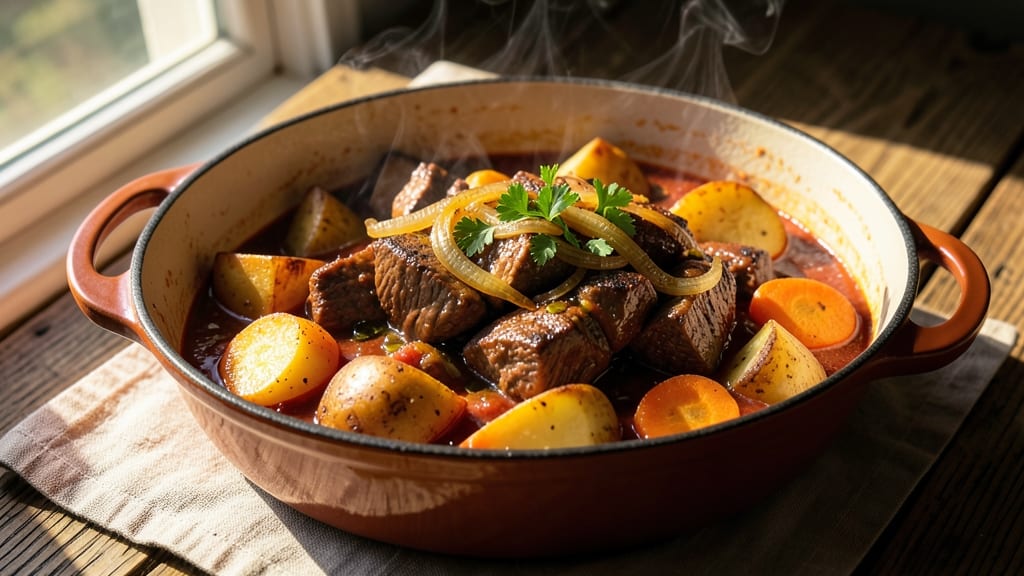
This beef and potato goulash recipe brings the rich, smoky flavors of Hungary to your kitchen with tender beef and hearty potatoes simmered in a deep, paprika-infused sauce.
The secret lies in slow cooking—browning the beef first unlocks deep, caramelized flavors that build as the stew simmers for hours, transforming tough cuts into melt-in-your-mouth bites. Every spoonful delivers that perfect balance of smoky, slightly sweet paprika and the earthy comfort of potatoes cooked just until tender.
The beauty of this classic dish is its versatility—traditionally made in a Dutch oven over an open flame, but just as delicious in a slow cooker or Instant Pot for modern convenience.
The key steps—browning the beef, layering aromatics, and letting the paprika develop its signature depth—ensure restaurant-quality results at home. Whether you're serving a family dinner or meal prepping for the week, this goulash delivers hearty satisfaction with minimal effort after the initial prep.
What makes this recipe stand out is the texture: fork-tender beef, potatoes that hold their shape without turning mushy, and a sauce thick enough to coat every bite. The slow simmer allows flavors to meld, creating a dish that tastes even better the next day.
Serve it with crusty bread to soak up every last drop of that rich, smoky sauce—it’s the kind of meal that feels like a warm embrace on a chilly evening.
For those short on time, the Instant Pot version cuts cooking time in half while preserving all the depth of flavor. The slow cooker method, on the other hand, lets the goulash develop even more complexity with hands-off ease.
Either way, you’ll end up with a stew that’s as comforting as it is impressive—perfect for weeknight dinners or special occasions.
Ingredients for beef and potato goulash
Rich, smoky paprika and tender beef—just eight ingredients transform into this hearty Hungarian classic.
| Ingredient | Amount | Notes |
|---|---|---|
| Chuck Roast 🥩 | 2 ½ lb | Cut into 1.5-inch cubes |
| Yellow Onions 🧅 | 2 whole | Medium, sliced into half-moons |
| Carrots 🥕 | 3 whole | Medium, peeled and chopped |
| Russet Potatoes 🥔 | 2 ½ lb | Peeled and cut into 1-inch cubes |
| Smoked Paprika 🌶️ | 3 tbsp | Hungarian or Spanish preferred |
| Tomato Paste 🍅 | ½ cup | Squeeze tube or canned |
| Beef Broth 💧 | 3 cups | Low-sodium preferred |
| Red Wine 🍷 | 1 cup | Bold dry like Cabernet |
| Garlic Cloves 🧄 | 4 cloves | Minced or finely chopped |
| Bay Leaves 🌿 | 2 whole | Fresh if possible |
| Salt 🧂 | 1 ½ tsp | Kosher or sea salt |
| Ground Black Pepper 🌶️ | 1 tsp | Freshly ground preferred |
| Olive Oil 🫒 | 2 tbsp | For searing beef |
| All-Purpose Flour 🌾 | 2 tbsp | For dusting beef |
The chuck roast is your secret weapon here—it's the only cut that gives you that melt-in-your-mouth texture after hours of simmering. Costco or Walmart usually have it pre-cut into cubes, which saves time, but if you're buying a whole roast, ask the butcher to cube it for you. Look for good marbling—those little white fat streaks are what keep the meat juicy. The potatoes? Russets hold their shape best, but Yukon Golds work too if you like them creamier. I always peel mine for this recipe, but if you're feeling fancy, leave the skins on for extra rustic texture.
No red wine? Beef broth with a splash of balsamic vinegar works in a pinch—just add a little more paprika to keep that smoky depth. Fresh bay leaves are ideal, but dried work at half the amount (so 1 whole dried leaf = 2 fresh). The tomato paste can be that little squeeze tube from Trader Joe's—it's perfect for single servings and keeps forever. For the paprika, Hungarian or Spanish smoked gives the best flavor, but regular sweet paprika will do if that's all you've got. Just add an extra pinch of smoked paprika to compensate. And if you're short on time, swap the red wine for an extra half-cup of beef broth—it won't be identical, but it'll still be delicious.
This goulash tastes even better the next day—honestly, that's when all the magic happens. Store leftovers in an airtight container in the fridge for up to 5 days, or freeze portions for 3 months. I always make a double batch because it reheats so well for quick lunches. The sauce thickens as it cools, so you might need to add a splash of broth when reheating. And if you've got crusty bread lying around, save it for serving—it's the perfect vehicle for soaking up every last bit of that rich, smoky sauce.
Why You'll Love This Recipe
- One-Pot Magic: I swear by this—just chuck everything in one pot, walk away, and let the smoked paprika work its deep, smoky charm. No fancy layers, no stress.
- Tender Every Bite: That chuck roast? It falls apart like it’s been slow-cooked for hours, but honestly, I’m lazy—I just sear it first and let the onions and carrots melt into sweetness around it. The potatoes soak up all the rich, paprika-kissed flavor.
- Leftover Heaven: Between us, this tastes better the next day. I make a double batch on Sundays, freeze half, and pull it out for those nights when I’m too tired to think. Reheats like a dream—no dry edges, just hearty, satisfying warmth.
- Budget-Friendly Feast: A big cut of chuck roast and a few cheap veggies stretch to feed four (or five if you’re feeding teenagers). Smoked paprika adds depth without cost, and the potatoes bulk it up so no one goes hungry. My wallet and my family win.
Step-by-step instructions for beef and potato goulash
This hearty goulash comes together with simple steps but delivers deep flavor and satisfying texture.
Sear the Chuck Roast for Maximum Flavor
Heat the 2 tablespoons olive oil in a large Dutch oven over medium-high heat until shimmering. Pat the 2.5 lb chuck roast dry with paper towels and cut into 1.5-inch cubes. Working in batches, add the beef to the pot and sear for 2-3 minutes per side until deeply browned—this builds the rich foundation for your goulash.
Once all the beef is browned, remove it from the pot and set aside. The browned bits left behind are called fond, and they're packed with flavor. Don't scrape them out—we'll use them to create the sauce. Here's the thing—if your pot gets crowded, reduce the heat slightly to prevent steaming instead of searing.
Build the Flavor Base with Vegetables and Spices
In the same Dutch oven, add the 2 whole yellow onions and 3 whole carrots (peeled and chopped) along with the 4 cloves garlic cloves (minced). Cook for 5-6 minutes until the onions soften and begin to caramelize—this adds natural sweetness to balance the smoky flavors.
Sprinkle in the 3 tablespoons smoked paprika and stir for 30 seconds to toast the spices and release their aromatic oils. This is where the goulash gets its signature smoky depth. Add the 2 tablespoons all-purpose flour and stir for another 1 minute to cook off the raw flour taste. Don't walk away—flour burns quickly.
Deglaze and Simmer the Goulash
Pour in the 1 cup red wine and scrape up all the browned bits from the bottom of the pot with a wooden spoon. This deglazing step captures all that meaty flavor. Let the wine simmer for 3-4 minutes until reduced by half. Add the 0.5 cup tomato paste and stir until fully incorporated.
Pour in the 3 cups beef broth and add the 2 whole bay leaves. Return the seared beef to the pot and bring everything to a gentle boil. Reduce heat to low and let it simmer uncovered for 1 hour. You'll see the sauce thicken slightly as it cooks—this is normal and indicates the flavors are melding together.
Add Potatoes and Complete the Cooking
After the initial 1 hour of simmering, add the 2.5 lb russet potatoes (peeled and cut into 1-inch cubes). Stir gently to distribute them throughout the stew. The potatoes will absorb some of the liquid as they cook, so don't worry if they don't fully submerge.
Continue simmering for another 45-60 minutes until the potatoes are fork-tender and the beef is meltingly tender. The goulash should have a thick, hearty consistency with just enough sauce to coat the back of a spoon. If it's too thin, let it simmer uncovered for another 10 minutes to reduce slightly. Season with the 1.5 teaspoons salt and 1 teaspoon ground black pepper to taste.
Rest and Serve with Perfect Texture
Remove the 2 whole bay leaves from the goulash and let the stew rest for 10 minutes before serving. This resting period allows the flavors to fully develop and the potatoes to absorb any remaining liquid, ensuring each bite is perfectly balanced.
Serve the goulash hot, straight from the pot, with crusty bread to soak up every last bit of that smoky, paprika-rich sauce. The beef should be tender enough to pull apart with a fork, and the potatoes should be creamy with a slight bite. Real talk: this goulash tastes even better the next day as the flavors continue to meld.
Pro Tips For Making Beef And Potato Goulash
- Sear the Chuck Roast: Don’t just toss that roast in the pot raw—get it screaming hot in a dry skillet first. After patting it dry (yes, even if it’s still cold), sear it on all sides with 2 tablespoons of oil until it’s deep brown. This isn’t just for looks; it locks in flavor and keeps the meat from turning out bland. I used to skip this, and the goulash always tasted like it was missing something.
- Cut Potatoes Evenly: Russets break apart when they cook, and uneven chunks mean some will turn to mush while others stay hard. Cut them into 1.5-inch cubes—big enough to hold their shape but small enough to soften properly. If you’re short on time, parboil them for 3 minutes before adding them to the pot, but don’t overcook them or they’ll turn into glue.
- Don’t Rush the Paprika: Smoked paprika is the soul of this dish, but it burns faster than you think. Toast it in the pot with the onions and carrots for 2-3 minutes until it smells earthy and fragrant—just until it’s warm, not charred. If you let it darken, it’ll turn bitter and overpower everything else. Trust me, the extra minute pays off.
- Add Potatoes Last: The potatoes need to soak up the rich beef and tomato flavors, not just boil in their own steam. Let the meat and sauce simmer together for at least 30 minutes before adding them—this ensures they absorb all that deep, smoky goodness. If you’re in a hurry, add them halfway through and stir them into the sauce at the end.
Flavor customization for beef and potato goulash
Smoky Heat Boost
For a deeper smoky flavor, increase the smoked paprika to 4 tablespoons and add ½ teaspoon cayenne pepper for a subtle kick. Toast 1 teaspoon ground coriander with the paprika to add earthy warmth. I like using Penzeys Hungarian smoked paprika—it has that authentic depth. 🌶️
Sweet-Tangy Twist
Balance the smokiness with a touch of sweetness by adding 2 tablespoons brown sugar or 1 tablespoon honey when you deglaze with wine. A splash of 2 tablespoons apple cider vinegar brightens the sauce without overpowering. This works especially well if you're using a milder paprika.
Creamy Finish
Stir in ½ cup sour cream or ¼ cup crème fraîche during the last 15 minutes of cooking for a velvety texture. This pairs beautifully with the smoky flavors and adds a luxurious mouthfeel. For a dairy-free option, use ¼ cup coconut milk instead. 💛
Herb Infusion
Add 1 teaspoon dried thyme or 1 tablespoon fresh parsley with the bay leaves for an aromatic boost. Fresh dill works too—about 2 tablespoons chopped—and adds a bright, citrusy note. I like to sprinkle fresh herbs on top just before serving for a pop of color and freshness.
Spiced Potatoes
Toss the potatoes with ½ teaspoon smoked paprika and ¼ teaspoon garlic powder before adding them to the goulash. This gives them a subtle smoky flavor and prevents them from turning bland. For extra richness, add 1 tablespoon butter when they're nearly done cooking.
Wine Variations
Swap the red wine for 1 cup white wine (like Chardonnay) for a lighter profile, or use 1 cup beef broth with 1 tablespoon balsamic vinegar for a non-alcoholic version.
A ½ cup tomato juice replacement works too if you're avoiding wine entirely. Each variation changes the sauce's depth but keeps the dish hearty.
Nutrition facts
Frequently asked questions
Can I use a different cut of beef instead of chuck roast?
Yes, but chuck roast is ideal for its marbling and flavor. You can substitute with stew beef or brisket, but avoid lean cuts like sirloin—they won't become tender. For quick cooking, use chuck steak cut into 1-inch cubes and reduce simmering time to 1.5 hours total.
Why does my goulash taste too thin or watery?
This usually happens if you added too much liquid or didn't simmer long enough. Let the goulash reduce uncovered for 10-15 extra minutes on low heat. For thicker sauce, mix 1 tablespoon cornstarch with 2 tablespoons cold water, stir into the pot, and simmer for 2 minutes until thickened.
Can I make this in a slow cooker or Instant Pot?
For the slow cooker, brown the beef first, then add all ingredients (except potatoes) and cook on low for 6-7 hours or high for 3-4 hours. Add potatoes during the last 1 hour. For Instant Pot, sear beef, then cook on high pressure for 35 minutes with potatoes added at the start—natural release for 10 minutes first.
How do I prevent potatoes from turning mushy?
Undercooking is the key! Add potatoes only during the last 45-60 minutes of simmering. For extra structure, parboil them for 5 minutes before adding to the goulash. Also, avoid overcrowding the pot—cook in batches if needed to maintain even heat distribution.
What's the best way to reheat leftover goulash?
Gently reheat on the stovetop over medium-low heat with a splash of beef broth to restore moisture. Microwave in 1-minute intervals stirring between each, covered with a damp paper towel. Never reheat to a boil—this makes the sauce separate and potatoes turn rubbery. The goulash tastes even better reheated!