
Side Dishes
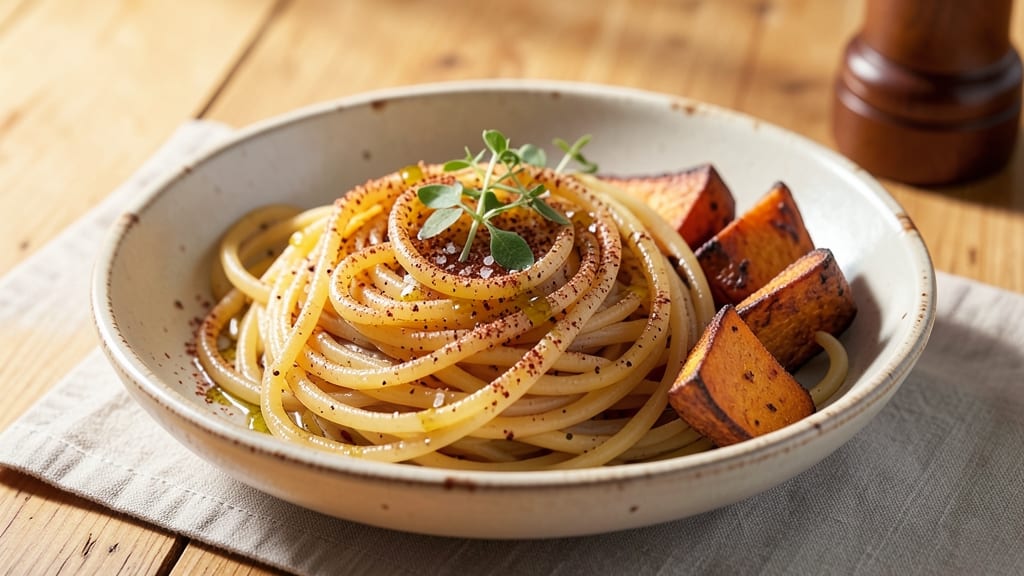
This spaghetti squash and sweet potato recipe transforms two humble vegetables into a showstopping side that rivals any pasta dish. 🌟 The secret lies in roasting them until caramelized and tender, creating strands that cling to sweet potato ribbons like nature’s own al dente noodles.
What makes this recipe special is its ability to stand alone as a vegetarian main or play supporting roles in casseroles and bowls.
The process is simpler than it sounds: halved squash roasts alongside cubed sweet potatoes, both bathed in olive oil, salt, and a touch of smoked paprika for depth. While they caramelize in the oven, the sweet potatoes break down into silky strands that intertwine with the squash’s delicate ribbons.
This method ensures maximum flavor extraction with minimal effort—no peeling, no boiling, just pure roasted goodness.
What you’ll end up with is a dish that’s naturally sweet, savory, and satisfying—perfect for those seeking a low-carb alternative to pasta. The caramelized edges add a touch of gourmet flair, while the natural sweetness of the sweet potatoes balances the earthy squash.
Serve it as a side, pile it over greens for a hearty bowl, or add protein like grilled chicken or chickpeas to turn it into a complete meal.
This recipe is also incredibly versatile: swap in maple syrup or cinnamon for a dessert twist, or toss with pesto and toasted pine nuts for a savory upgrade.
The possibilities are endless, but the base technique remains foolproof—ideal for weeknight dinners or meal prep. Ready to elevate your side dishes? Let’s get started.
Ingredients for spaghetti squash and sweet potato
Roasted vegetables with caramelized edges and silky strands—no pasta needed.
| Ingredient | Amount | Notes |
|---|---|---|
| Spaghetti Squash 🍠 | 1 medium | Halved lengthwise, seeds removed |
| Sweet Potatoes 🍠 | 2 medium | Cubed into 1-inch pieces |
| Extra-Virgin Olive Oil 🫒 | ¼ cup | High quality, fruity |
| Smoked Paprika 🌶️ | 1 tsp | For depth of flavor |
| Salt 🧂 | 1 ½ tsp | Diamond Crystal preferred |
| Black Pepper 🌶️ | ½ tsp | Freshly ground preferred |
| Garlic Cloves 🧄 | 2 cloves | Minced for seasoning |
| Maple Syrup 🍯 | 1 tbsp | Optional for sweetness |
| Fresh Rosemary 🌿 | ¼ cup | Chopped, stems removed |
| Fresh Thyme 🌿 | ¼ cup | Or 1 tsp dried thyme |
| Vegetable Broth 💧 | ½ cup | Low-sodium preferred |
| Lemon Juice 🍋 | 1 tbsp | Freshly squeezed |
| Pine Nuts 🥜 | ¼ cup | Toasted for garnish (optional) |
The spaghetti squash and sweet potatoes are the stars here. Medium-sized squash roasts perfectly for 4 servings—any larger and you'll end up with too much. For sweet potatoes, orange-fleshed varieties like Jewel or Garnet work best. I always grab mine from the produce section at Whole Foods when they're in season, but regular grocery stores carry them year-round. Look for firm, unblemished potatoes—they'll caramelize better. The squash? No need to peel—just halve and scoop out the seeds before roasting. If you're short on time, pre-cut squash from the store works too, but fresh is always better.
No smoked paprika? Regular paprika plus a pinch of liquid smoke gets you close. Fresh rosemary and thyme are ideal, but dried works at one-third the amount. Want to skip the nuts? Toasted sunflower seeds add crunch without the expense. The maple syrup is optional but adds a nice caramel note—Grade B has more flavor than Grade A. For extra richness, toss in 1 tbsp tahini after roasting. The vegetable broth adds moisture if the sweet potatoes seem too dry, but it's not strictly necessary. If you're making this ahead, roast the squash and potatoes separately first, then combine later to prevent sogginess.
Roasted squash and sweet potatoes keep beautifully in the fridge for 4-5 days if stored separately. For longer storage, freeze the cubed sweet potatoes for up to 3 months—they reheat perfectly. The squash strands get mushy when frozen, so I don't recommend freezing it. To reheat, spread portions on a baking sheet and warm at 350°F for 10 minutes. For meal prep, portion into containers with a drizzle of olive oil—they'll stay fresh for 3 days. Garnish with fresh herbs or toasted nuts right before serving to keep everything vibrant.
Why You'll Love This Recipe
- One-Pan Magic: I swear by this—just roast the squash and sweet potatoes together, toss in that smoky paprika, and you’ve got a hands-off meal. No chopping boards to clean, no extra pans, and the oven does all the work while you sip your coffee.
- Sweet & Smoky Crunch: That caramelized sweet potato meets the tender spaghetti squash strands—it’s like a hug for your taste buds. The smoked paprika gives it this deep, earthy warmth that makes it way more exciting than plain roasted veggies.
- Meal Prep MVP: Between us, this is my go-to for lunches all week. The flavors only get better as it sits, and reheating? Just a quick zap in the microwave or oven. I pack it in containers with a drizzle of olive oil—zero fuss, maximum satisfaction.
- Budget-Friendly Flex: Spaghetti squash and sweet potatoes are the unsung heroes of affordable eating. They stretch further than pasta, fill you up like crazy, and the olive oil and paprika keep costs low. Honestly, it’s the kind of dish that makes me feel like I’m feeding a crowd without breaking the bank.
Step-by-step instructions for roasted spaghetti squash and sweet potatoes
Transform humble squash and sweet potatoes into caramelized, silky strands with rich herbal notes.
🔥 Step 1: Roast the Sweet Potatoes to Perfection
Preheat your oven to 425°F and line two baking sheets with parchment paper. Toss the 2 medium cubed sweet potatoes with 2 tablespoons of the extra-virgin olive oil, ½ teaspoon of the smoked paprika, ½ teaspoon of the salt, and ¼ teaspoon of the black pepper. Spread them in a single layer—don't crowd the pan.
Roast for 20-25 minutes until the edges are deep golden brown and the cubes are tender when pierced with a fork. Real talk: if they're browning too quickly, move them to a different oven rack. You want caramelization, not charring. Remove and set aside—these will be our flavor base later.
🍳 Step 2: Roast the Spaghetti Squash Until Tender
Place the halved spaghetti squash (cut-side down) on the same baking sheets. Drizzle with 2 tablespoons of the remaining extra-virgin olive oil and sprinkle with the remaining ½ teaspoon smoked paprika and ½ teaspoon salt. Return to the oven and roast for 30-35 minutes until the flesh is fork-tender and the skin is slightly charred in spots.
Here's the thing—spaghetti squash is done when it yields to gentle pressure. If you press a fork into the thickest part and it slides in easily with minimal resistance, it's ready. Let it cool for 10 minutes before scraping—this prevents the strands from breaking apart.
👨🍳 Step 3: Create the Herb Broth Mixture
While the squash roasts, heat ½ cup vegetable broth in a small saucepan over medium heat. Add the 2 cloves minced garlic, ¼ cup chopped fresh rosemary, and ¼ cup chopped fresh thyme. Simmer for 5 minutes until fragrant, then stir in the 1 tablespoon maple syrup and 1 tablespoon lemon juice. Remove from heat and set aside.
This herb broth is where the magic happens—it infuses the squash strands with bright, aromatic depth. Don't skip the lemon juice; it cuts through the richness of the sweet potatoes and adds a refreshing note. Taste it now—it should be vibrant and slightly sweet with herbal complexity.
🥘 Step 4: Assemble and Finish with Roasted Sweet Potatoes
Use a fork to scrape the roasted spaghetti squash into strands, leaving about 1 tablespoon of the herb broth in the cavity. Transfer the strands to a large bowl and add the roasted sweet potatoes. Pour the remaining herb broth over everything and gently toss to combine.
Here's where it gets fun—taste and adjust seasoning. You might need another pinch of salt or a splash more lemon juice to balance the sweetness. The mixture should be vibrant, with caramelized sweet potato pieces nestled among the silky squash strands. If it's too dry, add 1 tablespoon water to loosen.
🔪 Step 5: Garnish and Serve Warm
Transfer the mixture to serving plates and garnish with ¼ cup toasted pine nuts (toast them in a dry skillet over medium heat for 2-3 minutes until golden). The pine nuts add a satisfying crunch that contrasts beautifully with the silky squash and tender sweet potatoes.
Serve immediately while warm. Each bite should deliver a perfect balance of caramelized sweetness from the potatoes, herbal brightness from the broth, and that satisfying "spaghetti" texture from the squash. The pine nuts add a nutty finish that elevates the whole dish. Don't wait too long to eat—this dish tastes best fresh out of the oven.
Pro Tips For Making Spaghetti Squash And Sweet Potato
- CUT SQUASH IN HALF BEFORE ROASTING: I learned this the hard way—skipping this step means uneven cooking and a squash that’s still rock-hard in the middle. Use a sharp chef’s knife and slice lengthwise (not crosswise) so the flesh separates into strands easily. If your knife’s dull, you’ll fight the squash instead of the heat.
- SALT SWEET POTATOES BEFORE CUBING: Sounds weird, but it works: Toss whole sweet potatoes with ½ teaspoon salt and 1 tablespoon olive oil before cutting. The salt breaks down the starches, so they caramelize faster and don’t turn to mush. (Yes, even if you’re impatient like me.)
- ROAST AT 400°F, NOT HIGHER: After burning three batches, I finally figured out: Spaghetti squash and sweet potatoes need steady, even heat. Cranking the oven to 425°F gives you crispy edges and pale centers—400°F guarantees tender strands and golden cubes without watching like a hawk.
- UPGRADE WITH GARLIC AND CHILI: This isn’t the prettiest method, but it’s the tastiest: Toss the roasted squash and sweet potatoes with 1 minced garlic clove and a pinch of red chili flakes while still hot. The residual heat blooms the garlic instantly—no waiting, no raw flavor. (Your future self will thank you.)
Wine and beer pairings for these flavors
White Wine Pairings
For this dish, I reach for dry Riesling—its crisp acidity and subtle honeyed notes complement the caramelized sweet potatoes beautifully. A German or Alsace Riesling (like Dr. Loosen Blue Slate) balances the dish's natural sweetness without clashing.
The wine's mineral finish also enhances the herbal notes from rosemary and thyme. 🍷
Red Wine Options
A Pinot Noir from Oregon or Burgundy works surprisingly well, especially if you've added a touch of smoked paprika to the dish. Look for a light-bodied example with red fruit notes—like Domaine Serene Pinot Noir—that won't overpower the delicate squash strands.
The wine's earthy undertones mirror the roasted vegetables' depth.
Beer Pairings
For beer lovers, a crisp American lager like Corona Extra or Heineken cleanses the palate between bites. The light malt sweetness pairs perfectly with the caramelized sweet potatoes. If you prefer something bolder, try a Belgian witbier like Hoegaarden—its citrusy peel and coriander notes brighten the dish's richness.
Non-Alcoholic Options
Sparkling ginger beer (like Feather's Ginger Beer) adds a refreshing zing that cuts through the dish's sweetness. For something more substantial, try an unsweetened iced tea with lemon—it enhances the herbal flavors while keeping the meal light.
A splash of coconut water adds a subtle tropical note that works surprisingly well. 💛
Dessert Wine Finish
If you're serving this as a main course, finish with a dry Moscato d'Asti—its light effervescence and peach notes complement the caramelized sweet potatoes.
For a richer option, a tawny Port (like Graham's 10-Year-Old) pairs beautifully with the dish's herbal complexity, especially if you've added maple syrup to the recipe.
Nutrition facts
Frequently asked questions
Can I use regular potatoes instead of sweet potatoes?
While you can substitute regular potatoes, the flavor and texture won't be the same. Sweet potatoes add natural sweetness and creaminess that regular potatoes lack. If you must substitute, try Yukon Gold potatoes for a slightly sweeter option, but expect less caramelization. The dish will still work, but the flavor profile changes significantly.
How do I prevent the spaghetti squash strands from turning mushy?
Roast the squash until just fork-tender (about 30-35 minutes at 425°F) and let it cool for 10 minutes before scraping. Overcooking or scraping immediately releases excess moisture, making strands mushy. For extra firmness, toss the finished strands with 1 tablespoon lemon juice—it helps set the texture.
Can I make this dish ahead of time?
Roast the sweet potatoes and spaghetti squash separately, then store them in airtight containers in the fridge for 4-5 days. Reheat in the oven at 350°F for 10 minutes before combining with the herb broth. The squash strands will be softer when reheated, but still delicious. For best results, assemble and serve immediately after reheating.
What's the best way to add protein to this dish?
Grill or bake chicken breast (seasoned with smoked paprika and garlic) and serve alongside, or stir in cooked chickpeas for a vegetarian option. For extra richness, top with crumbled feta cheese or toasted pecans. The dish works perfectly as a base for hearty bowls or wraps—just keep the protein portion separate until serving.
Why does my sweet potato taste bland?
Sweet potatoes need proper roasting time and seasoning. Ensure they're roasted until edges are deep golden brown (not just soft). Taste before combining with squash and adjust with extra smoked paprika, salt, or a splash of maple syrup. The herb broth adds depth—don't skip the rosemary and thyme! If still bland, add a pinch of cayenne pepper for warmth.