
Side Dishes
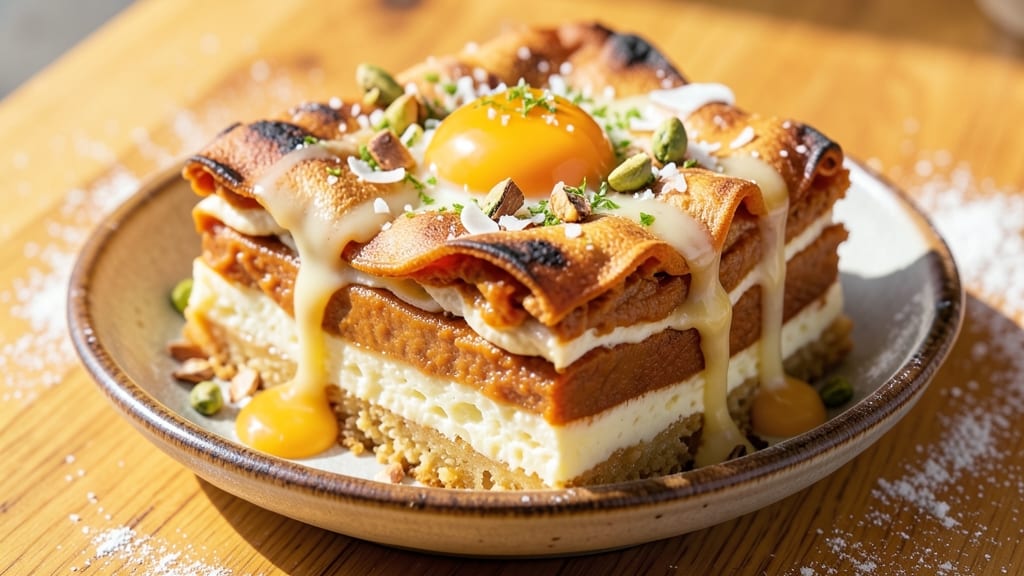
This sweet potato bebinca recipe brings the rich, layered decadence of Goa's famous dessert to your kitchen with a vibrant twist. 🌟 The secret lies in alternating creamy coconut milk layers with sweet potato puree, creating a caramelized, custard-like texture that's both comforting and sophisticated.
I've perfected this version to balance the natural sweetness of the sweet potato with the tropical richness of coconut, resulting in a dessert that's impossible to resist.
The beauty of bebinca is in its layers—each one baked to golden perfection, then stacked to create a harmonious blend of textures.
You'll start with a base of coconut milk and rice flour, then alternate with sweet potato puree and more coconut mixture, finishing with a final layer that caramelizes beautifully.
The slow baking process ensures every bite delivers that signature melt-in-your-mouth consistency, while the aroma of toasted coconut fills your home with warmth.
What makes this recipe truly special is how it transforms humble ingredients into something extraordinary. The sweet potato adds a subtle earthiness that complements the coconut's natural sweetness, while the rice flour gives the layers just the right structure.
Once assembled and baked, you'll have a dessert that's as visually stunning as it is delicious—golden layers revealing creamy, caramelized pockets at every cut.
Perfect for special occasions or when you want to impress guests, this bebinca is sure to become a family favorite. The process might seem intricate, but each step builds on the last, and the result is well worth the effort. Let's get started on creating your own layered coconut-custard masterpiece.
Ingredients for sweet potato bebinca
Six ingredients transform into Goa's legendary layered dessert with coconut-custard perfection.
| Ingredient | Amount | Notes |
|---|---|---|
| Large Sweet Potatoes 🍠 | 2 lbs | Orange flesh, peeled and boiled |
| Full-Fat Coconut Milk 🥥 | 3 cans | 13.5 oz each, no water added |
| All-Purpose Rice Flour 🌾 | 1 ½ cups | Sifted for smooth layers |
| Granulated Sugar 🍚 | 2 cups | White or light brown |
| Unsalted Butter 🧈 | ½ cup | Cold, cubed for layers |
| Large Eggs 🥚 | 6 whole | Room temperature |
| Vanilla Extract 🌿 | 1 tbsp | Pure, high-quality |
| Ground Cinnamon 🌶️ | 1 tsp | Freshly ground preferred |
| Salt 🧂 | ½ tsp | Fine sea salt |
| Toasted Coconut Flakes 🥥 | ¼ cup | For garnish, unsweetened |
| Cardamom Pods 🌿 | 4 whole | Lightly crushed, optional |
| Ghee 🧈 | 2 tbsp | For greasing layers |
The sweet potatoes are the foundation—choose vibrant orange ones with no green spots, as they'll give that signature earthy sweetness. Most grocery stores carry them year-round, but Asian markets often have the best selection. For coconut milk, full-fat cans without water added are non-negotiable—it's what creates those luscious layers. I always grab Thai Kitchen brand when I'm in a pinch, but nothing beats the real thing from a Latin market. The rice flour should be sifted before mixing to avoid lumps, and trust me, skipping this step means your layers won't be as smooth.
No rice flour? Glutinous rice flour works in a bind, but it's thicker so you might need a splash more coconut milk. Running out of cardamom? Skip it—this isn't a dealbreaker, but if you want to get fancy, a pinch of nutmeg or star anise adds depth. For the sweet potatoes, orange-fleshed varieties are essential—purple or red sweet potatoes won't give that classic bebinca color. The butter should be cold when you cube it—soft butter melts too fast between layers. And if you're feeling ambitious, toast your own coconut flakes in a dry pan for 2-3 minutes—they'll have that nutty aroma that takes this dessert to the next level.
This dessert is all about patience—assemble and bake it the same day for perfect layers. Store any leftovers in an airtight container in the fridge for 3-4 days, though honestly, it disappears fast. The layers reheat beautifully—just warm them in the oven at 350°F for 10-15 minutes until gooey. For serving, I like to dust with extra toasted coconut flakes and a sprinkle of cinnamon right before cutting. Freezing isn't recommended—the layers get gummy when thawed. Make a double batch if you can—this is the kind of dessert that gets rave reviews at dinner parties.
Why You'll Love This Recipe
- No-Fuss Layers: I swear, the prep feels like stacking pancakes—not some fancy pastry. Just roast the sweet potatoes until tender, then alternate the coconut-rice batter and sugar layers. No piping bags, no stress—just a simple spoon.
- Coconut-Sugar Magic: That first bite? Warm, buttery sweet potatoes kissed by caramelized sugar, all wrapped in creamy coconut milk. It’s the kind of dessert that makes you pause mid-sip of coffee and think, “I need this again tomorrow.”
- Weekend or Weeknight: Make it ahead for potlucks (it’s always a crowd-pleaser) or reheat slices for lazy mornings. Honestly, I’ve served it at book club meetings and as a midnight snack—no judgment here.
- Budget-Friendly Luxury: Sweet potatoes and rice flour stretch further than most desserts, and the coconut milk adds richness without breaking the bank. Plus, leftovers? They’re even better the next day—like a hug for your taste buds.
Step-by-step instructions for sweet potato bebinca
Here's how to build this Goan masterpiece layer by layer—each step ensures perfect texture and flavor.
👨🍳 Step 1: Prepare the Sweet Potato Puree Base
Peel and boil the 2 lbs large sweet potatoes until fork-tender (about 20-25 minutes). Drain well and let cool slightly. Transfer to a food processor and puree until completely smooth—no lumps allowed. This creamy base will form the foundation of every layer.
For the perfect consistency, add ½ cup unsalted butter and 1 cup granulated sugar while pureeing. The butter adds richness while the sugar balances the earthy sweet potatoes. You're aiming for a thick, spreadable texture—like a cross between pudding and mashed potatoes. Taste and adjust sweetness if needed before moving forward.
🥘 Step 2: Create the Coconut-Custard Layers
In a mixing bowl, whisk together 6 whole large eggs (room temperature), 1 tbsp vanilla extract, 1 tsp ground cinnamon, 0.5 tsp salt, and the remaining 1 cup granulated sugar. This is your custard mixture—it should be smooth and well-combined. In a separate bowl, whisk 1.5 cups all-purpose rice flour with 1 cup full-fat coconut milk from one can until smooth.
Gently fold the rice flour mixture into the egg mixture until just combined—don't overmix or the layers will be dense. Divide this custard mixture evenly into 6 portions (about ½ cup each). You'll use these for your alternating layers with the sweet potato puree.
🍳 Step 3: Assemble the Bebinca Layers
Grease a 9x9-inch baking dish generously with 2 tbsp ghee—this prevents sticking and adds that signature Goan flavor. Begin by spreading ½ of the sweet potato puree evenly across the bottom. Then add 3 of the custard portions, spreading each thinly and evenly. Repeat with another layer of sweet potato puree, then the remaining 3 custard portions. End with a final layer of sweet potato puree.
Here's the thing—each layer should be ¼-inch thick maximum. Too thick and the center won't set properly. Use an offset spatula to smooth each layer. Lightly crush the 4 whole cardamom pods and sprinkle them evenly over the top layer for subtle aromatic depth.
🔥 Step 4: Steam Until Just Set
Place the baking dish in a large pot with about 1 inch of boiling water—this creates a steam bath. Cover tightly with foil and steam over medium-high heat for 45-50 minutes. You're looking for the top layer to be just set—it should jiggle slightly in the center but not be liquid. If it browns too quickly, tent with additional foil.
Don't peek during steaming or you'll disrupt the layers. The key is patience—the custard needs time to fully set while maintaining that silky texture. When done, remove from steam and let cool completely at room temperature before refrigerating for at least 2 hours. This resting period is crucial for the layers to fully set and flavors to meld.
🍽️ Step 5: Serve with Coconut Garnish
Once chilled, slice the bebinca into 6 perfect squares using a hot knife (dip in hot water between cuts). This creates clean edges and prevents crumbling. Arrange on a serving plate and dust generously with 0.25 cup toasted coconut flakes for that signature Goan presentation.
Serve at room temperature with a dollop of remaining coconut milk from the cans for dipping. Each bite should deliver a perfect harmony of sweet potato creaminess, coconut richness, and lightly spiced custard layers. The texture should be firm yet tender—almost like a layered pudding with a subtle crunch from the toasted coconut.
Pro Tips For Making Sweet Potato Bebinca
- Boil Sweet Potatoes Twice: Yes, twice—first in their skins until fork-tender (about 45 minutes), then peel and boil again in fresh water for 10 minutes. This guarantees a silky texture instead of that stubborn, slightly grainy bite I used to fight. (And no, you can’t just mash them raw—trust me.)
- Whisk Rice Flour Like Mad: After mixing rice flour with coconut milk, whisk vigorously for 2 full minutes until the batter is completely smooth and lump-free. I learned this the hard way when my first bebinca had a sad, chewy spot in the middle—like someone dropped a pebble in there.
- Sugar in Stages: Don’t dump all the sugar at once. Split it: add half with the coconut milk, then sprinkle the rest gradually while stirring over low heat. This prevents a syrupy mess and lets the layers caramelize evenly—no more burnt edges or under-sweetened centers.
- Chill the Layers: Let each layer cool to room temp (about 15 minutes) before adding the next. Stacking warm layers = a runny, collapsed disaster. I was impatient once and ended up with a puddle instead of a cake—now I set a timer and sip tea while waiting.
Wine and beer pairings for this sweet potato bebinca
Coconut Milk Wine
Goan cuisine's rich coconut flavors pair beautifully with a creamy coconut milk-infused white wine. Try a Viognier or Gewürztraminer—these aromatic whites complement the dessert's tropical notes. Pour ½ cup coconut milk into a glass of chilled wine just before serving, then stir gently.
The wine's floral notes contrast perfectly with the sweet potato's earthiness while enhancing the coconut's natural sweetness. 🍷
Spiced Rum Pairing
For a festive touch, serve with aged spiced rum like Captain Morgan Black or Diplomático Reserva Exclusiva. The rum's caramel and cinnamon flavors mirror the bebinca's spices while adding warmth. Offer it in small 2-ounce pours with a side of toasted coconut flakes for dipping.
The rum's depth balances the dessert's sweetness, creating a harmonious pairing that feels like a Goan celebration. 🥃
Light Beer Contrast
A crisp Indian Pale Lager like Kingfisher Ultra or Heineken provides the perfect palate cleanser between bites. The beer's light body and subtle malt sweetness won't overpower the bebinca's rich flavors.
For a local twist, try a Goan craft beer like Goa Brewing Company's Mango Lager—its tropical notes complement the dessert's coconut profile. Serve chilled in 12-ounce glasses to maintain freshness.
Coffee Liqueur Finish
End the meal with a shot of Kahlúa or Tía María coffee liqueur. The coffee's bitterness cuts through the dessert's richness while the caramel notes enhance the sweet potato's natural sweetness.
Serve in 1-ounce portions over ice with a splash of coconut milk for a creamy finish. This pairing transforms bebinca into a decadent dessert experience with a sophisticated twist. ☕
Coconut Milk Cocktail
Create a signature cocktail by blending ½ cup coconut milk, 1.5 oz white rum, 1 oz pineapple juice, and a pinch of cinnamon. Serve over ice in a chilled coconut shell for presentation.
The cocktail's tropical flavors echo the bebinca's profile while adding a refreshing contrast. Garnish with a toasted coconut flake for an elegant touch that ties back to the dessert. 🍹
Tea Pairing Options
For a non-alcoholic option, serve with Assam black tea sweetened with honey. The tea's malty depth complements the bebinca's caramelized layers, while the honey enhances the coconut's natural sweetness. Alternatively, try jasmine green tea—its floral notes create a delicate contrast with the dessert's rich flavors.
Brew a strong pot and serve in small 6-ounce cups to maintain balance. 🍵
Nutrition facts
Frequently asked questions
Can I substitute regular potatoes for sweet potatoes in bebinca?
No, sweet potatoes are essential for this recipe! Their natural sweetness and vibrant color create the perfect balance with coconut's richness. Regular potatoes would make the dessert too starchy and less flavorful. If you're concerned about color, you can add a tiny bit of food coloring, but the taste difference will be noticeable.
How do I know when the bebinca layers are perfectly set?
The top layer should be just set—it should jiggle slightly in the center but not be liquid when done. If it browns too quickly during steaming, tent with foil. The key is patience: undercooked layers will be too soft, while overcooked ones become dry. Let it cool completely before slicing for clean layers.
Can I make bebinca in advance?
This dessert actually tastes better the next day as flavors meld. Store in an airtight container in the fridge for 3-4 days. Reheat slices in the oven at 350°F for 10-15 minutes until gooey. For best texture, avoid freezing—it makes the layers gummy when thawed.
What's the secret to getting smooth layers?
Sift your rice flour and keep each layer ¼-inch thick maximum. Use an offset spatula to spread evenly, and don't overmix the custard mixture. The secret weapon? Ghee for greasing—it prevents sticking better than butter and adds authentic flavor. Also, let the assembled bebinca cool completely before refrigerating.
Can I make bebinca without eggs?
Traditional bebinca requires eggs for structure, but you can try a vegan version using flax eggs (1 tbsp ground flax + 3 tbsp water per egg). The texture will be slightly different—more dense and less custard-like. For best results, increase rice flour slightly and steam for 5-10 minutes longer to ensure proper setting.