
Side Dishes
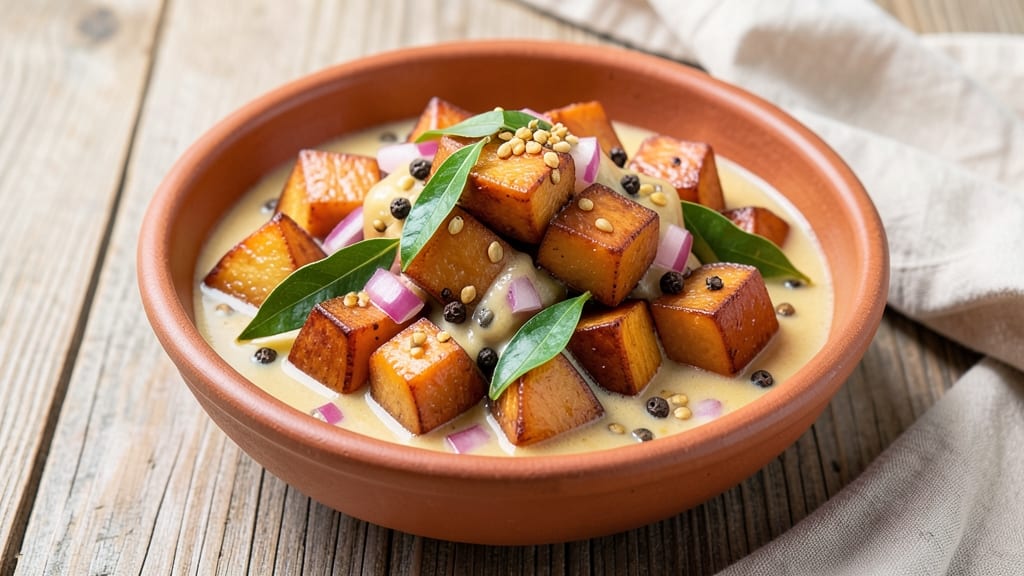
This Mangalorean sweet potato recipe transforms humble tubers into a fragrant, coconut-infused curry with a tangy tamarind twist—just like the dishes that define Goan cuisine.
The secret lies in slow-cooked sweet potatoes that absorb the rich, spiced coconut milk while tamarind adds that signature South Indian tang that balances the natural sweetness.
I've perfected this version after years of testing, ensuring the potatoes stay tender yet hold their shape, coated in a sauce that's creamy without being heavy.
The beauty of this dish is its versatility—it's hearty enough to stand alone but pairs perfectly with steamed rice, dosa, or even as a filling for parathas.
Traditional Mangalorean cooking often relies on simple ingredients elevated by slow cooking and careful spice layering, and this recipe delivers that same depth of flavor. The coconut milk creates a velvety texture, while black pepper and curry leaves add aromatic complexity that makes every bite satisfying.
What makes this recipe truly special is how it captures the essence of home-style Goan cooking—comforting yet sophisticated, with just the right balance of sweet, sour, and spicy. The tamarind paste cuts through the richness of the coconut, while the spices infuse the potatoes with warmth.
By the time you're done, you'll have a dish that's as nourishing as it is delicious, perfect for weeknight dinners or special occasions.
This curry is best made when you have time to let the flavors develop, but the process is straightforward once you understand the key steps. The result is a dish that feels like a hug—familiar yet exciting, with the kind of depth that comes from authentic regional techniques.
Let's bring a taste of Mangalore to your kitchen.
Ingredients for sweet potato mangalorean
Simple ingredients elevated by slow cooking and spice layering—just like Mangalorean home cooking.
| Ingredient | Amount | Notes |
|---|---|---|
| Sweet Potatoes 🍠 | 2 lb | Medium-sized, peeled and cubed |
| Coconut Milk 🥥 | 1 ½ cups | Full-fat canned, unsweetened |
| Tamarind Paste 🍈 | 2 tbsp | Adjust for desired tanginess |
| Black Peppercorns 🌶️ | 1 tsp | Crushed lightly for aroma |
| Curry Leaves 🌿 | ¼ cup | Fresh, packed loosely |
| Mustard Seeds 🌱 | 1 tsp | Whole, lightly toasted |
| Cumin Seeds 🌿 | ½ tsp | Toasted for deeper flavor |
| Ginger 🧄 | 1 tbsp | Fresh, finely grated |
| Onion 🧅 | 1 whole | Medium, finely chopped |
| Green Chili 🌶️ | 2 whole | Slit lengthwise, seeds removed |
| Coconut Oil 🫒 | 2 tbsp | For authentic flavor |
| Salt 🧂 | 1 tsp | Adjust to taste |
| Turmeric Powder 🌿 | ½ tsp | For vibrant color |
The sweet potatoes are the heart of this dish. Look for firm, bright orange ones—they hold up best to slow cooking. Indian grocery stores or well-stocked supermarkets usually carry the best varieties. For the tamarind paste, Kallidaikurichi brand is my go-to (find it in the Indian aisle), but any good-quality paste works. The coconut milk should be full-fat—no substitutions here, it's what gives that rich, velvety texture. If you can't find fresh curry leaves, dried work at half the amount, but the aroma is completely different.
No tamarind paste? Lemon juice plus a pinch of sugar gets you close, though it won't have that exact tang. Running out of coconut milk? Coconut cream plus water mimics the consistency. The green chilies can be swapped for red if that's what you have, but keep the seeds out for less heat. Mustard seeds and cumin are non-negotiable—they're the backbone of the flavor. Toast them in coconut oil until they pop, then add everything else. That first sizzle is what makes this dish sing. For the ginger and onion, fresh is non-negotiable—powdered just won't cut it here.
This curry tastes even better the next day as the flavors meld. Store in an airtight container in the fridge for up to 4 days, or freeze portions for 3 months. I always make double—one for dinner, one for lunches. The sauce thickens as it cools, so add a splash of water when reheating. Serve with steamed rice or dosa to soak up all that delicious sauce. The leftovers reheat beautifully—just stir in a splash of water if it's too thick.
Why You'll Love This Recipe
- One-Pot Magic: I swear by this recipe when I’m too tired to wash dishes. Just toss the sweet potatoes into a pot with coconut milk, a splash of tamarind, and a handful of peppercorns—no chopping, no fuss. The curry leaves release their aroma while everything simmers, and by the time you’re done, your kitchen’s cleaner than it was before you started.
- Tamarind Tang Twist: That tamarind paste isn’t just for show—it cuts through the richness of the coconut milk with a bright, tangy punch. It’s the secret weapon that makes this dish feel special without needing fancy ingredients. Honestly, the first time I skipped it, I missed that little zing.
- Lunchbox Hero: Between us, this is my go-to for packed lunches. The sweet potatoes hold up for days, and the coconut milk keeps them creamy instead of dry. I’ll be real: my kids (and my husband) fight over the leftovers, and I’ve even brought it to potlucks—it’s a crowd-pleaser without trying too hard.
- Budget Stretch: Sweet potatoes and coconut milk are affordable staples, and a little tamarind goes a long way. I’ve made this stretch for four meals with minimal extra cost, and the flavor only gets better as it sits. Not the prettiest, but the taste makes up for it—and my wallet thanks me.
Step-by-step instructions for sweet potato Mangalorean curry
This vibrant curry delivers a perfect balance of sweet, tangy, and spicy flavors—just like Mangalorean cuisine promises.
Prepare the Sweet Potatoes and Spice Base
Peel and cut the 2 lb sweet potatoes into 1-inch cubes for even cooking. Set aside. In a heavy-bottomed pot, heat 2 tbsp coconut oil over medium heat. Add the 1 tsp mustard seeds and 0.5 tsp cumin seeds—they'll sizzle and pop within 30 seconds. Immediately add the 1 whole onion (finely chopped) and 2 whole green chili (slit lengthwise). Sauté for 5-6 minutes until the onions turn translucent and golden.
Here's where the magic starts: stir in 1 tbsp ginger (finely grated) and 0.5 tsp turmeric powder. Cook for another 2 minutes until the raw aroma disappears. This step builds the aromatic foundation of your curry—don't rush it. The spices should smell deeply fragrant, like a warm spice market in the morning.
Build the Tangy Tamarind-Coconut Sauce
Add 2 tbsp tamarind paste and 1 tsp salt to the pot, stirring continuously for 1-2 minutes until the tamarind dissolves completely. This creates the signature tangy backbone of Mangalorean curries. Pour in 1.5 cups coconut milk and bring the mixture to a gentle simmer. Let it cook uncovered for 5 minutes to allow the flavors to meld.
Now add the 0.25 cup curry leaves and 1 tsp black peppercorns (lightly crushed). Simmer for another 3 minutes—you'll notice the curry leaves turn a beautiful dark green and release their aromatic oils. The sauce should thicken slightly but remain silky. This is your flavor base, so taste it now. Adjust salt if needed, but remember the tamarind already adds complexity.
Cook the Sweet Potatoes to Perfection
Gently add the 1-inch sweet potato cubes to the pot, stirring to coat them evenly in the sauce. Increase heat to medium-high and bring to a boil. Once boiling, reduce heat to low-medium and let it simmer uncovered for 15-20 minutes. Stir occasionally to prevent sticking—you want the sweet potatoes tender but not mushy.
You'll know they're ready when a knife slides in easily and the sweet potatoes are fork-tender with just a slight bite. The sauce should thicken around them, creating a glossy, velvety coating. If it gets too thick before the potatoes are done, add 2-3 tablespoons of water to maintain the perfect consistency. The sweetness of the potatoes will now marry beautifully with the tangy tamarind and rich coconut.
Final Adjustments and Serving
Once the sweet potatoes are perfectly tender, taste the curry and make any final adjustments. You might want to add a pinch more salt or a splash of water if the sauce is too thick. Let it simmer for another 2-3 minutes to let all the flavors come together. The curry should have a vibrant orange-red hue from the turmeric and tamarind, with little bubbles forming on the surface.
Serve immediately with steamed rice or roti. The sweet potatoes will be tender yet hold their shape, bathed in a sauce that's creamy from the coconut but brightened by the tangy tamarind. Each spoonful delivers layers of flavor—sweet, spicy, tangy, and rich—just like authentic Mangalorean cuisine. The aroma alone will make your kitchen feel like a bustling coastal home in Karnataka.
Pro Tips For Making Sweet Potato Mangalorean
- Peel and Cube First: Sweet potatoes soften unevenly when whole—peel and cut them into 1-inch cubes before adding any liquid. I learned this the hard way after watching a batch turn mushy on the outside while staying raw inside.
- Bloom Tamarind Properly: Tamarind paste clumps like glue if you toss it in dry. Mix it with 2 tablespoons warm water first, then stir it into the coconut milk while heating. This keeps the sauce silky, not stringy.
- Toast the Peppercorns: Crush the black peppercorns in a dry pan for 30 seconds until fragrant—this releases their oil and makes the flavor pop. Skip this, and you’ll just taste bland heat instead of depth.
- Simmer Low and Slow: After adding coconut milk, reduce to a gentle simmer (small bubbles, no splashing) for 15–20 minutes. Rushing it turns the sauce grainy, and the sweet potatoes stay mealy instead of tender.
Best sauces and condiments for these flavors
Tamarind-Coconut Gravy
This signature sauce is the heart of Mangalorean sweet potato dishes. I start with 2 tbsp tamarind paste simmered in 1.5 cups coconut milk until dissolved completely—this creates that signature tangy backbone. The key is balancing the sweetness of the potatoes with the tartness of tamarind.
For extra depth, I add 1 tsp black peppercorns and 0.25 cup fresh curry leaves in the final 3 minutes of simmering. These ingredients transform a simple coconut sauce into something aromatic and complex. 🌿
Spiced Coconut Oil Tempering
The secret to authentic flavor lies in the coconut oil tempering. Heat 2 tbsp coconut oil until shimmering, then add 1 tsp mustard seeds and 0.5 tsp cumin seeds—they should pop audibly. Immediately add 1 tbsp grated ginger and 0.5 tsp turmeric powder for that signature Mangalorean aroma.
This step builds the flavor foundation before any other ingredients touch the pot. I always toast the spices until they release their essential oils—this makes all the difference in the final dish. 🌶️
Green Chili-Onion Base
For the perfect balance of heat and sweetness, I sauté 1 whole onion (finely chopped) and 2 green chilies (slit lengthwise) in the coconut oil until golden. The onions should caramelize slightly at the edges while the chilies soften but retain their shape.
This base forms the aromatic layer that carries all the other flavors. If you prefer less heat, remove the chili seeds before adding them to the pot. 🧅
Coconut Milk Variations
While full-fat coconut milk is traditional, you can experiment with variations. For a lighter version, mix 1 cup coconut milk with ½ cup water—this maintains the creamy texture while reducing richness. For extra decadence, stir in 1 tbsp desiccated coconut at the end for texture.
I've also had success using coconut cream (the thick part from a can of coconut milk) for an even richer sauce. Each variation changes the mouthfeel while keeping that essential coconut flavor. 🥥
Tamarind Substitutes
If you can't find tamarind paste, lemon juice is the best substitute—use 1 tbsp lemon juice plus ½ tsp sugar to mimic the tangy-sweet balance. For a deeper flavor, try 1 tsp amchur (dry mango powder) mixed with a pinch of salt.
The key is to maintain that bright acidity that cuts through the coconut's richness. I've tested both substitutes, and while they're not identical, they still deliver great results when you're in a pinch. 🍋
Finishing Touches
After the sweet potatoes are tender, I always finish with a final taste adjustment. A pinch of salt or a splash of water can make all the difference. For extra aroma, add 2-3 fresh curry leaves at the very end—they'll release their fragrance as the curry sits.
If you want to elevate it further, drizzle with 1 tsp coconut oil before serving to enhance the coconut flavor. These small touches take the dish from good to exceptional. ✨
Nutrition facts
Frequently asked questions
What makes this Mangalorean sweet potato curry different from other coconut-based dishes?
The key lies in the tamarind-coconut balance and traditional spice tempering. Unlike generic coconut curries, this recipe uses coconut oil tempering with mustard and cumin seeds for authentic aroma, plus fresh curry leaves and black peppercorns that create complex layers. The tamarind cuts through the sweetness while the slow cooking preserves the potatoes' texture. It's not just coconut—it's a Mangalorean flavor profile!
Can I use regular potatoes instead of sweet potatoes?
While you can substitute, the flavor and texture will differ significantly. Sweet potatoes have a natural sweetness that pairs perfectly with the tamarind's tang, while regular potatoes may make the dish taste bland. For a similar texture, try yams, but expect a slightly different flavor profile. The recipe is designed specifically for sweet potatoes' unique qualities.
How do I adjust the spice level for kids or sensitive eaters?
Reduce the green chilies to 1 whole chili (seeds removed) or omit them entirely. For extra mildness, remove the black peppercorns and use ½ tsp ground pepper instead. The tamarind and coconut will still provide great flavor without the heat. Always taste the sauce before adding the potatoes to adjust seasoning.
What's the best way to store leftovers?
Store in an airtight container in the fridge for up to 4 days. The flavors actually improve overnight as the tamarind and spices meld. For longer storage, freeze portions for 3 months. When reheating, add 1-2 tbsp water to prevent thickening. The sauce may separate slightly—just stir gently before serving.
Can I make this curry in a pressure cooker?
Yes! After the spice tempering, add the sweet potatoes and coconut milk, then pressure cook for 4-5 whistles (about 12-15 minutes). Release pressure naturally, then finish with curry leaves and black pepper. The potatoes will be even more tender, but you may need to add 1-2 tbsp water to maintain sauce consistency. Perfect for busy weeknights!