
Side Dishes
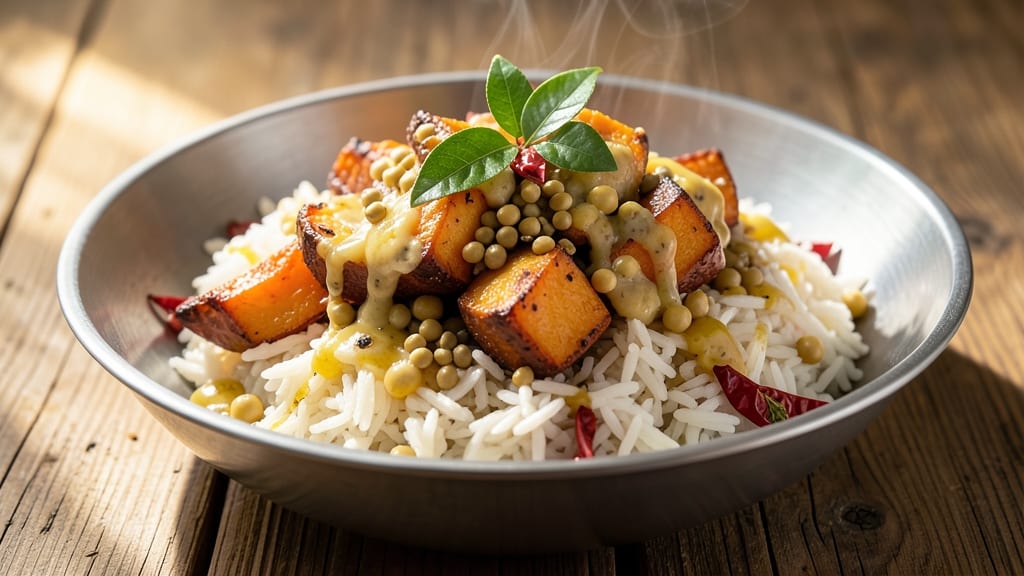
This sweet potato pulusu recipe brings the vibrant flavors of South India to your kitchen, transforming humble ingredients into a fragrant, spiced lentil-rice dish with tender sweet potatoes. 🌟 The dish is traditionally served during festivals and family gatherings, where its aromatic tempering of mustard seeds, curry leaves, and dried spices creates a symphony of flavors that lingers long after the first bite.
The beauty of pulusu lies in its simplicity—just a few key ingredients like rice, lentils, sweet potatoes, and a carefully balanced blend of spices create a dish that’s both comforting and nutritious.
The mustard crunch adds a textural contrast that elevates every spoonful, making it a standout side dish for any meal. What makes this recipe special is the way the spices bloom in the hot oil, infusing the dish with warmth and depth.
By the time you serve this dish, your kitchen will be filled with the intoxicating aroma of tempered spices, and your table will be adorned with golden-brown sweet potatoes, fluffy rice, and lentils that melt in your mouth.
The dish pairs perfectly with coconut chutney or a dollop of yogurt, adding a refreshing contrast to the rich, spiced flavors. It’s the kind of recipe that feels like a hug in every bite.
Whether you're preparing it for a festive occasion or a simple family dinner, this sweet potato pulusu is sure to impress. The process is straightforward, and the results are always rewarding. Let’s get started on creating this beloved South Indian classic in your own kitchen.
Ingredients for sweet potato pulusu
Sweet potatoes, fragrant rice, and aromatic lentils create this South Indian masterpiece.
| Ingredient | Amount | Notes |
|---|---|---|
| Sweet Potatoes 🍠 | 2 lbs | Medium-sized, peeled and cubed |
| Long-Grain White Rice 🍚 | 1 cup | Uncooked, washed and drained |
| Yellow Lentils (Moong Dal) 🌱 | ½ cup | Split, rinsed well |
| Mustard Seeds 🌿 | 1 tbsp | Whole, for tempering |
| Curry Leaves 🌿 | ¼ cup | Fresh, packed |
| Dried Red Chilies 🌶️ | 2 whole | Split, adjust for heat |
| Asafoetida (Hing) 🧂 | ⅛ tsp | Pinch for aroma |
| Cumin Seeds 🌿 | ½ tsp | Toasted lightly |
| Turmeric Powder 🧂 | ¼ tsp | Freshly ground preferred |
| Coriander Powder 🌿 | ½ tsp | Freshly ground for best flavor |
| Garam Masala Powder 🌶️ | ¼ tsp | Homemade or store-bought |
| Vegetable Oil 🫒 | ½ cup | For frying, high smoke point |
| Salt 🧂 | 1 tsp | Adjust to taste |
| Fresh Cilantro 🌿 | ¼ cup | Chopped, for garnish |
The sweet potatoes are the star here—orange-fleshed varieties like Jewel or Beauregard work best, giving that signature sweetness. I always grab mine from the produce section at Whole Foods or my local Indian grocery, where they're usually sold pre-peeled for convenience. For the lentils, yellow moong dal is traditional, but you can swap in toor dal or masoor dal if that's what you've got. The mustard seeds? Black mustard seeds add the best crunch, but white mustard seeds work too if you're in a pinch. Just toast them until they pop—that sound is music to my ears.
No curry leaves? Fresh cilantro or basil can stand in, though the flavor won't be identical. Running low on garam masala? Mix equal parts cinnamon, cardamom, cloves, and black pepper for a homemade version. The asafoetida (hing) is non-negotiable for that umami depth—it's the secret weapon in South Indian cooking. Indian grocery stores usually have it in tiny jars, or you can find it online if you're not near one. For the oil, coconut oil or ghee adds a lovely aroma, but vegetable oil works perfectly fine for frying. Just make sure it's hot enough before adding the potatoes—they should sizzle immediately.
The sweet potatoes keep best in the fridge for 3-4 days once peeled, so peel them just before cooking if you're not using them right away. The cooked rice and lentil mixture stays fresh for 2 days in the fridge, but I always make extra because it reheats beautifully. For the fritters, freeze them on a tray first before transferring to a bag—this way you can pop them straight into the pan from frozen. They're best served warm, so keep them covered in a warm oven if you're making a big batch for a gathering.
Why You'll Love This Recipe
- One-Pot Magic: I swear by this recipe—just toss everything into one pot, and it handles the rest. No chopping, no fussing, no extra bowls. The rice, dal, and sweet potatoes all cook together, soaking up flavors while you sip your tea.
- Creamy Crunch Contrast: That caramelized sweet potato paired with tender moong dal? Pure satisfaction. The mustard seeds and curry leaves add a little spark, while the rice soaks up the broth like a dream. (Yes, even my picky husband finishes his plate.)
- Meal Prep MVP: Make a big batch on Sunday, and you’ve got lunch sorted for the week. The flavors actually improve overnight—better than takeout, cheaper than delivery, and zero effort on busy mornings. Just reheat and enjoy.
- Budget-Friendly Feast: Sweet potatoes and rice stretch forever, and moong dal is a pantry staple. Honestly, this feeds four for under $5, and leftovers taste just as good the next day. My wallet and my taste buds thank me.
Step-by-step instructions for sweet potato pulusu
Here's how to make these crispy, spiced potato fritters with that signature mustard crunch.
🍳 Step 1: Cook the Sweet Potatoes Until Tender
Peel and cube the 2 lbs sweet potatoes into even ½-inch pieces. Boil them in salted water for 12-15 minutes until they're fork-tender but still hold their shape. You'll know they're ready when you can pierce them easily with a fork but they don't fall apart.
Drain immediately and let them cool for 5 minutes before handling. This cooling step prevents the potatoes from releasing excess moisture when you mix them with the other ingredients. I like to spread them on a clean kitchen towel to absorb any remaining surface water.
👨🍳 Step 2: Prepare the Spiced Rice-Lentil Mixture
In a large bowl, combine the 1 cup cooked long-grain white rice (cooked separately), 0.5 cup cooked yellow lentils (moong dal), 0.25 tsp turmeric powder, 0.5 tsp coriander powder, 0.25 tsp garam masala powder, and 1 tsp salt. Mix gently but thoroughly to distribute the spices evenly.
Add the cooled sweet potatoes to the rice-lentil mixture and combine with your hands until everything is well incorporated. The texture should be slightly sticky but still hold together when pressed. If it feels too dry, add 1 teaspoon water at a time until it reaches the perfect consistency for shaping.
🔥 Step 3: Create the Mustard Tempering
Heat 0.25 cup vegetable oil in a small pan over medium heat. Add the 0.5 tsp toasted cumin seeds and let them sizzle for 30 seconds until fragrant. Add the 1 tbsp mustard seeds and cook for another 1 minute until they begin to pop.
Add the 2 split dried red chilies and 0.25 cup curry leaves, cooking for 30 seconds until the leaves turn bright green and the chilies darken slightly. Finally, add the 0.125 tsp asafoetida (hing) and stir for 10 seconds—this releases its distinctive aroma that's key to authentic pulusu flavor.
🥘 Step 4: Shape and Fry the Pulusu
Pour the hot tempering oil over the potato mixture and mix well to coat all the ingredients. Let the mixture cool for 10 minutes—this helps the flavors meld and makes shaping easier. Shape the mixture into 1-inch diameter balls, pressing gently to form firm patties.
Heat 0.25 cup vegetable oil in a heavy skillet over medium heat until it reaches 350°F. Fry the pulusu in batches, turning once, for 3-4 minutes per side until they're golden brown and crispy. Don't overcrowd the pan or they'll steam instead of crisp up.
🍽️ Step 5: Serve Warm with Fresh Cilantro
Transfer the fried pulusu to a paper towel-lined plate to drain excess oil. Sprinkle with 0.25 cup chopped fresh cilantro just before serving. These fritters are best enjoyed warm when the exterior is still crispy and the interior maintains its soft, spiced texture.
Serve immediately with coconut chutney or tamarind sauce for that perfect South Indian street food experience. The mustard seeds will pop in your mouth with each bite, while the sweet potatoes add natural sweetness that balances the spices beautifully.
Pro Tips For Making Sweet Potato Pulusu
- Boil Sweet Potatoes Halfway: Cut them into 1-inch cubes and boil for 8-10 minutes until they’re just tender when pierced with a knife—overcooking turns them mushy in the final dish. I learned this the hard way after making a batch where the potatoes fell apart like wet paper.
- Temper Mustard Seeds Low: Start with medium heat when adding mustard seeds—they’ll pop aggressively and splatter like tiny fireworks. Drop the heat to low immediately after the first crackle to avoid a greasy mess. (Yes, even if you’re impatient like me.)
- Rinse Moong Dal Twice: Give those yellow lentils a thorough rinse in cold water, then drain and repeat—this removes excess starch that makes the dal gummy. My grandmother swore by this, and she was right: the texture stays light and fluffy, not gluey.
- Cook Rice Separately: Skip mixing rice with the dal at the end—cook it separately and fluff it just before serving. The rice absorbs flavors better this way, and you avoid the dreaded "pulusu soup" texture that happens when everything gets soggy together. (Your future self will thank you.)
Troubleshooting this dish
Potatoes Too Soft?
If your sweet potatoes turn mushy during boiling, reduce the cook time by 2-3 minutes—they should be tender but still hold their shape. I’ve found that Jewel sweet potatoes from the store hold up better than some organic varieties.
For extra firmness, add ½ tsp lemon juice to the boiling water—it helps preserve texture. Drain immediately and shock in cold water for 30 seconds to stop cooking.
Dry, Crumbly Mixture
When combining rice, lentils, and sweet potatoes, the mixture might feel too dry if the potatoes release too much moisture. Add 1 tsp water at a time until it holds together when pressed.
I like to mash the potatoes slightly with a fork before mixing—this helps bind the ingredients better. If it’s still crumbly, add ½ tsp yogurt to improve cohesion for shaping.
Mustard Not Popping?
The mustard seeds should sizzle and pop loudly when tempering—if they’re quiet, your oil isn’t hot enough. Heat the oil to 325-350°F before adding seeds. I use a thermometer for precision, but if you don’t have one, test with a pinch of flour: it should sizzle immediately.
For extra crunch, add ½ tsp poppy seeds with the mustard—they’ll toast beautifully alongside.
Pulusu Not Crispy?
Overcrowding the pan is the #1 reason for soggy pulusu. Fry in small batches of 2-3 at a time, and keep the oil at 350°F consistently. If they brown too quickly but stay soft inside, your oil is too hot—reduce heat to medium-low.
For extra crispiness, pat the shaped pulusu dry with a paper towel before frying to remove excess moisture.
Spices Too Mild?
If the flavors feel underwhelming, adjust the tempering: add 1 extra dried chili or ¼ tsp black pepper with the mustard seeds. For depth, toast the cumin seeds for 1 extra minute until they darken slightly.
I also recommend adding ½ tsp fennel seeds with the cumin—they add a subtle sweetness that complements the sweet potatoes beautifully.
Fritters Falling Apart?
If your pulusu crumbles when frying, the mixture wasn’t cohesive enough. Bind it better by adding 1 tbsp cornstarch to the rice-lentil mix before shaping. For extra strength, chill the mixture for 15 minutes in the fridge before frying—this firms up the texture.
Press the patties firmly when shaping, and avoid overmixing the batter to keep them intact.
Nutrition facts
Frequently asked questions
Can I use regular potatoes instead of sweet potatoes?
While you can substitute regular potatoes, the dish loses its signature sweetness and vibrant color. Sweet potatoes add natural caramelization when fried, creating a perfect balance with the spiced lentils. If you must use regular potatoes, choose waxy varieties like Yukon Gold for better texture, but expect a slightly different flavor profile.
How do I make this recipe gluten-free?
This recipe is naturally gluten-free as long as you use gluten-free rice and lentils. For extra binding, add 1 tbsp gluten-free cornstarch or ½ tsp xanthan gum to the mixture if it feels too crumbly. Always check your spice blends for hidden gluten if you're highly sensitive.
What's the best way to store leftover pulusu?
Store fried pulusu in an airtight container in the fridge for up to 3 days. Reheat in a dry skillet over medium heat for 2-3 minutes to restore crispiness. For longer storage, freeze them on a tray first, then transfer to a bag for up to 1 month. Thaw overnight in the fridge before reheating.
Can I make this dish without mustard seeds?
Yes, but you'll miss the signature crunch and aroma. Replace mustard seeds with 1 tbsp sesame seeds for nutty flavor, or 1 tsp nigella seeds (kalonji) for a similar popping texture. The dish will still be delicious but will have a different texture profile.
What's the difference between pulusu and other South Indian fritters?
Pulusu is unique because it combines cooked rice, lentils, and vegetables in a spiced mixture that's shaped and fried. Unlike medu vada (fermented lentil fritters) or kothu parotta (shredded paratha fritters), pulusu uses a softer, more cohesive batter that creates a tender interior with crispy edges. The mustard tempering is also what sets it apart from other fried snacks.