
Soups & Stews
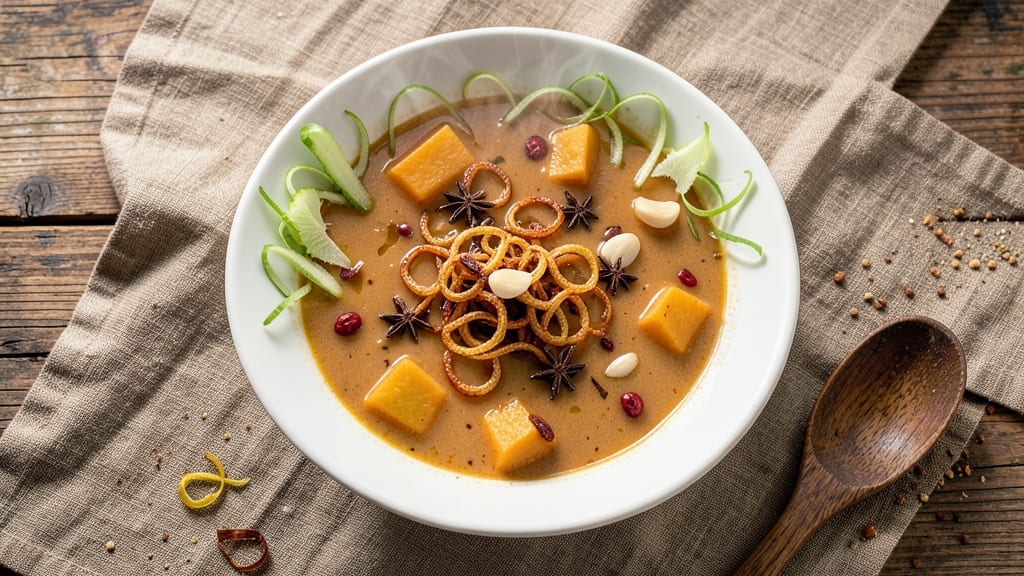
This Chinese sweet potato soup transforms humble ingredients into a velvety, fragrant dish that warms both body and soul. The foundation lies in slow-cooked sweet potatoes, aromatic ginger, and a touch of star anise that creates complex, earthy notes.
What makes this recipe special is balancing traditional techniques with modern accessibility—no pressure cooker required, just patience and proper layering of flavors.
The secret to achieving that signature silky texture lies in simmering the potatoes until they break down completely, then blending with just enough broth to create a smooth yet substantial consistency.
I've included goji berries for their subtle sweetness and nutritional boost, but they're optional for those new to Chinese flavors. The ginger-garlic base isn't just flavorful—it's therapeutic, with warming properties that make this soup perfect for chilly evenings.
What you'll end up with is a bowl of soup that's rich in color and depth—deep golden from the sweet potatoes, vibrant from fresh ginger, and aromatic from star anise. The texture is luxurious yet light, with each spoonful delivering layers of sweet, savory, and umami.
This is comfort food that feels special enough for company but simple enough for weeknights.
Serve with steamed rice for a complete meal, or pair with crusty bread to soak up every last drop of that fragrant broth. The recipe scales beautifully, making it ideal for feeding a crowd or prepping ahead for busy days.
Let's create this nourishing bowl of warmth that captures the essence of Chinese home cooking.
Ingredients for sweet potato soup chinese
Transform humble ingredients into a velvety Chinese soup with these aromatic staples.
| Ingredient | Amount | Notes |
|---|---|---|
| Sweet Potatoes 🍠 | 1 ½ lb | Medium-sized, peeled and cubed |
| Fresh Ginger 🧄 | 2 tbsp | Grated, aromatic variety preferred |
| Garlic Cloves 🧄 | 4 cloves | Peeled and minced |
| Star Anise 🌟 | 2 whole | For authentic Chinese aroma |
| Vegetable Broth 💧 | 4 cups | Low-sodium preferred |
| Goji Berries 🍇 | ¼ cup | Dried, optional for sweetness |
| Sesame Oil 🫒 | 1 tbsp | Toasted, for finishing |
| Soy Sauce 🍶 | 1 tbsp | Light or dark preferred |
| Honey 🍯 | 1 tsp | Or maple syrup for vegan option |
| Olive Oil 🫒 | 1 tbsp | For sautéing aromatics |
| Green Onions 🧅 | 2 whole | Sliced, for garnish |
| Salt 🧂 | 1 tsp | Kosher or sea salt |
| Black Pepper 🌶️ | ½ tsp | Freshly ground preferred |
| Rice Vinegar 🍶 | 1 tsp | For brightness (optional) |
The sweet potatoes are the heart of this soup—orange-fleshed varieties like Jewel or Garnet work best, offering natural sweetness and smooth texture. For the ginger, fresh is non-negotiable—it provides that signature warmth and aroma that dried can't replicate. I always grab organic ginger from the produce section at Whole Foods or my local Asian market, where they keep it properly refrigerated. The star anise is what elevates this from ordinary sweet potato soup to something authentically Chinese—look for whole pods at specialty stores or the international aisle of larger supermarkets. If you can't find star anise, anise seeds work in a pinch, though the flavor will be subtler.
No goji berries? Dried cranberries or raisins add sweetness, though they lack the unique earthy notes. Fresh ginger too strong? Use half the amount of powdered ginger, but know it won't have the same depth. The vegetable broth is where you can get creative—homemade is ideal, but even bouillon cubes work if you season well. For an extra layer of umami, add 1 tsp of miso paste to the broth. The sesame oil is purely for finishing—toasted sesame oil from Trader Joe's is my go-to, but any good-quality brand will do. Just don't cook with it—add it at the very end to preserve its nutty aroma.
This soup tastes even better the next day as flavors meld. Store in an airtight container for up to 5 days in the fridge, or freeze for 3 months—just thaw overnight in the fridge. The texture will be slightly thicker after freezing, so add a splash of broth when reheating. For meal prep, make a double batch and portion into containers. The green onions and sesame oil should be added fresh when serving, as they lose their vibrancy when stored. If you're serving a crowd, double the broth and adjust the potatoes proportionally—this recipe scales beautifully while maintaining its silky texture.
Why You'll Love This Recipe
- Here’s what sold me: the flavor actually improves the next day. The sweet potatoes soften just enough to melt in your mouth, and the star anise’s aroma lingers like a hug. I make a double batch on Sundays, freeze half, and still crave it weeks later. Budget-friendly? More like soul-friendly.
- No Chopping Needed: I swear by this trick—just peel and cube the sweet potatoes, no dicing, no fuss. The ginger and garlic get a quick mincing (or even a pulse in the food processor), and suddenly you’ve got a soup that’s half the prep work of other recipes.
- Star Anise Magic: That little spice pod? Total game-changer. It adds this warm, licorice-like depth that turns ordinary broth into something rich and aromatic. Honestly, if I skip it, the soup feels flat—like a good movie missing its soundtrack.
- Crowd-Pleaser Every Time: Between us, this soup disappears faster than I can say “seconds?” My roommates argue over who gets the last bowl, and my partner always asks for the recipe after. The best part? It’s equally at home as a light lunch or a cozy dinner—no pressure to “dress it up.”
Step-by-step instructions for sweet potato soup with Chinese flavors
Transform simple ingredients into a velvety soup with deep aromatic layers and perfect balance.
Sauté the Aromatic Base
Heat the 1 tablespoon olive oil in a large pot over medium heat. Add the 2 whole star anise, 4 cloves garlic cloves, and 2 tablespoons grated fresh ginger. Cook for 2 minutes until the star anise begins to sizzle gently and the garlic becomes fragrant but doesn't brown.
This foundational step builds the soul of your soup. The star anise releases its licorice-like aroma, while the ginger and garlic develop their full flavor without burning. If you smell burning, reduce the heat slightly—you want aromatic complexity, not bitterness. Stir occasionally to ensure even cooking of these aromatics.
Cook the Sweet Potatoes Until Tender
Add the 1.5 lb peeled and cubed sweet potatoes to the pot, along with the 4 cups vegetable broth, 1 tablespoon soy sauce, and 1 teaspoon salt. Bring to a gentle boil, then reduce heat to medium-low and simmer uncovered for 15-20 minutes. You'll know they're done when a knife slides in easily with minimal resistance.
The sweet potatoes should soften completely but not break apart. Stir occasionally to prevent sticking to the bottom. If the broth reduces too quickly, add ½ cup water to maintain the proper consistency. This simmering time is crucial for developing the sweet potato's natural sweetness and allowing the flavors to meld together.
Blend to Silky Perfection
Carefully transfer the soup mixture to a blender in batches, leaving some room at the top for steam to escape. Blend each batch until completely smooth, then return to the pot. Stir in the 1 teaspoon honey and 0.5 teaspoon black pepper. For extra brightness, add the 1 teaspoon rice vinegar (if using).
This blending step transforms your soup from rustic to restaurant-quality. The smooth texture comes from proper blending technique—don't overfill the blender or you risk a messy explosion. For an even silkier texture, strain the soup through a fine-mesh sieve if you prefer it completely smooth, though I find a few tiny bits add nice texture contrast.
Finish with Warmth and Garnish
Return the blended soup to the pot and heat gently over low heat for 5 minutes. Stir in the 0.25 cup goji berries and 1 tablespoon toasted sesame oil. Taste and adjust seasoning with additional salt or pepper if needed. Ladle into bowls and garnish with 2 whole sliced green onions.
The sesame oil adds a nutty warmth that elevates the soup's complexity, while the goji berries provide a subtle sweetness and textural contrast. The green onions add freshness and visual appeal. Serve immediately while the soup is steaming hot—this Chinese-style sweet potato soup is best enjoyed fresh from the pot when all the flavors are at their peak.
Pro Tips For Making Sweet Potato Soup Chinese
- PEEL AND CUBE SMALL: Sweet potatoes are stubborn—peel them first, then cut into 1.5-inch chunks. Big chunks take forever to soften, and small ones actually caramelize better when the soup reduces.
- GRATE GINGER FINE: Skip the coarse grating—use the smallest holes on your grater or microplane. Too many big ginger shards means you’ll taste chunks instead of that warm, aromatic punch the soup needs.
- STAR ANISE LATE: Drop the star anise in the last 10 minutes of simmering. Any earlier, and it’ll oversteep, turning your soup bitter. Remove it before blending—yes, even if you forget, just fish it out.
- BLEND HOT, THEN REHEAT: Blend the soup while it’s piping hot—it’ll be silky smooth. If it thickens too much, thin with a splash of broth, then reheat gently. Cold blending = gluey soup, and no one wants that.
Wine and beer pairings for this dish
White Wine Pairings
For this fragrant Chinese sweet potato soup, I reach for a dry Riesling or Pinot Grigio—both offer crisp acidity that cuts through the soup's natural sweetness while complementing the ginger and star anise.
A German Riesling with its subtle mineral notes enhances the soup's earthy depth, while an Italian Pinot Grigio from Alto Adige provides a lighter, more refreshing contrast. Serve slightly chilled (45-50°F) to let its brightness shine against the soup's warmth. 🍷
Light Beer Options
A Japanese junmai sake (unpasteurized) is my top recommendation—its clean, slightly sweet profile mirrors the soup's natural flavors without overpowering them. For beer lovers, a pilsner like Asahi Super Dry works beautifully, with its crisp, clean finish balancing the soup's richness.
Avoid heavy lagers or dark ales, as they'll clash with the delicate ginger and star anise notes. 🍺
Fortified Wine Twist
For a sophisticated touch, try a dry sherry like Fino or Manzanilla—its nutty, almond-like qualities harmonize perfectly with the toasted sesame oil and goji berries. Serve at room temperature to let its complexity unfold alongside the soup's aromatic layers. This pairing feels especially cozy during autumn gatherings. 🍷
Non-Alcoholic Alternatives
Don't drink alcohol? A sparkling green tea like San Pellegrino Limonata provides effervescence that cleanses the palate between spoonfuls. For a warmer option, ginger beer (non-alcoholic) with its spicy kick mirrors the soup's ginger base while adding a fun, bubbly contrast.
Both options keep the meal feeling special without alcohol. 🍵
Serving Temperature Tips
Always serve your beverage slightly cooler than room temperature—45-50°F for wine, 40-45°F for beer. The coldness helps balance the soup's warmth, creating a perfect sensory experience.
I like to chill my wine in the fridge for 30 minutes before serving, while beer can go straight from the fridge. Pro tip: Use a wine aerator for white wines to enhance their aromas before pouring. ✨
Nutrition facts
Frequently asked questions
Can I substitute regular potatoes for sweet potatoes in this recipe?
While you can use regular potatoes, the flavor and texture will be quite different. Sweet potatoes add natural sweetness and a velvety texture that's key to this Chinese-style soup. For a closer substitute, use yams or purple sweet potatoes, which have a similar earthy flavor. If you must use regular potatoes, increase the honey or maple syrup by ½ teaspoon to compensate for the lack of natural sweetness.
How do I make this soup vegetarian or vegan?
This recipe is already vegetarian-friendly! For a vegan version, simply replace the honey with maple syrup and ensure your vegetable broth is vegan (check for chicken or fish-based ingredients). The soy sauce should be tamari for a fully plant-based option. All other ingredients in this recipe are naturally vegan.
Why does my soup taste too bitter? What can I fix it?
Bitterness usually comes from overcooked ginger or garlic, or from star anise that's been cooking too long. Reduce the heat slightly when sautéing the aromatics and only cook them for 1-2 minutes. To fix a bitter soup, stir in ½ teaspoon more honey or 1 teaspoon rice vinegar to balance the flavors. If the star anise is the issue, remove it after sautéing and before blending.
Can I make this soup without a blender?
For a rustic texture, simply mash the cooked sweet potatoes with a potato masher or fork until smooth. Add a splash of broth to help create a creamy consistency. You'll get a more textured soup, but it will still be delicious and comforting. Just be prepared for a slightly chunkier result than the blended version.
What's the best way to reheat leftover soup?
Reheat gently on the stovetop over low heat for 5-7 minutes, stirring occasionally. If the soup seems too thick after reheating, add 1-2 tablespoons of broth or water to restore the proper consistency. For extra creaminess, stir in 1 teaspoon of coconut milk when reheating. Never microwave directly from the fridge—always bring it to room temperature first to prevent uneven heating.