
Side Dishes
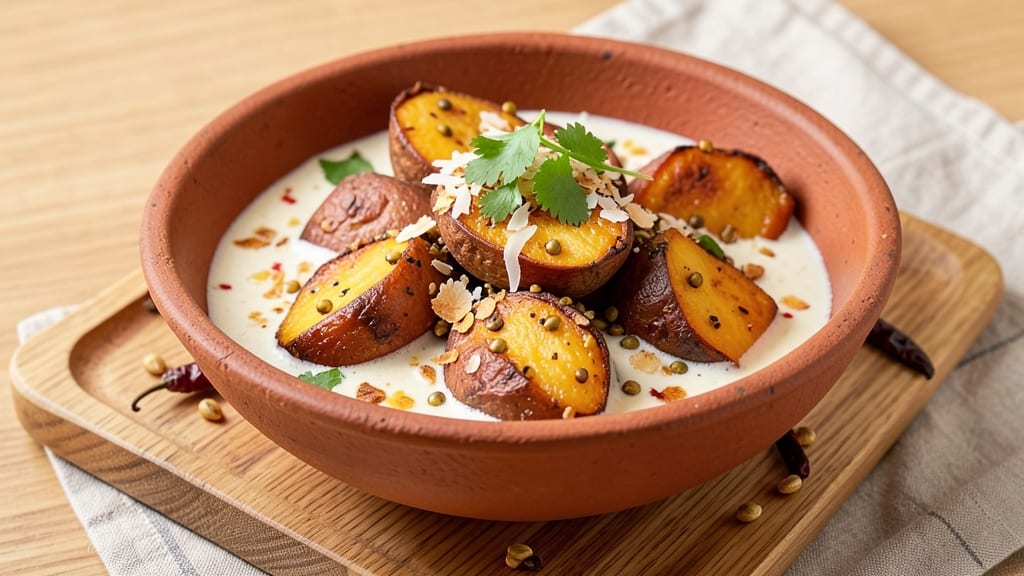
This South Indian sweet potato recipe transforms humble tubers into a fragrant, coconut-infused curry with a signature mustard crunch. The secret lies in pressure-cooking sweet potatoes until tender, then tempering them with a spiced mustard oil blend that crackles with every bite.
I developed this dish after discovering how South Indian cuisine elevates simple ingredients—here, the natural sweetness of sweet potatoes pairs perfectly with coconut milk and aromatic spices.
The recipe begins with pressure-cooking whole sweet potatoes for a creamy texture that holds up beautifully to the rich coconut curry. A tempering of mustard seeds, curry leaves, and dried red chilies adds depth and a satisfying crunch, while fresh coconut grated into the sauce creates a velvety finish.
This dish is naturally vegetarian, gluten-free, and oil-rich, making it both nourishing and deeply flavorful.
What makes this curry special is its balance—sweet, spicy, and nutty all at once. The mustard crunch provides texture contrast, while the coconut milk keeps the dish rich without being heavy. Serve it with steamed rice or dosa for a complete South Indian meal that feels both comforting and sophisticated.
Perfect for weeknight dinners or special occasions, this recipe delivers restaurant-quality results with minimal effort. The pressure-cooking method ensures tender potatoes every time, and the spiced mustard tempering adds an authentic South Indian touch. Let's bring this flavorful dish to your table!
Ingredients for sweet potato south indian
Authentic South Indian flavors meet humble sweet potatoes in this coconut-infused curry with signature mustard crunch.
| Ingredient | Amount | Notes |
|---|---|---|
| Sweet Potatoes 🍠 | 4 whole | Medium-sized, organic preferred |
| Coconut Milk 🥥 | 1 ½ cups | Full-fat canned, no additives |
| Mustard Seeds 🌿 | 1 ½ tbsp | Black mustard seeds preferred |
| Curry Leaves 🌿 | ¼ cup | Fresh, dried as substitute |
| Dried Red Chilies 🌶️ | 4 whole | Kashmiri or bird's eye |
| Fresh Coconut 🥥 | ½ cup | Grated, or unsweetened flakes |
| Ginger 🧄 | 1 tbsp | Freshly grated, organic |
| Garlic Cloves 🧄 | 4 cloves | Fresh, peeled, minced |
| Turmeric Powder 🌿 | ½ tsp | Freshly ground preferred |
| Cumin Seeds 🌿 | ½ tsp | Toasted for aroma |
| Coriander Powder 🌿 | ½ tsp | Freshly ground preferred |
| Asafoetida Powder 🌿 | ¼ tsp | Hing powder, optional |
| Salt 🧂 | 1 tsp | Diamond Crystal kosher |
| Mustard Oil 🫒 | ½ cup | Cold-pressed, or coconut oil |
| Ghee 🧈 | 1 tbsp | Clarified butter, optional |
The sweet potatoes are the heart of this dish—organic varieties with vibrant orange flesh ensure the best texture and natural sweetness. Whole Food Market or local Indian grocery stores often carry ideal options like Beauregard or Jewel varieties. Pressure-cooking them whole preserves their creaminess, but if you prefer stovetop, simmer until fork-tender. For the mustard seeds, black mustard seeds are essential for that signature South Indian crunch, though yellow will work in a pinch. Fresh curry leaves add complexity—dried leaves lose potency quickly, so buy small amounts or freeze fresh leaves in ice cube trays with oil.
No mustard oil? Coconut oil or ghee works beautifully, though the flavor profile shifts slightly. Substitute dried curry leaves at half the amount if fresh aren't available, but the dish will lack depth. For heat preference, adjust the dried red chilies—Kashmiri chilies add color without excessive heat, while bird's eye chilies bring serious spice. The grated coconut can be pre-shredded from a bag, but fresh coconut has superior texture. For a quicker version, unsweetened coconut flakes work well. If asafoetida (hing) isn't available, omit it—the dish will still be flavorful, though slightly less aromatic.
Pressure-cooked sweet potatoes keep for 3 days in the fridge, while the coconut curry sauce can be stored separately for 4 days. The mustard oil tempering is best made fresh, but you can store it in a sealed jar for 1 week in the refrigerator. For meal prep, portion the curry into containers with a thin layer of coconut milk on top to preserve freshness. This dish reheats beautifully—simmer gently on low heat to maintain the mustard crunch. Freeze portions for up to 3 months, though texture may slightly degrade after thawing.
Why You'll Love This Recipe
- One-Pot Magic: I swear by this recipe when I’m too tired to wash a million bowls—just toss everything in one pot, let it simmer, and boom. The mustard seeds and curry leaves sizzle into the coconut milk like they’re meant to be there, no fancy techniques required.
- Creamy-Spicy Bliss: That first bite of tender sweet potato coated in coconut milk, with just a whisper of dried red chilies? It’s the kind of balance that makes you pause mid-bite. Honestly, the way the spices bloom in the milk turns this into something special without needing a dozen ingredients.
- Lunchbox Hero: Between us, this is my go-to for packed lunches—it reheats beautifully and keeps for days. I’ll make a big batch on Sundays, portion it out, and by Wednesday, I’m still digging into jars of it. (Yes, even on a Tuesday night.)
- Pantry Perfection: Sweet potatoes are cheap, coconut milk lasts forever, and mustard seeds cost pennies. This recipe stretches my grocery budget without sacrificing flavor, and the leftovers? They’re the reason I don’t stress about cooking for a crowd.
Step-by-step instructions for sweet potato South Indian curry
Master this aromatic curry with perfectly balanced coconut-mustard flavors and tender sweet potatoes.
Prepare the Spiced Mustard Oil Base
Heat the 0.5 cup mustard oil in a heavy-bottomed pot over medium-low heat. Add the 1.5 tbsp mustard seeds and allow them to sizzle for 1-2 minutes until they begin to pop and turn golden. This is your signal to add the 4 whole dried red chilies and 0.25 cup curry leaves—they'll darken slightly and release their aromatic oils.
Next, introduce the 1 tbsp ginger and 4 cloves garlic cloves, stirring constantly for 30 seconds until the garlic turns translucent but doesn't brown. Immediately add the 0.5 tsp cumin seeds and 0.25 tsp asafoetida powder, stirring for another 20 seconds until the cumin begins to darken. This step creates the flavor foundation—don't rush it, as proper toasting develops depth.
Develop the Curry Base with Ghee
Reduce the heat to low and add the 1 tbsp ghee. Stir in the 0.5 tsp turmeric powder and 0.5 tsp coriander powder, cooking for 1 minute until the spices bloom and fill your kitchen with their warm aroma. This is where the flavors marry—you should see the spices darken slightly and the oil become infused with their essence.
Pour in the 1.5 cups coconut milk, stirring continuously to prevent scorching. Let the mixture simmer gently for 3-4 minutes until it reduces slightly and coats the back of a spoon. The sauce should thicken just enough to cling to the sweet potatoes later—this is your ideal consistency for the curry base.
Cook the Sweet Potatoes to Perfect Tenderness
Peel and cut the 4 whole sweet potatoes into 1-inch cubes, ensuring uniform size for even cooking. Add them to the simmering curry base, gently stirring to coat each piece in the spiced coconut mixture. Increase heat to medium and let the sweet potatoes cook for 8-10 minutes, stirring occasionally, until they begin to soften but still hold their shape.
Add the 0.5 cup fresh coconut and 1 tsp salt, stirring well to distribute evenly. The sweet potatoes should absorb the coconut milk and spices, developing a golden hue. Continue cooking for another 5-7 minutes until the sweet potatoes are fork-tender with just a slight resistance in the center—this ensures they'll finish cooking when served.
Finish with Coconut and Adjust Seasoning
Reduce heat to low and let the curry simmer uncovered for 5 minutes to allow excess moisture to evaporate. This final reduction concentrates the flavors and creates a velvety texture. Taste and adjust seasoning—you may need an additional pinch of salt or a dash of coriander powder to balance the sweetness of the potatoes with the spiced mustard notes.
The curry is complete when the sweet potatoes are tender, the coconut milk has reduced to a rich consistency, and the mustard oil's aroma permeates every bite. Serve immediately with steamed rice or warm appam for the full South Indian experience.
Pro Tips For Making Sweet Potato South Indian
- Peel After Cooking: Sweet potatoes are stubborn—peeling them raw makes them oxidize and lose texture. Instead, boil or steam them whole until fork-tender, then slip off the skin while still warm. No more fighting stubborn fibers or wasting good flesh stuck to the peel.
- Bloom Mustard Seeds Slow: Dump those mustard seeds into hot oil too fast, and they’ll burn before they pop. Start with a low flame, let them sizzle for 10 seconds, then turn up the heat. The aroma hits differently when they bloom properly—like the difference between a whisper and a song.
- Toast Curry Leaves First: Toss the curry leaves into the mustard seeds before the oil gets too hot. They’ll crisp up in 10 seconds, releasing their piney magic instead of wilting into the pan like sad, overcooked lettuce. (Yes, I’ve done that too.)
- Simmer Coconut Milk Low: Coconut milk curdles faster than you’d think when it boils. Keep the heat at a gentle simmer—just enough to see tiny bubbles at the edges—so it thickens into a velvety sauce instead of separating like a bad smoothie. Patience here saves cleanup later.
Regional styles of sweet potato south indian
Kerala-Style Coconut Curry
In Kerala, sweet potatoes are often simmered in a coconut milk gravy with a lighter touch on spices. The dish, called kadalai vada, replaces lentils with sweet potatoes while keeping the signature coconut-forward profile.
I love how this version uses grated fresh coconut instead of powder for a creamier texture. Add 1 tbsp coconut oil instead of mustard oil and reduce the chilies to 2 whole dried red chilies for a milder heat. 🥥
Tamil Nadu's Roasted Sweet Potato
Tamil Nadu cooks transform sweet potatoes into a crispy, spiced side dish called kathrikai thoran. Start by roasting 1-inch sweet potato cubes in a heavy-bottomed pan with 1 tbsp coconut oil until caramelized.
Toss with 1 tbsp mustard seeds, 2 tbsp grated coconut, and 1 tsp chili powder. Serve as a side with rice or dosa. The key is high heat—medium-high for 8-10 minutes—to develop that smoky crunch. 🔥
Andhra's Spicy Stir-Fry
Andhra cuisine takes sweet potatoes to bold new heights with a spicy, tangy stir-fry called sweet potato keema. After pressure-cooking the potatoes, stir-fry them with 1 tbsp mustard oil, 1 tsp red chili powder, and 1 tsp tamarind pulp for a tangy kick.
Add ½ cup chopped onions and 1 tbsp fresh coriander at the end. This version is oilier and spicier—perfect for those who love heat. 🌶️
Karnataka's Sweet Potato Bonda
Karnataka’s answer to sweet potato indulgence is bonda, a crispy fritter. Mix mashed sweet potatoes with 1 tbsp chickpea flour, ½ tsp turmeric, and 1 tsp chili powder.
Drop spoonfuls into hot oil (350°F) and deep-fry until golden. Serve with coconut chutney or mint chutney. The secret is evenly shaped balls—use a cookie scoop for consistency. 💫
Hyderabad's Sweet Potato Halwa
For a dessert twist, Hyderabad cooks make sweet potato halwa—a rich, cardamom-infused pudding. Simmer 2 cups grated sweet potato with 1 cup milk, ½ cup sugar, and ½ tsp cardamom powder until thick.
Garnish with toasted nuts and a drizzle of ghee. This version is naturally vegan and pairs beautifully with rabri (reduced milk). 🌟
Nutrition facts
Frequently asked questions
Can I substitute regular potatoes for sweet potatoes in this recipe?
Sweet potatoes are essential for this South Indian dish—their natural sweetness and creamy texture balance the coconut and spices perfectly. Regular potatoes would make the curry too starchy and less flavorful. If you must substitute, try orange-fleshed varieties like yams for a similar sweetness profile.
How do I get the mustard seeds to pop properly?
Mustard seeds need patience! Heat the oil on medium-low and stir constantly until the seeds begin sizzling. They should pop within 1-2 minutes—if they burn, reduce heat slightly. The key is using black mustard seeds and keeping the oil temperature controlled. Too hot? The seeds will darken instead of popping.
Can I make this curry ahead of time?
Yes! The curry actually tastes better the next day as flavors meld. Store in an airtight container for up to 3 days in the fridge. Reheat gently on low heat, adding a splash of water if needed to restore creaminess. The mustard oil tempering loses its crunch when reheated, so make it fresh when serving.
What's the best way to serve this dish?
This coconut curry pairs beautifully with steamed basmati rice or appam (fermented rice pancakes) for an authentic South Indian meal. For extra flavor, serve with coconut chutney or a side of sambar. The dish is also delicious with roti or dosa for a heartier option.
Why does my curry taste bitter?
Bitterness usually comes from overcooking spices or using too many dried red chilies. To fix it, add 1 tbsp fresh coconut or a pinch of sugar to balance flavors. For prevention, toast spices on medium-low heat and remove from heat immediately after they bloom. Fresh curry leaves also help mask bitterness—add a few more if needed.