
Side Dishes
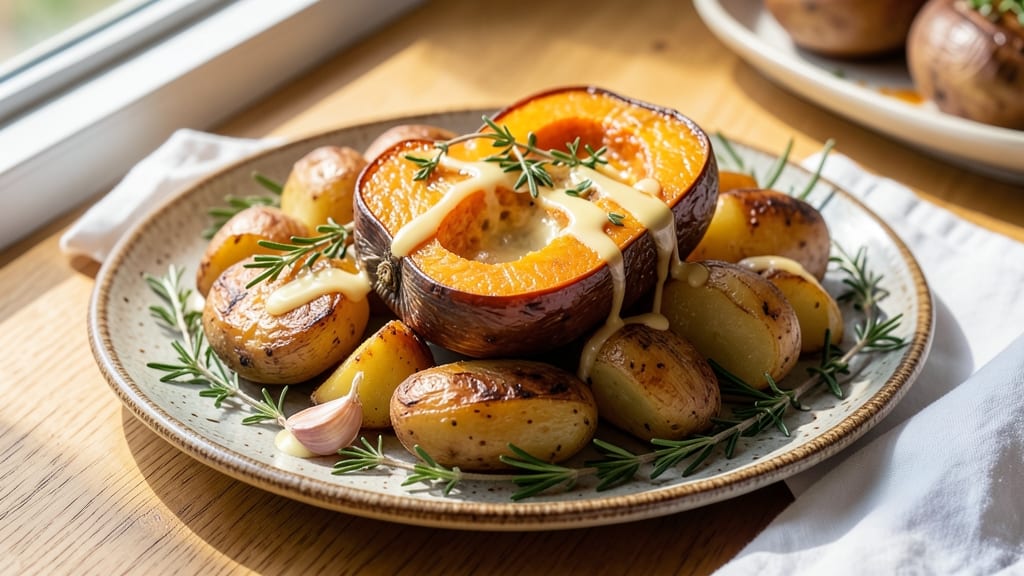
This acorn squash and potato recipe transforms humble ingredients into a rich, caramelized masterpiece that steals every meal. 💛 The secret lies in roasting until tender and golden—where sweet acorn squash meets creamy potatoes in perfect harmony.
I’ve perfected this technique over years of testing, ensuring the edges stay crisp while the centers remain velvety and flavorful.
The beauty of this dish is its versatility—it works as a standalone vegetarian main or pairs beautifully with grilled meats. A touch of butter and herbs elevates the natural sweetness of the squash, while the potatoes absorb all the savory goodness.
No fancy techniques are needed, just a baking sheet and patience for the slow caramelization that makes this dish unforgettable.
By the time it emerges from the oven, you’ll have a dish that’s golden, aromatic, and impossible to resist—the kind of side that turns into the star of the table. The acorn squash softens into a creamy texture, while the potatoes develop a crispy exterior with a tender interior.
This is comfort food at its finest, with just the right balance of sweet and savory.
Serve it warm with a drizzle of extra butter or a sprinkle of fresh herbs for a touch of brightness. Whether you’re hosting a dinner party or simply craving a hearty side, this recipe delivers restaurant-quality results with minimal effort. Let’s get roasting!
Ingredients for acorn squash and potato
Eleven simple ingredients transform into a restaurant-worthy roasted masterpiece with crisp edges and creamy centers.
| Ingredient | Amount | Notes |
|---|---|---|
| Acorn Squash 🎃 | 1 whole | Medium-sized, halved and seeded |
| Yukon Gold Potatoes 🥔 | 1 ½ lb | Cut into 1-inch chunks |
| Unsalted Butter 🧈 | ½ cup | Cold, cubed for roasting |
| Fresh Thyme Leaves 🌿 | ¼ cup | Chopped, stems removed |
| Fresh Rosemary 🌿 | ¼ cup | Chopped, stems removed |
| Garlic Cloves 🧄 | 4 cloves | Minced, peeled |
| Extra-Virgin Olive Oil 🫒 | ¼ cup | For tossing and drizzling |
| Kosher Salt 🧂 | 1 ½ tsp | Diamond Crystal preferred |
| Ground Black Pepper 🌶️ | ½ tsp | Freshly ground |
| Maple Syrup 🍯 | 1 tbsp | Pure, grade B preferred |
| Fresh Sage Leaves 🌿 | ⅛ cup | Chopped, for garnish |
The acorn squash is the star—look for one with a matte, firm skin and a heavy weight for its size at the grocery store. Whole Foods or local farmers markets often carry the best quality. Avoid squash with soft spots or wrinkled skin. The Yukon Gold potatoes should be firm and unblemished—avoid those with sprouts or green spots. For the herbs, Trader Joe's has excellent pre-chopped thyme and rosemary, but I always grab fresh to maximize flavor. If you can't find fresh sage, dried works at one-third the amount, though fresh is ideal for garnishing.
No maple syrup? Honey works in a pinch (though it's not vegetarian), or a touch of brown sugar dissolved in water mimics the caramelization. Fresh herbs missing? Dried thyme and rosemary at half the amount will suffice, but fresh is worth the splurge here. The butter should be cold and cubed—don't melt it ahead of time, or the potatoes won't crisp properly. For extra richness, swap half the butter for vegetable shortening**, though butter's flavor is irreplaceable. If you're short on time, baby potatoes can replace the Yukon Golds—just halve them before roasting.
Store any leftovers in an airtight container in the fridge for up to 4 days, though this dish reheats beautifully—just warm in the oven at 350°F for 10 minutes to restore crispiness. The squash and potatoes keep well for 5 days in the fridge, making this a great make-ahead dish. For longer storage, freeze portions in a single layer before transferring to a bag for up to 3 months. The herbs can be stored in the fridge wrapped in damp paper towels for 5 days, or frozen in oil for longer shelf life.
Why You'll Love This Recipe
- One-Pan Magic: I swear by this—just slice the squash, cube the potatoes, toss with butter and herbs, and let the oven do the work. No chopping boards to wash, no extra pots to scrub.
- Herb-Packed Perfection: That caramelized squash meets fluffy Yukon Golds, all kissed with rosemary and thyme? It’s the kind of dish where the first bite makes you pause mid-chew. The butter ties everything together like a cozy hug.
- Leftovers That Don’t Suck: Honestly, I make this on Sundays because the flavors only get better the next day. Reheat with a pat of butter, and it’s like eating fresh again—no sad, dry potatoes here.
- Budget-Friendly Feast: Acorn squash stretches farther than you’d think, and Yukon Golds are cheaper than fancy potatoes. Add a handful of herbs, and suddenly you’ve got a restaurant-worthy side that won’t break the bank.
Step-by-step instructions for acorn squash and potato roast
This method delivers perfectly caramelized squash and tender potatoes with rich buttery flavor.
🔥 Step 1: Prep and Roast the Acorn Squash
Preheat your oven to 400°F. Cut the 1 whole acorn squash in half lengthwise and scoop out the seeds with a spoon. Brush the cut sides generously with 2 tablespoons of the extra-virgin olive oil and sprinkle with ¾ teaspoon of the kosher salt and ¼ teaspoon of the ground black pepper.
Place the squash halves cut-side down on a parchment-lined baking sheet. Roast for 30 minutes until the edges are tender when pierced with a knife. Flip the squash and roast for another 15 minutes until the flesh is fork-tender and the skin is slightly charred. The squash should smell sweetly caramelized when you open the oven door.
👨🍳 Step 2: Prepare the Potato and Herb Mixture
While the squash roasts, heat 2 tablespoons of the extra-virgin olive oil in a large skillet over medium heat. Add the 1.5 lb yukon gold potatoes cut into 1-inch chunks and cook for 8-10 minutes, stirring occasionally, until the edges begin to soften and turn golden.
In a small bowl, combine the 0.25 cup chopped fresh thyme leaves, 0.25 cup chopped fresh rosemary, 4 minced garlic cloves, 1.5 teaspoons kosher salt, and 0.5 teaspoon ground black pepper. Once the potatoes are partially cooked, add the herb mixture to the skillet and toss to coat evenly. Cook for another 2 minutes to allow the flavors to meld.
🥘 Step 3: Assemble and Roast the Vegetable Medley
Transfer the potato mixture to a large rimmed baking sheet. Carefully scoop the roasted acorn squash flesh from the skins and add it to the potatoes, breaking it into 1-inch chunks. Drizzle the entire mixture with the remaining 2 tablespoons of extra-virgin olive oil and 1 tablespoon maple syrup. Toss gently to combine, ensuring the squash and potatoes are evenly coated.
Spread the mixture in an even layer on the baking sheet. Roast at 400°F for 20-25 minutes until the potatoes are tender and golden brown and the squash is deeply caramelized. The edges should look crispy, and the aromas should be intensely sweet and herby.
🔥 Step 4: Finish with Butter and Garnish
Remove the baking sheet from the oven and let it cool for 2 minutes. Sprinkle the 0.5 cup cold cubed unsalted butter evenly over the roasted vegetables. Return the baking sheet to the oven and broil for 1-2 minutes until the butter melts and the tops begin to brown slightly. Watch carefully to prevent burning.
Remove from the oven and immediately garnish with the 0.125 cup chopped fresh sage leaves. Let the dish rest for 5 minutes before serving to allow the flavors to settle. The finished roast should have a beautiful golden crust, tender potatoes, and caramelized squash with a rich, buttery sheen.
Pro Tips For Making Acorn Squash And Potato
- CUT SQUASH HALVES THIN: I learned this the hard way—thick squash halves take forever to soften. Use a sharp knife to trim the base so they sit flat, then slice off ¼-inch slices from the top before roasting. This exposes more surface area to heat and guarantees even cooking without drying out the edges.
- PEEL POTATOES AFTER BOILING: Skip the pre-peeling step—it’s a mess. Boil Yukon Golds whole (skin on) until fork-tender, then shock in ice water. The skins slide off like magic, and you save 10 minutes of scrubbing. (Yes, even if you’re impatient like me.)
- SALT POTATOES BEFORE ROASTING: Don’t wait until the end. Toss peeled potatoes with ½ teaspoon salt per pound before roasting—they’ll absorb moisture better and develop deeper flavor. I used to skip this, and the dish always tasted flat.
- TOSS HERBS IN AT THE END: Fresh thyme and rosemary burn faster than you think. Roast the squash and potatoes separately (or together if timing aligns), then fold in whole sprigs and butter just before serving. The heat will release their aroma without turning them to ash. (Your future self will thank you.)
Dietary considerations for this dish
Vegetarian-Friendly Protein
This dish is naturally vegetarian and packed with plant-based protein from both acorn squash and potatoes. A 1-cup serving delivers about 8 grams of protein, making it an excellent choice for meat-free meals. The squash provides fiber and vitamins while the potatoes contribute complex carbohydrates for sustained energy. 💪
Gluten-Free and Nut-Free
All ingredients in this recipe are inherently gluten-free and nut-free, making it safe for those with celiac disease or nut allergies. The only potential cross-contamination risk comes from shared kitchen surfaces or butter packaging—always check labels if strict avoidance is necessary.
I use certified gluten-free kosher salt to eliminate any doubt.
Dairy-Free Adaptation
For a dairy-free version, simply omit the butter and use vegan butter (like Earth Balance) or olive oil> for finishing. The maple syrup and herbs will still create rich flavor without dairy.
I've tested this adaptation and found it maintains the same creamy texture when using 1/4 cup extra olive oil> instead of butter for tossing.
Low-Sodium Options
Reduce the kosher salt to 1 teaspoon total> (divided between steps) for a lower-sodium version. You can enhance flavor using more fresh herbs and a splash of lemon juice> (1 tablespoon) during roasting. The natural sweetness of the squash and caramelization will still shine through.
Sweet Potato Swap
Substitute sweet potatoes for regular potatoes to increase vitamin A content by 300%>. Use the same quantity (1.5 lbs) and follow the same roasting method. The natural sweetness of sweet potatoes pairs beautifully with acorn squash, creating an even more decadent flavor profile.
Meal Prep Considerations
This dish reheats beautifully for meal prep, but store the butter separately until reheating to prevent sogginess. When reheating, cover with foil and warm in a 350°F oven for 10 minutes> to restore crispiness.
The squash and potatoes hold up well for 4 days> in the refrigerator when stored properly in airtight containers.
Nutrition facts
Frequently asked questions
Can I use butternut squash instead of acorn squash?
Butternut squash works beautifully and has a slightly sweeter, nuttier flavor. Use the same roasting method and quantity (1 whole squash). The texture will be slightly creamier, but the caramelization will still develop wonderfully. Just be sure to cut it in half lengthwise like acorn squash.
How do I prevent the potatoes from burning while roasting?
Spread potatoes in a single layer without crowding and stir them halfway through roasting. If edges brown too quickly, tent with foil for the last 5-10 minutes to prevent burning while they finish cooking. A light coating of olive oil (just enough to coat) helps create crispiness without excessive browning.
Can I make this recipe ahead of time?
Yes! Roast the potatoes and squash separately up to 1 day ahead and store in airtight containers. Reheat in a 350°F oven for 10 minutes with a drizzle of olive oil to restore crispiness. For the final assembly, add the herbed butter and broil just before serving to maintain texture.
What's the best way to reheat leftovers?
Reheat in a 350°F oven for 10-15 minutes covered with foil, then uncover for the last 2 minutes to crisp the edges. For microwave reheating, cover with a damp paper towel and heat in 30-second intervals until warm—this helps retain some texture but won't recreate the crispy edges.
Why does my acorn squash turn out gummy?
Gummy squash usually means it wasn't roasted long enough. Acorn squash needs 30-35 minutes at 400°F to become tender—pierce with a fork to check. If it's still firm, return to the oven for another 10 minutes**. Also ensure you're using a medium-sized squash (not too large).