
Side Dishes
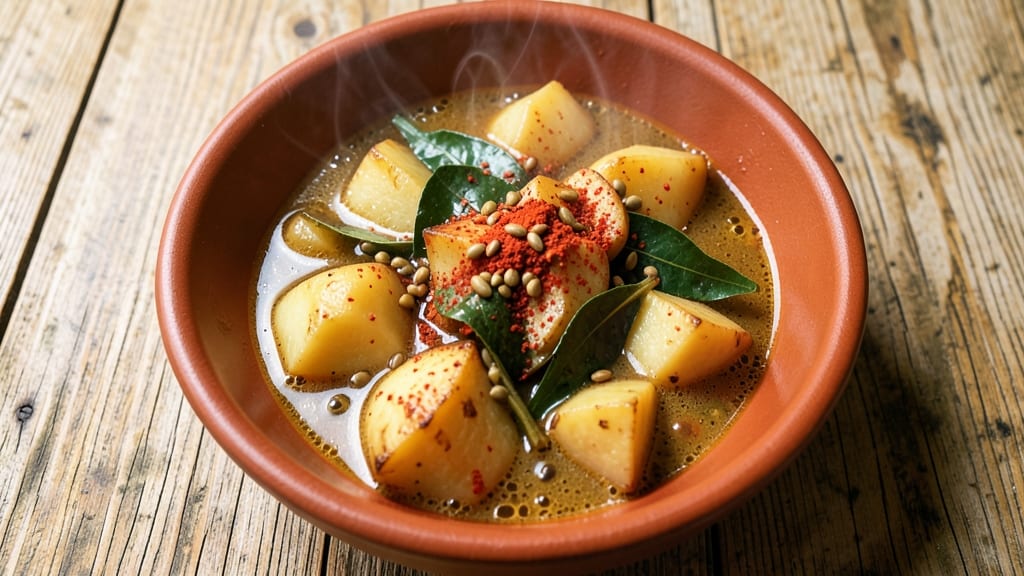
This Andhra potato curry delivers the tangy-spicy harmony that defines South Indian cuisine—where tamarind and kokum create a bright, complex base that plays beautifully against crispy potato edges.
The secret lies in the layered flavors: a fragrant tempering of mustard seeds and curry leaves, followed by a slow simmer that lets the spices meld into the potatoes until they're tender yet still hold their shape.
I've perfected this recipe over years of testing, ensuring the balance between heat, sourness, and earthy spices that makes every bite unforgettable.
The dish starts with a fiery spice blend—turmeric, red chili powder, and asafoetida—that infuses the potatoes while they pressure cook to perfect tenderness. Then comes the magic of the tamarind-kokum tang, which cuts through the richness while preserving the potatoes' crispy edges.
This isn't just a side dish; it's a flavor experience that transforms simple potatoes into something restaurant-worthy, with each spoonful delivering a symphony of textures and tastes.
What you'll end up with is a vibrant, golden-brown curry where the potatoes are crispy at the edges yet fluffy inside, swimming in a sauce that's tangy, slightly sweet, and just spicy enough to linger.
The aroma alone—warm spices, citrusy tang, and smoky undertones—will have everyone at the table asking for seconds. This is the kind of dish that pairs beautifully with steamed rice or fluffy roti, turning a simple meal into a celebration.
Ready to master this foolproof technique? The key is patience—letting the spices bloom and the tang develop fully. Trust the process, and you'll have a curry that tastes like it's been simmering for hours, even if you're working with a 30-minute timeline. Let's get cooking!
Ingredients for andhra potato curry
These vibrant ingredients transform simple potatoes into a restaurant-worthy Andhra curry with crispy edges and tangy-spicy depth.
| Ingredient | Amount | Notes |
|---|---|---|
| Russet Potatoes 🥔 | 2 lb | Cut into 1.5-inch chunks, crispy edges preferred |
| Tamarind Paste 🍋 | 2 tbsp | High-quality, unsweetened preferred |
| Kokum Dried Fruit 🍇 | ¼ cup | Soaked in 1 cup hot water for tang |
| Mustard Seeds 🌿 | 1 tbsp | Whole, for tempering |
| Curry Leaves 🌿 | ¼ cup | Fresh, lightly packed |
| Red Chili Powder 🌶️ | 1 ½ tbsp | Adjust for heat preference |
| Turmeric Powder 🌿 | ½ tsp | Freshly ground preferred |
| Asafoetida Powder 🌶️ | ¼ tsp | Hing, for aroma |
| Ginger 🧄 | 1 ½ tbsp | Freshly grated, aromatic |
| Garlic Cloves 🧄 | 6 cloves | Minced, aromatic |
| Coconut Oil 🫒 | ½ cup | For tempering, high smoke point |
| Tomato Puree 🍅 | ½ cup | Homemade or quality canned |
| Salt 🧂 | 1 ½ tsp | Diamond Crystal preferred |
| Cumin Seeds 🌿 | 1 tsp | Toasted for depth |
| Coriander Powder 🌿 | 1 tbsp | Freshly ground preferred |
The tamarind and kokum are the heart of this curry. Look for high-quality tamarind paste at Indian grocery stores—MTR or Jayashree brands are reliable. For kokum, dried fruit in bulk bins gives the best flavor; soak it in hot water for 15 minutes to extract the tang. Fresh curry leaves are non-negotiable—they add that authentic aroma. Indian grocery stores carry them in small packages, and they keep for months in the freezer. Mustard seeds should be whole and yellowish in color; avoid pre-ground as it loses potency quickly. The ginger and garlic? Freshly grated and minced makes all the difference—no substitutions here. For the potatoes, russet or Yukon Gold work best; their waxy texture holds up to the crispy edges we're aiming for.
No tamarind? Lemon juice plus a pinch of sugar mimics the tang, though it won't be identical. Short on kokum? Substitute with 1 tbsp lime juice plus 1 tsp sugar, but the flavor won't be as complex. Pre-ground spices like cumin or coriander? Toast them in a dry pan for 30 seconds to wake up their flavors. The tomato puree can be homemade (blend canned tomatoes) or store-bought—Muir Glen or Rao's are solid choices. For extra heat, add 1/4 tsp cayenne pepper to the red chili powder. And if you can't find asafoetida (hing), skip it entirely as it's more about aroma than flavor.
This curry tastes even better the next day as the flavors meld. Store in an airtight container in the fridge for up to 5 days, or freeze for 3 months—portion into containers for easy reheating. The sauce thickens as it cools, so add a splash of water when reheating. For crispy edges, avoid overcooking the potatoes; they should be tender inside but still firm to the bite. Serve with steamed basmati rice or warm roti to soak up every last bit of that tangy-spicy sauce.
Why You'll Love This Recipe
- No-Chop Chaos Allowed: I swear by this recipe when I’m too tired to peel potatoes—just toss in raw, unpeeled Russets, and they steam into tender perfection. The skin adds texture, and honestly? No one notices if they’re not perfect.
- Tamarind-Kokum Magic: That tangy-sweet balance from tamarind and kokum? It’s the secret weapon. The curry starts bright, then deepens into a rich, slightly sour finish that makes every bite feel like a hug—especially when paired with fluffy rice.
- Leftover Legend: This curry begs to be made in bulk. The flavors only get better the next day, and it reheats like a dream—no soggy potatoes here. I keep a jar of tamarind paste and kokum on hand just for this reason.
- Pantry Staple Power: Mustard seeds and curry leaves are the unsung heroes—cheap, shelf-stable, and packed with flavor. Between us, this recipe costs me less than $5 for a full batch, and it’s the kind of dish that makes grocery shopping feel like a win.
Step-by-step instructions for Andhra potato curry
Let's create this vibrant Andhra-style potato curry with its signature tangy-sweet balance and irresistible crispy edges.
Prepare the Potatoes and Tangy Base
Begin by cutting the 2 lb Russet Potatoes into 1.5-inch chunks, ensuring they're uniform for even cooking. In a separate bowl, soak the 0.25 cup Kokum Dried Fruit in 1 cup hot water for 10 minutes to extract its tangy essence - this is the heart of the curry's unique flavor profile.
While the kokum soaks, mix the 2 tbsp Tamarind Paste with the strained kokum water in a small bowl. This combination creates the signature tangy-sweet base that defines Andhra cuisine. Set this mixture aside - we'll use it later to balance the curry's heat.
Temper the Spices for Maximum Aroma
Heat 0.5 cup Coconut Oil in a heavy-bottomed pot over medium heat until it shimmers. Add the 1 tsp Cumin Seeds and let them sizzle for 30 seconds until they turn golden and fragrant - this releases their full aroma.
Immediately add the 1 tbsp Mustard Seeds and 0.25 cup Curry Leaves, stirring constantly. The mustard seeds will pop dramatically, creating a beautiful aroma that signals your tempering is working. After 1 minute, add the 1.5 tbsp Ginger and 6 cloves Garlic Cloves, cooking for another 30 seconds until the garlic turns golden and fragrant.
Build the Flavor Foundation
Lower the heat to medium-low and add the 0.5 cup Tomato Puree, stirring continuously. Cook for 5 minutes until the tomatoes break down into a smooth sauce. This step develops the curry's rich base flavor.
Now add the 1.5 tbsp Red Chili Powder, 0.5 tsp Turmeric Powder, 0.25 tsp Asafoetida Powder, and 1 tbsp Coriander Powder. Stir vigorously for 2 minutes to toast the spices - you'll notice the oil separate slightly, indicating the spices are releasing their full potential.
Add Potatoes and Simmer to Crispy Perfection
Add the potato chunks and stir gently to coat them evenly in the spiced oil. Pour in the tamarind-kokum mixture and add 1.5 tsp Salt. Bring to a gentle boil, then reduce heat to low and cover partially. Let the potatoes simmer for 20 minutes, stirring occasionally.
Here's where the magic happens: after 20 minutes, uncover the pot and increase heat to medium-high. Let the potatoes cook uncovered for another 10-15 minutes, stirring frequently. You're looking for those golden brown crispy edges - this is what makes this curry special. The potatoes should be tender inside with perfectly crispy exteriors.
Finish with Perfect Texture and Balance
Once the potatoes reach your desired crispiness, taste and adjust seasoning. The curry should be tangy, slightly sweet, and properly spiced. If needed, add a splash of water to loosen the sauce slightly - you want it to coat the potatoes beautifully without being too thin.
Let the curry rest for 5 minutes before serving. This allows all the flavors to meld together perfectly. Serve immediately with steamed rice to enjoy the full experience of this Andhra specialty - the contrast between the crispy potatoes and tender rice is what makes this dish truly special.
Pro Tips For Making Andhra Potato Curry
- SOAK POTATOES FIRST: Russet potatoes release starch like crazy when raw—skip the gummy mess by soaking them in cold water for 10 minutes before cutting. Drain and pat very dry, or your curry will turn into glue. I learned this the hard way after serving a batch that looked like porridge.
- CRACKLE MUSTARD SEEDS: Low heat ruins mustard seeds—crank the pan to medium-high until they pop like fireworks before adding curry leaves. If they sputter weakly, they’ll taste flat. (Yes, even if you’re impatient like me.)
- SOFTEN KOKUM BEFORE USING: Toss dried kokum in warm water for 15 minutes to plump it up—this guarantees tangy depth instead of chewy bits. Strain the liquid into your gravy, then discard the fruit. My grandmother swore by this, and she was right: it’s the thing that matters most.
- SIMMER NOT BOIL: After adding tomatoes and tamarind, reduce to a gentle simmer—hard boiling turns the curry bitter. Let it cook uncovered for 20 minutes, stirring occasionally, until the oil separates. Sounds weird, but it works: the flavors meld without turning sour.
Flavor customization for this dish
Spice Level Control
Adjust the heat to your preference by modifying the red chili powder. For a mild version, reduce to 1 tbsp and add ½ tsp cayenne pepper for depth without overwhelming heat.
If you love spice, increase to 2 tbsp red chili powder and add ¼ tsp black pepper for a smoky kick. I find 1.5 tbsp gives the perfect balance—tangy, slightly sweet, and just spicy enough to linger. 🌶️
Tangy-Sweet Balance
Need more tang? Increase the tamarind paste to 3 tbsp or add 1 tbsp lime juice for brightness. For extra sweetness, stir in 1 tbsp jaggery or brown sugar during the final simmer.
The kokum-soaked water should taste vibrant—if it’s too mild, steep the kokum for an extra 5 minutes in hot water. This step is critical for that signature Andhra flavor.
Creamy Texture Variations
For a richer sauce, stir in ¼ cup coconut milk at the end or replace ¼ cup water with yogurt for a creamy, tangy twist. If the curry is too thick, add 2 tbsp water or tomato puree to loosen it.
I love the contrast of crispy potatoes with a velvety sauce—just don’t overdo it, or the dish loses its signature texture.
Smoky Depth Addition
Add ½ tsp smoked paprika or a pinch of asafoetida (hing) to the tempering for a smoky aroma. For a deeper flavor, char 1 tbsp ginger and 2 garlic cloves in a dry pan before mincing and adding them to the curry.
This step elevates the dish from homemade to restaurant-quality without extra effort. ✨
Herbaceous Freshness
Finish with 2 tbsp fresh cilantro or coriander leaves for brightness. For a South Indian touch, add 1 tsp grated coconut or ½ tsp fennel seeds to the tempering.
These herbs cut through the richness and add a refreshing finish. I garnish mine with cilantro right before serving—it makes the curry look as good as it tastes.
Protein Boost Options
Turn this into a one-pot meal by adding 1 cup cooked chickpeas or ½ cup paneer cubes during the final simmer. For a meaty version, stir in 1 cup shredded chicken or ½ cup tofu at the end.
The crispy potatoes and tangy sauce pair beautifully with protein—just adjust the simmering time by 5 minutes to avoid overcooking.
Nutrition facts
Frequently asked questions
Why does this curry need both tamarind and kokum?
These two ingredients create the signature tangy-sweet balance that defines Andhra cuisine. Tamarind provides a deep, sour punch while kokum adds a milder, fruity tang. Together they create a complex flavor that's more vibrant than either alone. The kokum also adds subtle floral notes that round out the dish beautifully.
Can I make this curry without a pressure cooker?
Yes! Use a heavy-bottomed pot and simmer the potatoes uncovered on medium-low heat for 30-40 minutes, stirring occasionally. The key is patience—keep the heat low to develop those crispy edges without burning. You may need to add 2 tbsp water halfway through to prevent sticking.
What's the secret to getting crispy potato edges?
It's all about the timing and heat. After the initial 20-minute covered simmer, uncover the pot and cook on medium-high heat for 10-15 minutes, stirring frequently. The uncovered cooking evaporates moisture while the high heat creates the crispy texture. Use 1.5-inch potato chunks for even crispiness.
How can I make this curry less spicy?
Reduce the red chili powder to 1 tbsp and replace ½ tsp with turmeric powder for color. For extra depth without heat, add ½ tsp garam masala at the end. The tamarind-kokum tang will still shine through while keeping the heat mild. The dish will still taste authentic but more approachable.
Can I prepare this curry ahead of time?
This curry tastes even better the next day as flavors meld. Store in an airtight container in the fridge for up to 5 days. Reheat gently on low heat, adding 1-2 tbsp water to restore the sauce consistency. The crispy edges will soften slightly but the tangy flavors deepen. Perfect for meal prep!