
Side Dishes
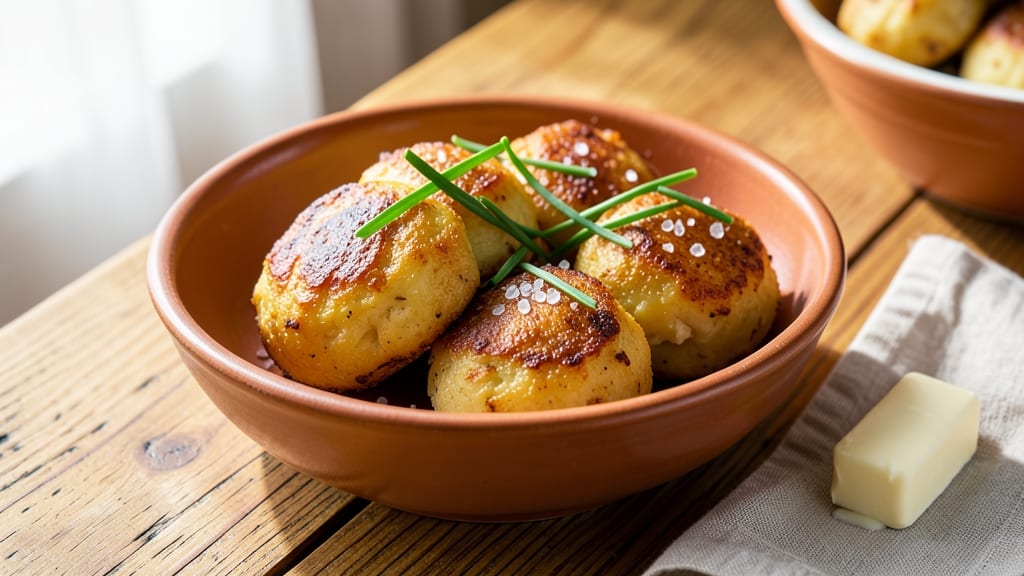
Austrian potato dumplings bring hearty comfort to any meal with their signature fluffy texture and simple ingredients. 💛 These no-knead dumplings transform humble potatoes into tender, melt-in-your-mouth bites that pair perfectly with gravy or roasted meats.
The secret lies in boiling and mashing the potatoes just right, then mixing them with flour, egg, and baking powder for that signature lightness.
What sets these dumplings apart is their foolproof technique—no kneading required. After shaping the dough into smooth balls, they boil gently until they float to the surface, signaling perfect doneness. The result is a dish that feels both rustic and refined, straight from an Austrian kitchen.
These dumplings are the ideal side for beef goulash, roasted pork, or even as a comforting vegetarian main with butter and chives. The texture is what makes them special: tender yet firm enough to hold their shape, with a subtle eggy richness that balances rich sauces beautifully.
Ready in under an hour, this recipe delivers restaurant-quality results with minimal effort. The key is patience—letting the dumplings cook slowly ensures that fluffy, cloud-like interior everyone loves. Serve warm with your favorite gravy for the full Austrian experience.
Ingredients for austrian potato dumplings
Eight simple ingredients create these melt-in-your-mouth Austrian dumplings with no-knead magic.
| Ingredient | Amount | Notes |
|---|---|---|
| Russet Potatoes 🥔 | 2 ½ lb | Yukon gold or red potatoes work too |
| All-Purpose Flour 🌾 | 2 cups | Plus 2 tbsp for dusting |
| Large Eggs 🥚 | 2 whole | Room temperature preferred |
| Baking Powder 🍞 | 1 tbsp | Aluminum-free preferred |
| Salt 🧂 | 1 ½ tsp | Kosher or sea salt |
| Unsalted Butter 🧈 | ½ cup | Cold, cubed for texture |
| Milk 🥛 | ¼ cup | Whole milk for richness |
| Fresh Chives 🌿 | ¼ cup | Chopped, for garnish |
| Garlic Cloves 🧄 | 2 cloves | Minced, optional for flavor |
The potatoes are the foundation—Russet potatoes give the best texture, but Yukon golds add natural sweetness. Grab organic potatoes if you can, especially for the skin-on version. For flour, King Arthur or Gold Medal brands work best—they're fine enough for that signature lightness. The baking powder is non-negotiable here; aluminum-free ensures they rise properly. I always buy extra butter (the cold cubes add richness) and keep it in the freezer until ready to use. The chives? Fresh is best, but dried works in a pinch if you're in a hurry.
No baking powder? Self-rising flour at 2 cups plus 1 tsp salt gets you close. Short on milk? Heavy cream or buttermilk work too, but whole milk is the standard. The garlic is optional but worth it—three cloves max so they don't overpower. For a vegetarian twist, skip the butter and use olive oil instead (though traditionalists will scoff). The eggs should be room temperature—cold eggs make the dough tough. If you're making these ahead, the dough keeps for 2 days in the fridge, covered tightly.
Shape the dumplings gently—they'll puff up to 1.5x their size while boiling. Freshly made dumplings reheat beautifully—steam for 5 minutes with a splash of water to restore their fluffiness. Store cooked dumplings in the fridge for 3 days or freeze for 2 months. For serving, I always keep a jar of melted butter nearby—drizzle generously before adding gravy. The chives add freshness, but parsley works too if that's what you've got.
Why You'll Love This Recipe
- No Peel, No Stress: I swear by Russets here—just grate them raw, no peeling, no fuss. That starchy mess? It’s what makes them light and fluffy, not some fancy technique.
- Creamy-Crisp Magic: The egg and baking powder combo gives you that perfect texture—tender inside, golden crust outside. Not too dense, not too gummy, just right.
- Lunch or Dinner Fix: Stash them in the fridge for days, reheated in seconds. Cold with butter? Yes. Sautéed with onions? Even better. Honestly, they’re my lazy Sunday go-to.
- Pantry Staple Power: Five ingredients, zero specialty items. If you’ve got flour, eggs, and potatoes, you’ve got dinner. My wallet—and my kids—thank me every time.
Step-by-step instructions for Austrian potato dumplings
Master this no-knead technique for dumplings so light they'll disappear from your plate.
👨🍳 Step 1: Cook and Mash the Potatoes
Peel the 2.5 lb Russet Potatoes and cut them into 1-inch chunks. Place them in a pot of cold, salted water and bring to a boil. Once boiling, reduce heat to medium-low and simmer for 15-20 minutes until fork-tender and easily pierced with a knife.
Drain the potatoes thoroughly, then return them to the pot. Using a potato masher or fork, mash them until completely smooth with no lumps. Let them cool slightly—about 5 minutes—so they're warm but not scorching when you handle them. The texture should be like a thick, smooth purée, not gluey or watery. This forms the foundation of your dumplings, so take your time to get it right.
🥘 Step 2: Mix the Dry Ingredients
In a large mixing bowl, whisk together the 2 cups All-Purpose Flour, 1 tbsp Baking Powder, and 1.5 tsp Salt. I like to sift these ingredients first to avoid lumps, but if you don't have a sifter, whisking vigorously for 30 seconds will work just fine. The baking powder is key here—it gives these dumplings their signature light, airy texture.
Create a well in the center of the dry mixture and make sure it's deep enough to hold all the wet ingredients. This prevents overmixing, which can make the dumplings dense. The flour should look like a mound with a clear depression in the middle, ready to be combined with the potatoes.
🍳 Step 3: Combine Wet Ingredients
Add the warm mashed potatoes to the well in the dry ingredients. Using a wooden spoon or spatula, gently fold everything together until just combined. You should still see some flour streaks—this is crucial. Overmixing develops gluten, which makes the dumplings tough instead of tender.
Once the potatoes are fully incorporated, add the 2 whole Large Eggs, 0.5 cup Unsalted Butter, and 0.25 cup Milk. Mix gently again until everything comes together into a smooth, slightly sticky dough. The dough should hold its shape when pressed but still be pliable. If it feels too dry, add 1 tablespoon of milk at a time until it reaches the right consistency. This dough is forgiving, but it shouldn't be crumbly or overly wet.
🔪 Step 4: Shape and Prepare the Dumplings
Lightly flour a clean surface with 2 tablespoons of All-Purpose Flour (from the extra amount specified in the ingredients). Turn out the dough onto this surface and divide it into 4 equal portions. Roll each portion into a 12-inch rope, about 1-inch thick. This is where precision matters—even ropes ensure even cooking.
Cut each rope into 2-inch pieces, giving you a total of 16 dumpling pieces. Gently flatten each piece into a ½-inch thick oval with your hands. The goal is to create uniform shapes that will cook evenly. Place them on a floured baking sheet, leaving 1 inch of space between each dumpling to prevent sticking.
🔥 Step 5: Boil to Perfection
Bring a large pot of salted water to a rolling boil. Carefully add the dumplings in batches—don't overcrowd the pot. They should float to the surface almost immediately. If they sink, gently press them down with a slotted spoon until they rise. Once they float consistently, reduce the heat to medium-low and simmer for 10-12 minutes.
You'll know they're done when they're plump, tender, and no longer translucent when cut open. Remove them with a slotted spoon and transfer to a serving platter. For extra flavor, sprinkle with chopped fresh chives and minced garlic cloves (if using). Serve immediately with your favorite gravy or butter for dipping. These dumplings are best enjoyed fresh while still warm and fluffy.
Pro Tips For Making Austrian Potato Dumplings
- BOIL POTATOES UNIFORMLY: Cut Russets into even 1-inch chunks—no big lumps, no tiny specks—and drop them into salted boiling water. If they’re uneven, some will turn to mush while others stay raw. Stir once, then let them cook undisturbed for 12-15 minutes until a knife slides in like butter. Overcooked potatoes make gluey dumplings, and no one wants that.
- COOL POTATOES BEFORE MASHING: Drain the potatoes and spread them on a baking sheet to cool for 10 minutes—yes, even if you’re eager. Hot potatoes release too much starch when mashed, and your dumpling dough will turn out gummy instead of light. I learned this the hard way after making a batch that stuck together like wet cement.
- DON’T OVERMIX THE DOUGH: Once you fold in the flour, egg, and baking powder, stop mixing after two turns with a fork. Overworking the dough activates the gluten, and your dumplings will turn out dense instead of fluffy. The dough should look shaggy, not smooth—like it’s holding together but still got character.
- STEAM NOT BOIL THE DUMPLINGS: Simmer the dumplings in gentle water—just enough to cover them by half—on low heat. Boiling water will toughen the outside before the inside cooks, leaving you with a rubbery texture. Keep the heat at a whisper, and add a splash of water if they start sticking. Patience here makes all the difference.
Regional styles of this austrian potato dumplings
Tyrolean Mountain Style
Austrian potato dumplings take on a rustic charm in the Tyrolean Alps, where they're often served with hearty game meats. Here, the dough includes 1 grated apple (about ½ cup) and 1 tsp caraway seeds for subtle sweetness and warmth.
The dumplings are boiled in chicken broth instead of water, giving them a deeper flavor. Serve with venison stew or wild boar sausages for an authentic alpine experience. 🏔️
Viennese Classic
In Vienna, these dumplings become a centerpiece for Sunday dinners, often paired with roast pork or beef goulash. The key difference is adding 1 tbsp grated Parmesan cheese to the dough for extra richness.
The dumplings are cut into smaller, golf-ball-sized pieces and boiled in lightly salted water with 1 bay leaf for subtle aroma. Garnish with crispy fried onions and a drizzle of melted butter for a true Viennese touch. 🍽️
Carinthian Herbed Version
Carinthia's version incorporates fresh herbs into the dough, giving it a vibrant twist. Mix in 2 tbsp finely chopped fresh dill and 1 tbsp chopped fresh parsley along with the chives. The dumplings are often served with smoked trout or carp fillets in a creamy dill sauce.
For extra flavor, add 1 tsp lemon zest to the dough. This lighter, herb-infused style is perfect for spring and summer meals. 🌿
Styrian Butter Dumplings
In Styria, the dumplings are made even richer by increasing the butter to ¾ cup and adding 2 tbsp sour cream to the dough. These dumplings are boiled in whole milk instead of water, creating a velvety texture.
Serve them with mushroom gravy or sauerkraut for a comforting, traditional Styrian meal. The extra butter makes them decadent enough to be a main dish on their own. 🧈
Salzburg Light Dumplings
For a lighter take, Salzburg chefs reduce the flour to 1½ cups and add ½ cup grated zucchini to the dough. The dumplings are boiled in sparkling water for a subtle effervescence, giving them a delicate texture.
Garnish with lemon zest and fresh chives for brightness. This version pairs beautifully with poached fish or light vegetable soups, making it ideal for spring menus. ✨
Nutrition facts
Frequently asked questions
Why do Austrian potato dumplings need baking powder?
The baking powder creates tiny air pockets that give these dumplings their signature light, fluffy texture. Without it, they'd be dense and heavy. The chemical reaction between the baking powder and the warm potatoes is what makes them rise beautifully while boiling. For best results, use aluminum-free baking powder.
Can I make these dumplings ahead of time?
Shape the dumplings and refrigerate them on a floured tray for up to 2 days before boiling. For longer storage, freeze the shaped dumplings (uncooked) for 2 months. When ready to cook, boil them from frozen—just add 2 extra minutes to the cooking time. They reheat perfectly with a quick steam in gravy or butter.
What's the best way to test if they're done?
Cut one open—they're done when the center is opaque and tender, not translucent. They should also float consistently at the surface. If they sink, they need 2-3 more minutes of gentle simmering. Overcooking makes them dry, so watch carefully during the last 5 minutes of boiling.
Can I substitute Yukon Gold potatoes?
Yes! Yukon Golds work beautifully—they're slightly waxier and sweeter, giving the dumplings a richer flavor. For best texture, use 2.5 lb Yukon Golds and boil them 2-3 minutes less than Russets since they cook faster. The skin-on version adds extra creaminess, but peel them for a cleaner texture if preferred.
What if my dumplings turn out dense?
Dense dumplings usually mean overmixing or undercooked potatoes. For next time, handle the dough gently (just until combined) and ensure your potatoes are thoroughly mashed with no lumps. Also, check your baking powder—it should be fresh. If all else fails, add ½ tsp more baking powder to the dough and boil them in sparkling water for extra lift.