Side Dishes
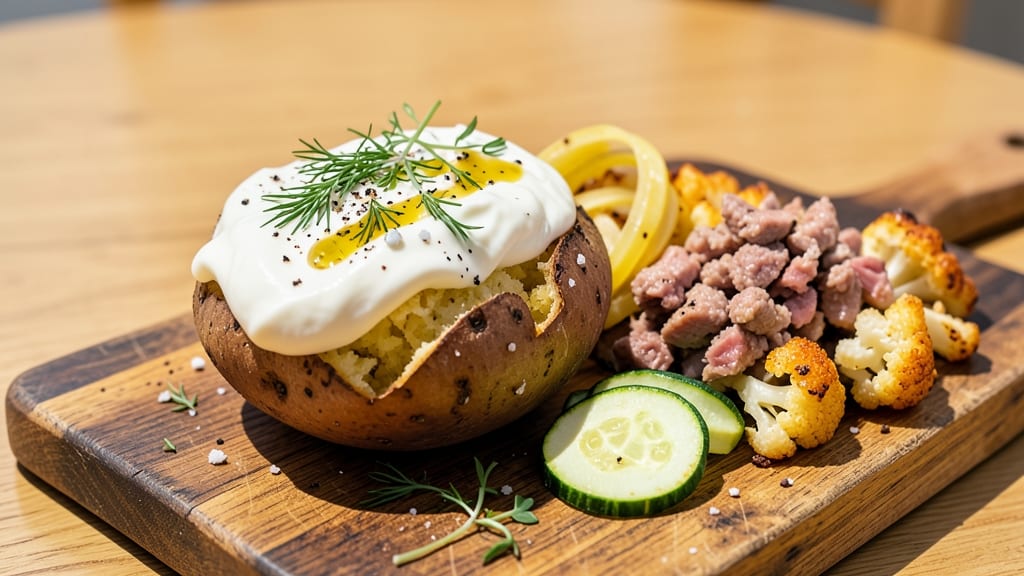
This baked potato recipe for weight loss proves you don’t have to sacrifice flavor to eat healthily. The secret lies in portion control and smart toppings—like Greek yogurt instead of sour cream—that keep calories in check while delivering satisfying texture.
After perfecting this version, I’ve found the right balance between indulgence and nutrition, making it my go-to side dish for meals.
The foundation is a simple baked potato with a crispy skin and fluffy interior, achieved by baking at 400°F for about 45-50 minutes. The real magic happens with the toppings: steamed cauliflower masquerades as cheese sauce, lean turkey replaces bacon, and Greek yogurt adds creaminess without guilt.
Every bite feels indulgent, but the nutrition facts tell a different story.
What makes this recipe work is the hidden veggies—pureed cauliflower and zucchini blend seamlessly into the toppings, boosting fiber and nutrients without altering the taste. The result is a loaded potato that’s lower in calories but higher in satisfaction, perfect for weight management without feeling deprived.
It’s the kind of dish that keeps you full and happy while supporting your goals.
Serve this alongside grilled chicken or a fresh salad for a balanced meal, or enjoy it as a standalone side that feels like a treat. The best part? You’ll never miss the heavy toppings—just pure, flavorful nutrition. Let’s get cooking!
Ingredients for baked potato recipe for weight loss
Four russets and a clever mix of veggies make this loaded potato feel indulgent while sneaking in nutrition.
| Ingredient | Amount | Notes |
|---|---|---|
| Russet Potatoes 🥔 | 4 whole | Medium-sized for even baking |
| Plain Nonfat Greek Yogurt 🥛 | ½ cup | Full-fat works too (trust me) |
| Lean Ground Turkey 🦃 | ¼ lb | 93% lean or higher preferred |
| Fresh Cauliflower 🧅 | 1 ½ cups | Riced or finely chopped |
| Zucchini 🥒 | 1 medium | Peeled and grated (or spiralized) |
| Yellow Onion 🧅 | ½ whole | Finely diced for flavor base |
| Garlic Cloves 🧄 | 2 cloves | Minced for aromatic depth |
| Low-Sodium Chicken Broth 💧 | ¼ cup | For pureeing veggie mix |
| Shredded Parmesan Cheese 🧀 | ¼ cup | Low-fat version preferred |
| Olive Oil 🫒 | 1 tbsp | For brushing potato skins |
| Salt 🧂 | 1 tsp | Kosher or sea salt preferred |
| Black Pepper 🌶️ | ½ tsp | Freshly ground for best flavor |
| Dried Thyme 🌿 | ¼ tsp | Or 1 tsp fresh chopped |
| Cayenne Pepper 🔥 | ⅛ tsp | Optional for subtle heat |
The russets are non-negotiable—Idaho-grown if you can find them, but any russet works. Walmart or Costco always have them in bulk, and they're cheaper than organic. Look for ones that feel heavy for their size—those are the fluffiest. The Greek yogurt? Fage or Siggi's are my go-tos, but any plain nonfat works. Pro tip: buy the big tubs—they're cheaper per ounce and last forever. For the cauliflower and zucchini, Trader Joe's frozen riced cauliflower is a game-changer when you're short on time, but fresh is better if you've got it.
No lean ground turkey? 99% lean ground beef works in a pinch, but it'll be richer. The veggie puree is where the magic happens—steam the cauliflower first so it blends smoother. No parmesan? Nutritional yeast gives a cheesy vibe without the fat. The onion and garlic can be swapped for green onions if you're in a rush, but they're worth the chop. And if you're feeling fancy, roast the cauliflower first for deeper flavor. The cayenne is totally optional, but it adds just enough kick to make you feel like you're cheating.
Potatoes keep 3-4 days in the pantry if you leave them whole, but once baked, they're best eaten fresh. The veggie puree can be made ahead and reheated gently—it's even better the next day. Portion the toppings into small containers so you can just grab and assemble. Freeze the puree for up to 3 months if you're meal prepping. And if you're really organized, bake the potatoes ahead and just reheat them at 350°F for 15 minutes—they crisp up beautifully.
Why You'll Love This Recipe
- One-Pan Magic: I swear by this—just toss the potatoes, cauliflower, and zucchini on a sheet pan, bake until tender, then top with the turkey and yogurt. No pots, no pans, no stress. (Yes, even on a Tuesday night when you’re exhausted.)
- Creamy Without Guilt: That dollop of nonfat Greek yogurt? It’s the secret weapon—smooth, tangy, and thick enough to feel indulgent, but with half the calories of sour cream. Honestly, I’ll take this over any store-bought "light" topping any day.
- Meal Prep MVP: Make a batch on Sunday, and you’ve got four lunches ready to go. The potatoes stay firm, the turkey stays juicy, and the veggies? Still crisp after reheating. My daughter picks out the zucchini first, but still asks for seconds.
- Budget-Friendly Feast: Russets and cauliflower stretch forever, and lean ground turkey costs less than half the price of beef. Between us, this feeds four for under $10—and leftovers taste just as good the next day. Not the prettiest, but the taste makes up for it.
Step-by-step instructions for lightened loaded potatoes with hidden veggies
Here's how to transform simple russet potatoes into a satisfying, nutrient-packed meal that keeps calories in check.
Bake Potatoes Until Fork-Tender
Preheat your oven to 425°F and line a baking sheet with parchment paper. Pierce each of the 4 whole russet potatoes all over with a fork—about 8-10 times per potato. This prevents them from bursting during baking.
Place the potatoes directly on the baking sheet and bake for 45-50 minutes until they feel soft when squeezed gently at the stem end. The skin should be slightly wrinkled but not browned. Real talk: don't overbake them or they'll turn to mush. Remove from oven and let them rest for 10 minutes before opening—this allows the steam to redistribute inside and keeps them moist.
Prepare the Hidden Veggie Mixture
While the potatoes bake, heat 1 tablespoon olive oil in a large skillet over medium heat. Add the 0.5 whole yellow onion and 2 cloves garlic cloves (both finely diced) and sauté for 3-4 minutes until the onion becomes translucent and the garlic is fragrant.
Add the 1.5 cups fresh cauliflower (riced or finely chopped) and 1 medium zucchini (peeled and grated) to the skillet. Cook for 5-6 minutes, stirring occasionally, until the cauliflower softens slightly. Pour in the 0.25 cup low-sodium chicken broth and let it simmer for 2 minutes until mostly absorbed. Season with 1 tsp salt, 0.5 tsp black pepper, 0.25 tsp dried thyme, and 0.125 tsp cayenne pepper. Remove from heat and set aside.
Cook the Lean Turkey Protein
In the same skillet (no need to clean it—the browned bits add flavor), increase heat to medium-high and add the 0.25 lb lean ground turkey. Break it up with a wooden spoon as it cooks, stirring frequently for 4-5 minutes until it reaches 165°F and is no longer pink in the center.
Here's the thing—don't drain the fat. That rendered turkey fat contains flavor that will help bind your potato toppings. Once cooked, transfer the turkey to a bowl and mix in the prepared cauliflower-zucchini mixture. This creates a flavorful, veggie-packed topping that won't weigh you down.
Assemble and Bake the Loaded Potatoes
Carefully slice open each potato lengthwise and use a spoon to create a well for the filling. Divide the turkey-veggie mixture evenly among all 4 potatoes, pressing down gently to help it adhere. Top each potato with 2 tablespoons of the plain nonfat Greek yogurt (about 0.125 cup total per potato) and sprinkle with 1 tablespoon shredded parmesan cheese (about 0.0625 cup per potato).
Return the potatoes to the oven and bake for 10-12 minutes until the cheese is lightly golden and the yogurt begins to bubble slightly. The key is to watch closely—you want the cheese to melt without burning. Broil for 1-2 minutes at the end if you need extra browning, but keep an eye on them to prevent over-browning.
Garnish and Serve Immediately
Remove the potatoes from the oven and let them rest for 2 minutes before serving. Top each with an additional sprinkle of black pepper and a tiny pinch of cayenne pepper if you like a little heat. The contrast of the creamy yogurt, savory turkey, and crispy potato skins makes this dish incredibly satisfying while keeping it light.
Serve with a side of steamed green beans or a simple salad to round out the meal. The beauty of this recipe is that you're getting all the comfort of a loaded potato without the guilt—hidden veggies and lean protein make it a weight-loss-friendly powerhouse.
Pro Tips For Making Baked Potato Recipe For Weight Loss
- PIERCE POTATOES FIRST: Russets need a good stab to steam evenly—use a fork or knife to poke holes all over, then microwave them 5 minutes before baking. I learned this the hard way after opening the oven to find one side still raw while the other was burnt.
- DON’T OVERMIX THE TURKEY: Lean ground turkey dries out fast, and overworking it turns it rubbery. Just break it up with your hands until it’s crumbly, then season—no need to force it into a paste.
- SAVE THE YOGURT LAST: Mixing Greek yogurt into your filling too early makes it watery. Keep it separate until the very end, then fold it in just before serving—this keeps the texture creamy without sogging the potato.
- ROAST CAULIFLOWER AND ZUCCHINI TOGETHER: Toss them in the same tray with olive oil, salt, and pepper at 400°F for 15 minutes before adding to your potatoes. They’ll caramelize slightly, adding depth without extra effort. (Yes, even if you’re impatient like me.)
Essential equipment for this recipe
Oven Essentials
Your oven is the star of this recipe, so make sure it’s preheated to 425°F for that perfect crispy skin. I use a Farberware Classic Oven Thermometer to ensure accuracy—ovens often run hot or cold.
Line your baking sheet with parchment paper or a silicone mat for easy cleanup and even baking. If you don’t have parchment, a light coat of olive oil on the sheet prevents sticking. 🌡️
Piercing Tool
A fork is all you need to pierce those potatoes, but if you want to go pro, a potato masher with a fork attachment (like the OXO Good Grips model) makes the job faster.
Just poke each potato 8-10 times—this releases steam and prevents bursting. I’ve learned the hard way that skipping this step can lead to exploded potatoes in the oven! 💥
Skillet for Toppings
A 10-inch cast-iron skillet (like the classic Lodge brand) is ideal for cooking the turkey and veggie mixture—it retains heat well and adds a subtle smoky flavor.
If you don’t have cast iron, a heavy stainless-steel skillet works too. Avoid nonstick for this step, as the browned bits add depth to the toppings. 🍳
Measuring Tools
Precision matters when it comes to portion control. Use a kitchen scale for the lean ground turkey to ensure you hit 0.25 lb exactly—this keeps calories in check.
For the Greek yogurt and parmesan, a measuring cup with a spout (like the OXO Good Grips set) makes it easy to divide evenly. A microplane for garlic and onion is a game-changer for quick, even dicing. 📏
Optional: Food Processor
If you’re short on time, a mini food processor (like the Ninja BN601) can puree the cauliflower and zucchini in seconds. Just pulse until smooth, then mix with the turkey. This is especially helpful if you’re prepping for meal prep—it saves you from chopping and steaming by hand. 💫
Storage Containers
For meal prep, invest in glass airtight containers (like Pyrex Simply Store) to keep the baked potatoes fresh for up to 4 days in the fridge.
If you’re freezing the veggie mixture, use quart-sized freezer bags—they’re stackable and thaw faster than containers. Label everything with the date to stay organized. ❄️
Nutrition facts
Frequently asked questions
Can I use sweet potatoes instead of russet potatoes?
Yes, but the texture will differ slightly. Sweet potatoes are denser and naturally sweeter, which pairs well with savory toppings. Bake them at 400°F for 40-45 minutes—they cook faster than russets. The key is to adjust seasoning: add ½ teaspoon cinnamon or ¼ teaspoon smoked paprika to complement their natural flavor. For weight loss, they’re a great swap since they’re lower in calories and higher in fiber.
How do I keep the potato from drying out?
Underbaking is the secret! Remove potatoes when they’re just fork-tender (about 45 minutes at 425°F), then let them rest for 10 minutes before opening. Brush skins with 1 teaspoon olive oil before baking for extra crispiness. For reheating, wrap in foil and warm at 350°F for 15 minutes—this traps moisture better than microwaving.
What are the best protein swaps for weight loss?
Lean ground turkey is ideal, but you can also use chicken breast (diced and cooked separately), tofu (crumbled and pan-fried), or white beans (mashed for a cheesy texture). For extra flavor, marinate proteins in lemon juice + garlic before cooking. Always aim for 3-4 oz per serving to keep portions balanced while staying full.
Can I make this ahead of time?
Prep the veggie-turkey mixture in advance and store it in an airtight container for 3 days in the fridge, or freeze for 3 months. Bake the potatoes fresh day-of for best texture, but you can also parboil them (bake at 350°F for 20 minutes) and finish later. Assemble and reheat at 375°F for 10 minutes—just add a splash of water to the pan to keep toppings moist.
Why does my Greek yogurt look watery?
Nonfat Greek yogurt often separates because it’s strained to remove fat. Stir it well before using, or blend it with 1 teaspoon cornstarch to thicken. For extra creaminess, chill it for 30 minutes before topping—cold yogurt holds its shape better. If it’s still too thin, mix in 1 tablespoon ground flaxseed for a protein boost and thicker texture.