
Side Dishes
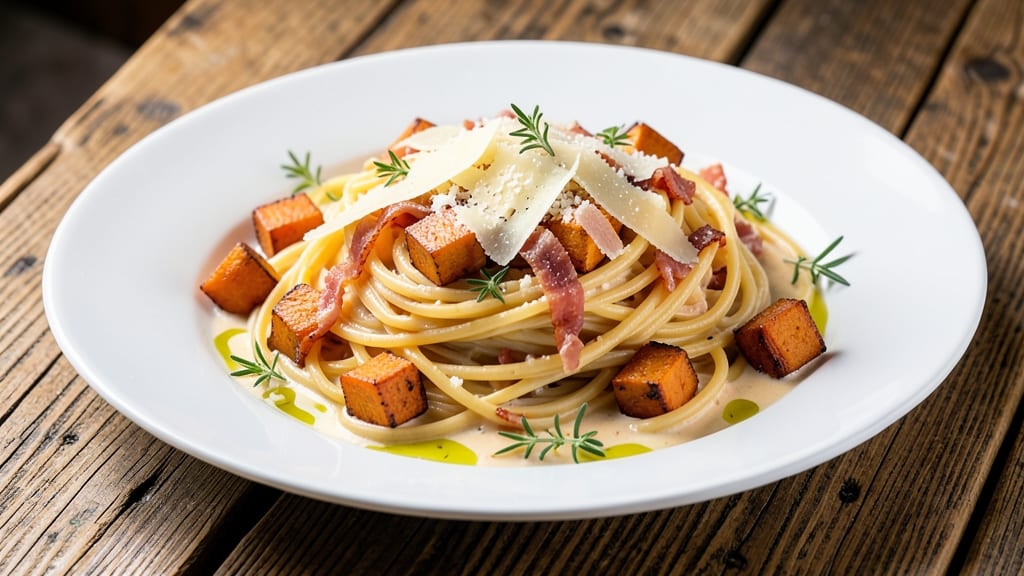
This sweet potato carbonara recipe transforms classic pasta night into a smoky, velvety masterpiece that balances sweet and savory in every bite.
The secret starts with roasting sweet potatoes until caramelized—deep golden, tender, and infused with smoky depth—then tossing them into a silky egg-cheese sauce that clings to al dente pasta like a dream.
I developed this after craving carbonara’s richness but wanting the earthy sweetness of roasted roots to cut through the creaminess. It’s the kind of dish that feels indulgent yet balanced, with crispy pancetta adding a salty crunch that ties everything together.
The beauty of this recipe lies in its two-stage cooking process: first, roasting the sweet potatoes at high heat until they’re caramelized and slightly crisp at the edges, then incorporating them into a foolproof egg-cheese sauce that cooks just long enough to coat the pasta without scrambling.
Traditional carbonara relies on starchy pasta water to emulsify the sauce—here, the sweet potatoes add natural sweetness that enhances the cheese’s nuttiness. No fancy techniques required, just patience (and a little elbow grease for tossing). The result?
A plate that’s visually stunning—creamy sauce pooling around roasted sweet potatoes and crispy pancetta—while delivering a flavor profile that’s both comforting and unexpected.
What makes this carbonara stand out is how the sweet potatoes elevate the dish beyond its classic Italian roots. Their natural sugars caramelize during roasting, adding a subtle smokiness that pairs perfectly with the salty pancetta and rich pecorino or parmesan.
The sauce, tempered with pasta water, remains velvety and clings to every strand of pasta, ensuring no bite goes dry. It’s the kind of recipe that feels restaurant-worthy but stays approachable for home cooks—no special equipment, just a few key steps executed with care.
Serve it with a crisp green salad or garlic bread to soak up every last drop of that luscious sauce.
For those watching their carb intake, this version lets you control the portion size while still delivering that satisfying, cheesy, smoky experience. Swap pancetta for crispy bacon if preferred, or use nutritional yeast for a vegan-friendly cheese alternative.
The roasting technique works equally well with regular potatoes if sweet potatoes aren’t available, though the natural sweetness of the orange flesh is what truly makes this dish shine. Ready to redefine your carbonara game? Let’s get cooking.
Ingredients for sweet potato carbonara
Roasted sweet potatoes and al dente pasta transform classic carbonara into a smoky, velvety masterpiece.
| Ingredient | Amount | Notes |
|---|---|---|
| Sweet Potatoes 🍠 | 1 ½ lb | Medium size, peeled and cubed |
| Spaghetti 🍝 | 12 oz | Al dente pasta, dried |
| Pancetta 🥓 | 6 oz | Diced into small pieces |
| Large Eggs 🥚 | 3 whole | Room temperature preferred |
| Pecorino Romano Cheese 🧀 | 1 cup | Freshly grated, coarse |
| Parmesan Cheese 🧀 | ½ cup | Freshly grated, coarse |
| Extra-Virgin Olive Oil 🫒 | ¼ cup | High quality, fruity |
| Garlic Cloves 🧄 | 3 cloves | Minced for roasting |
| Smoked Paprika 🌶️ | 1 tsp | For roasting depth |
| Kosher Salt 🧂 | 1 ½ tsp | Diamond Crystal preferred |
| Black Pepper 🌶️ | ½ tsp | Freshly cracked |
| Fresh Thyme Leaves 🌿 | 2 tsp | Chopped, for aroma |
The sweet potatoes are the foundation—choose vibrant orange ones with firm texture, not those with soft spots. Trader Joe's or local farmers markets often carry the best quality, especially in fall. Peeled and cubed into even 1-inch pieces, they roast until caramelized at the edges. For extra smokiness, add a pinch of smoked paprika to the roasting tray. The pancetta should be high-quality, with visible marbling for maximum flavor. If you can't find pancetta, guanciale works perfectly, but good-quality bacon in a pinch will do. The key is to render the fat first before adding the potatoes to the pan—this builds the smoky base for the sauce.
No pancetta? Crispy bacon or guanciale delivers similar salty crunch, though guanciale has a richer, meatier flavor. For a vegetarian twist, swap in crispy chickpeas or smoked tofu—just ensure they're well-seasoned to mimic the pancetta's saltiness. The eggs must be at room temperature to blend smoothly with the cheese; cold eggs create a grainy sauce. Pecorino Romano adds a sharper bite than Parmesan, but using both creates depth. If you're sensitive to dairy fat, reduce the cheese by 1 tbsp and add an extra egg yolk for creaminess. The pasta water is non-negotiable—it's what emulsifies the sauce, so save at least 1 cup before draining. For extra insurance, keep the pasta slightly undercooked by 1 minute before draining.
Roasted sweet potatoes keep in the fridge for 5 days if stored in an airtight container, but they're best used immediately for maximum caramelization. Pancetta fat can be stored in a sealed jar in the fridge for up to 2 weeks, making it perfect for quick weeknight meals. The cheese sauce reheats beautifully—simmer gently on low heat, adding a splash of pasta water as needed to restore creaminess. For meal prep, cook the pasta and sweet potatoes separately, then toss with the sauce just before serving to maintain texture. The sauce itself keeps for 3 days in the fridge, though it's best enjoyed fresh. Freeze portions in ice cube trays for easy single-serving additions to future meals.
Why You'll Love This Recipe
- Sweet Potato Magic: The roasted sweet potatoes add natural sweetness that balances the salty pancetta—like a caramelized hug in every bite. I’ll be real: the first time I tried this, I thought, “Why didn’t I do this sooner?”
- Pancetta Perfection: That crispy, salty pancetta crunch? It’s the star. You don’t even need fancy ingredients—just fry it until golden, and suddenly, your pasta tastes like a restaurant’s secret. Honestly, the eggs and cheese just hold it all together.
- Weeknight Hero: Boil the spaghetti, roast the sweet potatoes (while you cook), and toss everything together in one pan. No sauce to simmer, no last-minute stress—just 30 minutes of hands-off magic. (Yes, even on a Tuesday night.)
- Leftovers? Better: This dish actually tastes better the next day. The flavors meld, the sweet potatoes soften just right, and you’ve got a ready-to-reheat meal that feels indulgent. My kids beg for it—no joke.
Step-by-step instructions for sweet potato carbonara
Master this smoky, cheesy twist on classic carbonara with perfectly roasted sweet potatoes and rich eggy sauce.
Roast Sweet Potatoes Until Caramelized
Preheat your oven to 400°F. Toss the 1.5 lb sweet potatoes with 0.25 cup extra-virgin olive oil, 1 tsp smoked paprika, 1.5 tsp kosher salt, 0.5 tsp black pepper, and 2 tsp fresh thyme leaves on a rimmed baking sheet. Spread them in a single layer so they roast evenly.
Roast for 35-40 minutes, stirring once halfway through, until fork-tender with deep caramelization. You'll know they're done when the edges are crispy and the flesh easily yields to a fork. The potatoes should smell sweetly nutty—this is your cue they've developed the perfect balance of caramelized sweetness and smoky depth.
Cook Pancetta Until Crispy and Rendered
While the sweet potatoes roast, cook the 6 oz pancetta in a large skillet over medium heat until the fat renders out and the meat becomes golden and crispy. This should take about 8-10 minutes. Don't rush this step—the rendered fat is essential for building flavor in the sauce.
Once crispy, remove the pancetta with a slotted spoon and set it aside on paper towels to drain excess fat. Leave the rendered fat in the skillet—this is your flavor base. You should have about 2 tablespoons of golden fat remaining. If you need more, add 1 tablespoon extra-virgin olive oil to the skillet.
Prepare the Egg and Cheese Mixture
In a separate bowl, whisk together the 3 whole large eggs, 1 cup pecorino romano cheese, and 0.5 cup parmesan cheese until fully combined. The mixture should be smooth and pale yellow, with no visible cheese chunks. This is your sauce foundation—get it perfectly emulsified now to avoid scrambled eggs later.
Keep this mixture at room temperature while you cook the pasta. The eggs should be room temperature to prevent the sauce from curdling when they hit the hot pasta. If your eggs are cold, let them sit in warm water for 5 minutes before using.
Cook Pasta and Combine with Sweet Potatoes
Cook the 12 oz spaghetti in generously salted boiling water until 1 minute shy of al dente. Reserve 1 cup of pasta water before draining. Add the roasted sweet potatoes to the drained pasta and toss to combine.
Return the skillet with pancetta fat to medium-low heat. Add the drained pasta and sweet potatoes, then pour in the egg mixture. Toss vigorously for 1-2 minutes until the sauce thickens and coats the pasta. If it's too thick, add reserved pasta water 1 tablespoon at a time until you reach a creamy consistency.
Finish with Crispy Pancetta and Fresh Herbs
Remove the skillet from heat and fold in the crispy pancetta. The residual heat will gently warm the pancetta without overcooking it. Garnish with additional fresh thyme leaves and freshly cracked black pepper for brightness.
Serve immediately while the sauce is still silky. Each bite should deliver tender sweet potatoes, creamy cheese sauce, and crispy pancetta all in perfect harmony. The smoky depth from the roasted potatoes elevates this classic carbonara into something truly special.
Pro Tips For Making Sweet Potato Carbonara
- Boil Sweet Potatoes First: Peel and cube them while raw, then parboil for 5 minutes before adding to the skillet. This keeps them tender without turning to mush—trust me, I’ve seen carbonara sauce turn into glue when you skip this.
- Crisp Pancetta Low and Slow: Cook the pancetta on medium-low heat until golden, not crispy. High heat burns it fast, and you’ll end up with bitter bits instead of rich, salty fat. Stir occasionally—it’s worth the wait.
- Use Room-Temp Eggs: Take the eggs out of the fridge 15 minutes before mixing them with cheese. Cold eggs scramble unevenly and make the sauce grainy. Room temp = silky sauce every time.
- Toast Spaghetti in Pancetta Fat: Drain the pasta, toss it back into the skillet with the pancetta fat, and stir for 30 seconds. The residual heat gives the noodles a nutty crust—no extra oil needed, just use what’s already there.
Make-ahead tips for this dish
Sweet Potato Prep Ahead
Roast the sweet potatoes 2 days in advance and store them in an airtight container at room temperature. Their flavors deepen over time, and reheating at 350°F for 10 minutes restores their caramelized edges beautifully. For extra crispiness, broil for 2 minutes before serving. 🍠
Cheese Sauce Prep
Make the egg-cheese mixture 1 day ahead and store it in a sealed jar in the fridge. When ready to cook, whisk vigorously to re-emulsify before combining with pasta. Add 1 tablespoon pasta water if it thickens too much during storage. This step saves precious time on busy weeknights! 🧀
Pasta Water Reserve
Save 2 cups pasta water in a small jar in the fridge for up to 3 days. This starchy liquid is the secret weapon for creating a silky sauce—no need to measure fresh each time.
Just reheat the reserved water in the microwave for 30 seconds before using to restore its emulsifying power. 💡
Pancetta Fat Storage
Render the pancetta fat ahead and store it in a small glass jar in the fridge for up to 2 weeks. Use it as a flavor base for future dishes—it's perfect for sautéing mushrooms or finishing off roasted vegetables.
Just heat it gently in a skillet before adding ingredients. 🥓
Assembly Strategy
Cook the pasta and reheat the sweet potatoes separately, then toss with the sauce just before serving. This keeps the sweet potatoes from becoming mushy. For a 5-minute assembly, simply reheat all components and combine everything in the skillet with the pancetta fat.
The residual heat will finish the sauce perfectly. ✨
Freezer-Friendly Hack
Freeze the roasted sweet potatoes in a single layer on a tray, then transfer to a freezer bag for up to 3 months. Thaw overnight in the fridge before reheating.
The sauce and pancetta reheat best fresh, but you can freeze cooked pasta separately and combine it with thawed sweet potatoes when ready to serve. ❄️
Nutrition facts
Frequently asked questions
Can I use regular potatoes instead of sweet potatoes?
Yes, but you’ll lose the natural sweetness and caramelization that makes this dish special. For a similar texture, use Yukon Gold potatoes—they’re creamy and hold up well to roasting. If you prefer white potatoes, roast them at 425°F for 25-30 minutes to achieve crispy edges, but they won’t have the same depth of flavor.
Why does my carbonara sauce get grainy?
Graininess usually means the eggs scrambled from too much heat or not enough pasta water. Always work over low heat and use the reserved starchy pasta water (1 tbsp at a time) to thin the sauce. Also, ensure your eggs are room temperature and whisk the cheese mixture until completely smooth before combining with pasta.
How do I make this vegetarian?
Swap pancetta for crispy chickpeas or smoked tofu cubes (marinated in soy sauce and smoked paprika). Use nutritional yeaststrong> instead of cheese for a vegan option, and add 1 tbsp lemon juicestrong> to brighten the sauce. The key is maintaining that salty, umami crunch—so don’t skip seasoning your substitute well!
What’s the best pasta shape for this?
Spaghetti or linguine work perfectly, but bucatini or fettuccinestrong> also shine. For extra fun, try pappardellestrong> (wide ribbons) to make dramatic presentation. Avoid tiny shapes like penne—they won’t hold the sauce as well, and the sweet potatoes might overpower the dish.
Can I make this ahead of time?
Roast the sweet potatoes 2 days aheadstrong> and store them at room temperature. Make the cheese sauce 1 day aheadstrong> in a sealed jar. Cook the pasta fresh and toss with reheated components—just 5 minutesstrong> of assembly! The sauce reheats beautifully, but keep the pancetta separate until serving to maintain crispiness.