
Side Dishes
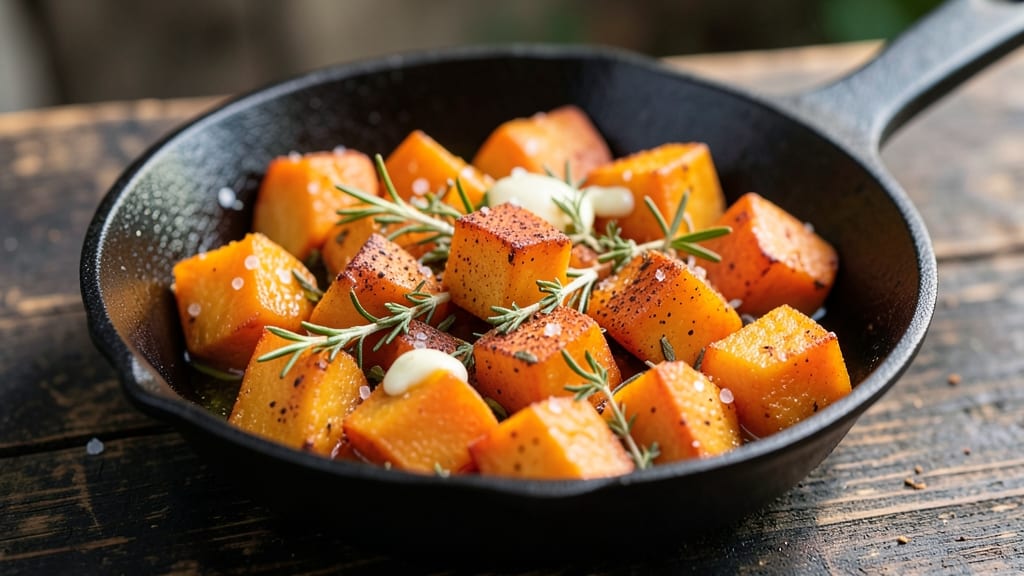
This sweet potato cast iron skillet recipe transforms humble sweet potatoes into a smoky, caramelized masterpiece with crispy edges and tender centers. The cast iron skillet creates that perfect char while trapping natural sweetness, making every bite irresistible.
I developed this recipe after realizing how much better homemade sides taste compared to store-bought—this one delivers restaurant-quality results with minimal effort.
The secret lies in the cooking technique: start with a hot skillet and cut the sweet potatoes into even pieces for consistent crispiness. A light sprinkle of salt and a drizzle of olive oil before roasting enhances the natural flavors, while finishing with butter and fresh herbs adds richness.
This dish works as both a hearty side and a light main when paired with protein.
By the end, you'll have golden, caramelized sweet potatoes with crisp edges and tender insides—perfect for soaking up sauces or standing alone. The smoky aroma alone will have everyone asking for seconds.
This recipe is versatile enough for weeknight dinners or special occasions, and the cast iron skillet ensures foolproof results every time.
Serve with grilled chicken, steak, or even as a vegetarian main with a dollop of sour cream. The possibilities are endless, but the execution stays simple. Let's get cooking—your taste buds will thank you.
Ingredients for sweet potato cast iron skillet
Restaurant-quality sweet potatoes start with these twelve essential ingredients for smoky, caramelized perfection.
| Ingredient | Amount | Notes |
|---|---|---|
| Sweet Potatoes 🍠 | 2 lbs | Medium-sized, peeled and cut into 1-inch cubes |
| Extra-Virgin Olive Oil 🫒 | ¼ cup | For high-heat searing and flavor |
| Unsalted Butter 🧈 | 4 tbsp | Cold, for finishing and richness |
| Kosher Salt 🧂 | 1 ½ tsp | Diamond Crystal preferred for even distribution |
| Fresh Rosemary 🌿 | ¼ cup | Chopped, for aromatic depth |
| Fresh Thyme 🌿 | ¼ cup | Leaves only, for herbal balance |
| Smoked Paprika 🌶️ | 1 tsp | For authentic smoky flavor |
| Ground Black Pepper 🌶️ | ½ tsp | Freshly cracked for brightness |
| Garlic Cloves 🧄 | 2 cloves | Minced for aromatic base |
| Maple Syrup 🍯 | 1 tbsp | Grade B for deeper caramel notes |
| Balsamic Vinegar 🍶 | 1 tbsp | For acidity and depth |
| Cast Iron Skillet 🔥 | 1 whole | 10-inch diameter, preheated |
The sweet potatoes are the star—look for vibrant orange flesh and firm texture at the store. Trader Joe's and Whole Foods carry the best organic varieties, but any medium-sized sweet potatoes work. Peeled and cut into even 1-inch cubes, they'll cook consistently for those perfect crispy edges. The cast iron skillet is non-negotiable here; its ability to retain heat and create that coveted char is what transforms this from side dish to showstopper. Season your skillet well before use—a dry towel and a few minutes on the stove ensures nothing sticks.
No smoked paprika? Substitute liquid smoke at half the amount—just a pinch goes a long way. Fresh herbs wilt fast, so dried rosemary and thyme at one-third the quantity works in a pinch, though fresh delivers that restaurant aroma. The maple syrup should be Grade B for its deeper caramel notes, but Grade A works if that's all you have. For extra richness, swap half the olive oil for avocado oil, which has a higher smoke point. The balsamic vinegar can be reduced by half if you prefer less acidity—simply simmer it down first.
Sweet potatoes keep for up to 2 weeks in a cool, dark place, but refrigerate them once cut to maintain freshness. Pre-cut cubes can be stored in airtight containers with a paper towel to absorb moisture for 3 days. This dish reheats beautifully—just pop it back in the skillet over medium heat with a splash of water for 3-4 minutes. For meal prep, portion into individual containers and store with a drizzle of olive oil to maintain crispiness. The flavors actually improve overnight as the sweetness caramelizes further.
Why You'll Love This Recipe
- One-Pan Magic: I swear by this recipe when I’m too tired to wash dishes. Toss the sweet potatoes into a screaming-hot cast iron with olive oil and salt, let them caramelize, then finish with butter and rosemary—no extra pans, no stress.
- Rosemary-Kissed Richness: That crispy, golden crust on the outside? Chef’s kiss. But the real magic is the tender inside, where the butter and rosemary melt into the sweet potatoes like a warm hug. Honestly, I’ll take this over fries any day.
- Weeknight to Dinner Party: Same effort, different vibes. Serve it with a simple salad for a lazy Tuesday, or drizzle with honey and crumbled feta for a fancy-ish weekend meal. The cast iron keeps it looking rustic-chic, no matter the occasion.
- Budget-Friendly Leftovers: Sweet potatoes are cheap, and this recipe stretches easily. Roast a big batch, reheat in the oven, or pack it for lunch—still tastes just as good the next day. My wallet and my taste buds thank me.
Step-by-step instructions for sweet potato cast iron skillet with smoky-caramelized crunch
Master this technique and you'll achieve perfectly charred edges with tender, caramelized sweet potatoes every time.
Prep the Sweet Potatoes and Seasonings
Start by peeling the 2 lbs sweet potatoes and cutting them into uniform 1-inch cubes. I use a sharp chef's knife for clean cuts—this ensures even cooking and consistent charring. Transfer the cubes to a large bowl and toss them with the 0.25 cup extra-virgin olive oil, 1.5 tsp kosher salt, 1 tsp smoked paprika, and 0.5 tsp ground black pepper until every piece is evenly coated.
In a small bowl, combine the 0.25 cup fresh rosemary and 0.25 cup fresh thyme leaves with the 2 minced garlic cloves. This aromatic blend will infuse the sweet potatoes with deep herbal notes as they cook. Keep this mixture separate until we need it in the final step—adding it too early would make the herbs release moisture and steam the potatoes instead of caramelizing them.
Sear the Sweet Potatoes in the Cast Iron Skillet
Place the 10-inch cast iron skillet over medium-high heat until it's thoroughly preheated. You'll know it's ready when a drop of water sizzles and dances across the surface. Working in batches to avoid overcrowding, add the sweet potato cubes in a single layer. Don't stir immediately—let them develop a deep golden crust on the first side for 4-5 minutes.
When the edges are crisp and you see beautiful char marks forming, gently flip each piece and continue cooking for another 3-4 minutes. The potatoes should develop that perfect smoky aroma and caramelized exterior. If you notice any pieces sticking, carefully lift them with a spatula and give the skillet another 30 seconds to heat up before adding more. This high-heat searing creates the signature charred edges while keeping the centers tender.
Finish with Butter and Herbs
Reduce heat to medium and add the 4 tbsp cold unsalted butter to the skillet. Let it melt completely, about 1 minute, then immediately add the sweet potatoes back along with the reserved herb-garlic mixture. Toss everything together for 1-2 minutes until the butter coats the potatoes and the herbs release their aromatic oils.
Watch closely as the butter begins to foam and turn golden—this indicates the herbs are infusing their flavors. The potatoes should now be tender when pierced with a fork but still hold their shape. If any pieces seem undercooked, return them to the skillet for another 30 seconds of heat.
Add Maple Syrup and Balsamic for Depth
Pour in the 1 tbsp maple syrup and 1 tbsp balsamic vinegar, then toss everything together for 30-45 seconds until the potatoes are evenly glazed. The acidity from the vinegar brightens the sweetness of the maple syrup, creating a perfect balance of flavors. You'll see the syrup caramelize slightly on the potatoes, adding that beautiful glossy finish.
Taste and adjust seasoning if needed—you might want to add a pinch more salt or black pepper to complement the sweet-savory profile. The sweet potatoes should be tender with crisp edges, and the sauce should coat them evenly. Serve immediately while the skillet is still hot to maintain that perfect texture contrast.
Pro Tips For Making Sweet Potato Cast Iron Skillet
- CUT POTATOES EVENLY: Grab a knife and a cutting board—no mandoline required—and slice those sweet potatoes into ½-inch rounds (no thinner, or they’ll dry out; no thicker, or they’ll stay undercooked). I used to eyeball it, but consistent thickness means even cooking every time. A ruler or measuring tape works better than your "good enough" guess.
- SALT THE POTATOES FIRST: Toss the raw sweet potato slices with ½ teaspoon kosher salt per pound before they hit the skillet. This seasons the flesh, not just the crust, and prevents blandness later. (Yes, even if you’re adding salted butter—trust me, the extra layer matters.)
- WATCH THE BUTTER BURN: Once the potatoes are golden, add the butter and rosemary—but lower the heat to medium-low immediately. I’ve charred butter on these twice, and it turns the whole dish bitter. Let it melt gently, then fold in the herbs at the end so they stay bright and fragrant.
- REST THEM COVERED: After pulling the skillet from heat, cover it tightly with foil and let the potatoes steam for 5 minutes. This traps moisture so they finish tender, not gummy. I know, it’s tempting to serve right away, but that’s how you end up with a sad, dry center. (Your future self will notice.)
Best sauces and condiments for this recipe
Maple-Balsamic Glaze
This simple but transformative sauce combines 1 tbsp maple syrup with 1 tbsp balsamic vinegar for a perfect sweet-tart balance. The maple syrup caramelizes beautifully during the final toss, creating glossy edges that make your sweet potatoes irresistible.
For extra depth, simmer the glaze separately for 2 minutes before drizzling over the finished dish—this intensifies the flavors without overpowering the natural sweetness. 🍯
Garlic-Herb Butter
The finishing touch of 4 tbsp cold butter infused with fresh rosemary, thyme, and minced garlic elevates this dish to restaurant quality. I like to melt the butter directly in the skillet over medium heat, then toss the potatoes until fully coated.
For a richer flavor, add 1 tsp lemon zest to the herb mixture—it brightens the dish beautifully. This butter not only adds richness but also helps create that perfect sauce that clings to every crispy edge. 🧈
Spicy Honey Drizzle
For a sweet-and-spicy kick, whisk together 1 tbsp honey with ½ tsp cayenne pepper and ½ tsp smoked paprika before drizzling over the finished sweet potatoes. The heat cuts through the richness while enhancing the caramelized flavors.
I recommend using local raw honey for its deeper flavor profile. This variation works especially well with grilled meats or as a vegetarian main course. 🌶️
Creamy Sour Cream
A dollop of sour cream adds a cooling contrast to the warm, caramelized sweet potatoes. Mix ¼ cup sour cream with 1 tsp fresh dill and a pinch of salt for a refreshing topping.
The tanginess balances the sweetness perfectly, making this an excellent option for those who prefer a lighter finish. Serve it on the side for dipping or spoon it directly over the skillet. 🥄
Smoked Salt Finish
For an extra layer of smokiness, sprinkle ½ tsp smoked salt (like Maldon smoked sea salt) over the finished dish just before serving. This adds a subtle smoky depth that complements the natural sweetness of the potatoes.
I also like to finish with a few flakes of flaky sea salt for texture contrast. The combination of smoky and salty flavors takes this dish to the next level. ⚡
Cheesy Garlic Sauce
For a cheesy twist, melt 2 tbsp butter in the skillet after removing the sweet potatoes, then whisk in ¼ cup heavy cream and ½ cup shredded sharp cheddar. Stir until the cheese melts completely, then toss the potatoes in the sauce until fully coated.
This rich, creamy sauce pairs perfectly with the crispy edges. For extra flavor, add 1 tsp Dijon mustard to the sauce mixture. 🧀
Nutrition facts
Frequently asked questions
Can I use regular potatoes instead of sweet potatoes?
While you can substitute regular potatoes, the flavor and texture will be completely different. Sweet potatoes have a natural sweetness and creamier texture that caramelizes beautifully in the cast iron skillet. Regular potatoes will stay starchier and less flavorful. If you must use them, try russet potatoes for better texture, but expect a less sweet, more neutral taste.
How do I prevent the sweet potatoes from sticking to the cast iron?
Prevent sticking by ensuring your skillet is thoroughly preheated (test with a water droplet that sizzles) and using enough oil to coat the potatoes evenly. Work in batches so they're not overcrowded, and avoid moving them until they develop a crust. If they do stick, let them cook longer to crisp up, then carefully lift with a spatula. A well-seasoned cast iron skillet also helps prevent sticking over time.
What's the best way to reheat leftover sweet potatoes?
Reheat in the same cast iron skillet over medium heat for 3-4 minutes with a splash of water to restore crispiness. For microwave reheating, cover with a damp paper towel and heat in 30-second intervals to avoid steaming. The skillet method preserves the best texture, while the microwave works in a pinch—just expect slightly softer edges.
Can I make this recipe ahead of time?
You can prep the sweet potatoes up to 3 days in advance by storing the cut cubes in airtight containers with a paper towel to absorb moisture. Cook them fresh for the best texture, but if reheating, follow the instructions above. The flavors actually improve slightly overnight as the sweetness caramelizes further, but the crispy edges will be best when freshly cooked.
What's the secret to getting extra crispy edges?
The secret is high heat and patience! Use medium-high heat and let the potatoes develop a crust on the first side for 4-5 minutes before flipping. Avoid overcrowding the skillet, and resist the urge to stir too soon. The key is creating that Maillard reaction—the chemical process that makes food brown and crispy. A hot skillet and even-sized pieces are your best friends for perfect crispiness.