
Side Dishes
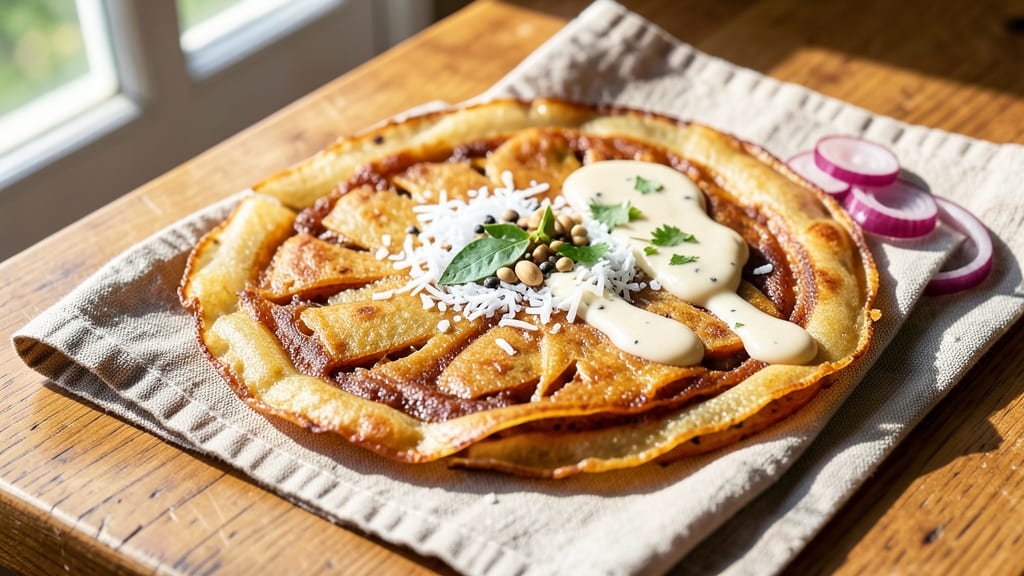
This sweet potato dosa recipe transforms humble ingredients into a crispy, fermented lattice masterpiece that rivals any South Indian restaurant. The secret lies in blending roasted sweet potatoes with rice and lentils, creating a batter that ferments overnight into a light, airy texture with golden, shatteringly crispy edges when pan-fried.
I've perfected this technique after years of trial and error—no special equipment needed, just patience and attention to detail.
The process begins with roasting sweet potatoes until caramelized, which deepens their natural sweetness and forms the flavor foundation.
This batter requires a 24-hour fermentation (don't skip this step!) to develop that signature crispy-yet-tender texture, while the spiced filling of grated coconut, green chilies, and curry leaves adds layers of aromatic complexity.
What makes this version special is how the lattice design—created by pressing the batter through a sieve—catches perfectly crispy while maintaining a delicate structure.
By the time you flip the first dosa, you'll be rewarded with a crispy lattice that shatters at the edges while remaining soft inside, all wrapped around a warm, spiced coconut filling.
The aroma alone—warm rice flour, caramelized sweet potatoes, and toasted spices—will have everyone at your table asking for seconds. This recipe delivers restaurant-quality results at home, and it's completely vegan, making it versatile for any meal.
Serve with coconut chutney or sambar for the full South Indian experience, or enjoy as a satisfying snack with a side of spicy tomato onion salad.
The beauty of this dish is its adaptability—make a big batch for meal prep or whip up a few fresh ones for an impressive appetizer. Let's get started on creating your crispy dosa masterpiece.
Ingredients for sweet potato dosa
Roasted sweet potatoes, fermented rice-lentil batter, and aromatic coconut filling transform simple ingredients into crispy dosa perfection.
| Ingredient | Amount | Notes |
|---|---|---|
| Medium Sweet Potatoes 🍠 | 2 whole | Organic preferred, skin-on |
| White Rice 🍚 | 1 cup | Long-grain, uncooked |
| Red Lentils 🌾 | ½ cup | Rinsed thoroughly |
| Rice Flour 🌾 | 1 ½ cups | Fine grind preferred |
| Unsweetened Coconut Milk 🥥 | 13 ½ oz | Full-fat canned variety |
| Fresh Grated Coconut 🥥 | 1 cup | Unsweetened, packed |
| Green Chilies 🌶️ | 4 whole | Fresh, finely chopped |
| Curry Leaves 🌿 | ¼ cup | Fresh, finely chopped |
| Turmeric Powder 🌶️ | ½ tsp | Freshly ground preferred |
| Cumin Seeds 🌿 | ½ tsp | Toasted lightly |
| Asafoetida Powder 🌶️ | ¼ tsp | Pinch for aroma |
| Salt 🧂 | 1 ½ tsp | Diamond Crystal preferred |
| Vegetable Oil 🫒 | ½ cup | High smoke point |
| Fresh Coriander Leaves 🌿 | ¼ cup | Chopped for garnish |
| Lemon Juice 🍋 | 1 tbsp | Freshly squeezed |
The sweet potatoes are the flavor foundation—organic or heirloom varieties have the best texture and sweetness. Roast them until caramelized and tender (about 45 minutes at 400°F), then mash while still warm to concentrate their natural sugars. For the rice and lentils, Bob's Red Mill long-grain rice works perfectly, and Patel Brothers red lentils stay intact during fermentation. The coconut milk should be full-fat canned—Thai Kitchen brand is my go-to for consistency. Fresh curry leaves are non-negotiable here; they're the secret behind that authentic South Indian aroma. If you can't find them at your grocery store, Indian specialty markets always carry them fresh.
No fresh curry leaves? Dried curry leaf powder at half the amount works in a pinch, though it won't be as vibrant. Substituting coconut milk? Cashew cream (blend soaked cashews with water) gives similar richness. For the filling, unsweetened desiccated coconut from the bulk section is more flavorful than pre-sweetened versions. The green chilies can be swapped for jalapeños or serranos if you prefer more heat. When measuring rice flour, spoon it into the cup and level off—packing it too tightly makes the batter gummy. And trust me on the fermentation: 24 hours is ideal, but if you're in a hurry, 12 hours still gives great results.
The batter keeps 2 days in the fridge after mixing, but fermentation works best at room temperature. Store any leftover filling in an airtight container with a thin layer of oil on top to preserve freshness for 3 days. For crispier dosas, let the batter rest 10 minutes before pouring—this helps develop gluten for that signature shatter. The filling can be prepped a day ahead, and both batter and filling freeze beautifully for up to 2 months. Just thaw overnight in the fridge before using.
Why You'll Love This Recipe
- Sweet Potato Magic: I swear, the moment I roast those sweet potatoes until caramelized and mash them into the batter, the whole kitchen smells like a South Indian street stall. That natural sweetness from the potatoes cuts through the earthiness of red lentils—no extra sugar needed.
- No Fuss Batter: Honestly, the batter comes together in one bowl. Soak the rice and lentils overnight (or even 4 hours if you’re in a rush), blend with pre-cooked rice flour, and toss in coconut milk for that signature creaminess. No complicated ratios, no stress—just mix and go.
- Breakfast or Dinner: Between us, I’ve served these for both. Crispy dosas with coconut chutney make a satisfying breakfast, but they’re just as happy as a dinner side with a yogurt dip and spicy sambar. Kids love the mild sweetness, and adults appreciate the texture.
- Budget-Friendly Staples: Here’s what sold me—the ingredients are all pantry basics. Sweet potatoes bulk up the flavor, rice and lentils add protein, and coconut milk keeps it rich without breaking the bank. A single batch feeds four, and leftovers reheat beautifully for days.
Step-by-step instructions for sweet potato dosa
Here's how to create a crispy, fermented lattice dosa with a flavorful filling—every step matters.
Prepare the Sweet Potato Batter
Peel and grate the 2 whole medium sweet potatoes using a box grater or food processor. Place the grated sweet potatoes in a colander and squeeze out all excess moisture by pressing gently with your hands. This step is crucial—too much moisture prevents crispiness.
In a large mixing bowl, combine the grated sweet potatoes with 1 cup white rice and 0.5 cup red lentils. Add 1.5 cups rice flour, 1 tbsp lemon juice, 0.5 tsp turmeric powder, 0.5 tsp cumin seeds, 0.25 tsp asafoetida powder, and 1.5 tsp salt. Mix thoroughly until the batter is smooth and well combined. The batter should have a thick, spreadable consistency—similar to pancake batter but slightly stiffer. If it's too thick, add 1-2 tablespoons of water at a time until it reaches the right texture. Let the batter rest, covered, for 1 hour at room temperature before fermentation.
Ferment the Batter for Crispy Layers
After resting, transfer the batter to a clean, greased bowl. Cover it tightly with a damp cloth or plastic wrap and let it ferment at room temperature for 8-10 hours (or overnight in the refrigerator for 12-14 hours). Fermentation is key to achieving that signature crispy texture and light, fluffy interior. You'll know it's ready when small bubbles form on the surface and the batter rises slightly. If fermenting in the fridge, take it out 2 hours before cooking to bring it to room temperature.
Here's the thing—fermentation can vary based on your climate. If your kitchen is warm, the batter will ferment faster. If it's cold, it might take longer. The goal is to achieve a slightly tangy, airy batter that holds its shape when spread thinly. Over-fermenting can make the batter too sour, so keep an eye on it.
Prepare the Spiced Filling
In a small pan, heat 0.25 cup vegetable oil over medium heat. Add 0.25 cup curry leaves and 4 finely chopped green chilies, and sauté for 30 seconds until the curry leaves turn dark green and fragrant. Add 0.5 tsp cumin seeds and toast for 1 minute until they release their aroma. Stir in 1 cup fresh grated coconut and cook for 2 minutes until lightly toasted. Remove from heat and let it cool. Once cooled, mix in 0.25 cup chopped fresh coriander leaves and set aside. This filling will add a burst of flavor to your dosa.
The filling should be warm but not hot when you add it to the dosa—this ensures it doesn't steam and soften the crispy layers. If it's too hot, let it cool for 5 minutes before assembling. The combination of toasted coconut, aromatic curry leaves, and fresh coriander creates a perfect balance of flavors that complements the sweet potato batter beautifully.
Cook the Dosa to Golden Perfection
Heat a non-stick skillet or dosa pan over medium-high heat. Lightly grease the pan with a tiny bit of vegetable oil to prevent sticking. Pour a ladleful of the fermented batter onto the center of the pan and quickly spread it into a thin, even circle by rotating the pan. The key here is speed—you have about 10 seconds to spread the batter before it starts cooking.
Once the edges start to turn golden brown and crispy, carefully place 1-2 tablespoons of the spiced filling in the center of the dosa. Using a spatula, fold the dosa into a half-moon shape, pressing gently to seal the filling inside. Cook for another 1-2 minutes until the bottom is crispy and golden brown. Flip carefully and cook the other side for 1 minute until golden. Repeat with the remaining batter, making sure not to overcrowd the pan. Each dosa should be crispy on the outside and soft on the inside—just like a perfect lattice.
Serve Immediately for Maximum Crispiness
Transfer the cooked dosas to a serving platter and serve immediately while they're still crispy. The contrast between the crispy, golden lattice and the soft, flavorful filling is what makes this dosa so special. Pair it with a side of coconut chutney or a tangy mint-coriander sauce to enhance the flavors. The dosas will lose their crispiness as they cool, so don't wait too long before serving.
Here's a pro tip: If you're making dosas for a larger group, cook them in batches and keep them warm in a 200°F oven on a wire rack for no more than 10 minutes. This helps maintain their crispiness until serving time. Enjoy your homemade sweet potato dosas—crispy, flavorful, and absolutely worth the effort!
Pro Tips For Making Sweet Potato Dosa
- Boil Sweet Potatoes Till Fork-Tender: I learned this the hard way—undercooked sweet potatoes turn your batter into a gummy mess. Boil them until they collapse easily with a fork (about 15-20 minutes for medium potatoes), then mash them while still warm. Cold, lumpy mash is the enemy of smooth dosa batter.
- Soak Red Lentils Overnight: Skipping this step makes your batter taste bland and the texture gritty. Toss the red lentils in a bowl of water for at least 6 hours (or overnight) before grinding. This softens them properly and cuts the cooking time later—no more burning the bottom of your pan.
- Rest the Batter 20 Minutes: Yes, even if you're impatient like me. The batter needs time to hydrate fully and develop flavor. After mixing, cover it and let it sit—this prevents the dosas from cracking as they cook and makes them crispier.
- Use Warm Coconut Milk: Cold coconut milk throws off the batter's consistency, leading to dry or sticky dosas. Heat the unsweetened coconut milk just until it's warm to the touch before adding it to the batter. This ensures a smooth, spreadable texture without altering the flavor.
Common mistakes when making perfect results
Over-Fermented Batter
I’ve made this mistake more times than I’d admit—leaving the batter too long in the fridge or a warm kitchen turns it overly tangy and gummy. The batter should smell pleasantly fermented (like yogurt with a hint of sweetness), not like vinegar.
If it’s past its prime, stir in 1 tsp lemon juice and ½ tsp sugar to balance the sourness, then let it rest 30 minutes before cooking. Trust me, this saves your dosas from being chewy disasters. 💡
Skipping the Rest
Rushing the 1-hour rest after mixing the batter is a big no-no. This step lets the flour absorb moisture and develop gluten, which is what gives your dosa that crispy lattice structure.
If you skip it, your batter will be too thick to spread evenly, and your dosas will turn out dense instead of light and crispy. Think of it like resting dough for pizza—patience pays off! ⏰
Wrong Heat Setting
Using high heat right away burns the outside before the inside cooks through, while low heat makes the dosa soggy. The secret is medium-high heat—just enough to see tiny bubbles form around the edges in 10-15 seconds.
If your pan isn’t hot enough, the batter will stick and steam instead of crisping. Test with a drop of water: if it sizzles immediately, your pan is ready. 🔥
Overloading the Filling
Stuffing too much filling into your dosa makes it impossible to fold neatly, and the extra moisture can turn your crispy lattice into a soggy mess. Stick to 1-2 tablespoons per dosa—just enough to taste the coconut and spice without overwhelming the structure.
If your filling is loose, press it gently into a small log before adding it to the dosa for cleaner folds. 🌶️
Using the Wrong Pan
A regular non-stick skillet works, but a cast-iron dosa pan or even a heavy stainless-steel pan distributes heat more evenly, giving you that perfect crispy edge. If you don’t have one, a well-seasoned cast-iron skillet is your next best bet.
Avoid thin, flimsy pans—they won’t hold heat well, and your dosas will cook unevenly. Invest in a good pan, and you’ll never look back! 🍳
Not Adjusting for Altitude
If you live at high altitudes (above 3,500 feet), the thinner air affects fermentation and cooking. Your batter may ferment faster, so check it after 6 hours instead of 8. For cooking, increase heat slightly to compensate for the lower boiling point of water.
At high altitudes, I add 1 extra tablespoon of rice flour to the batter to help it hold its shape better. Always adjust, don’t guess! ⛰️
Nutrition facts
Frequently asked questions
Can I make sweet potato dosa without fermentation?
Fermentation is key for that signature crispy-yet-light texture, but you can try a quick version by adding 1 tbsp yogurt and ½ tsp baking soda to the batter. Mix well, rest for 30 minutes, then cook immediately on medium-high heat. The result won't be as crispy, but it'll still be tasty!
How do I store leftover sweet potato dosa?
Store cooked dosas in an airtight container at room temperature for 2 hours max—they lose crispiness quickly. For longer storage, refrigerate for up to 3 days or freeze for 1 month. To reheat, warm in a dry skillet over medium heat for 1-2 minutes per side until crispy again. Microwaving makes them soggy!
What's the best way to make the lattice pattern?
Use a fine-mesh sieve or a dosa press to create the lattice. Pour batter into the center, then gently tap the sieve in a circular motion while rotating the pan. The batter should flow through the holes, creating natural patterns. For extra crispiness, work quickly—you have about 10 seconds before the edges set!
Can I substitute regular potatoes for sweet potatoes?
Not recommended! Sweet potatoes add natural sweetness and a creamy texture that regular potatoes can't match. If you must substitute, use orange-fleshed potatoes (like yams) and roast them longer to concentrate their flavor. Regular white potatoes will make your dosa taste bland and watery.
How many dosas does this recipe make?
This recipe yields about 8-10 individual dosas, depending on your portion size. Each dosa uses roughly ¼ cup batter and 1-2 tbsp filling. For a larger batch, double the ingredients while keeping the fermentation time consistent. Plan for 2-3 dosas per person as an appetizer or 1 per person as a main dish.