
Side Dishes
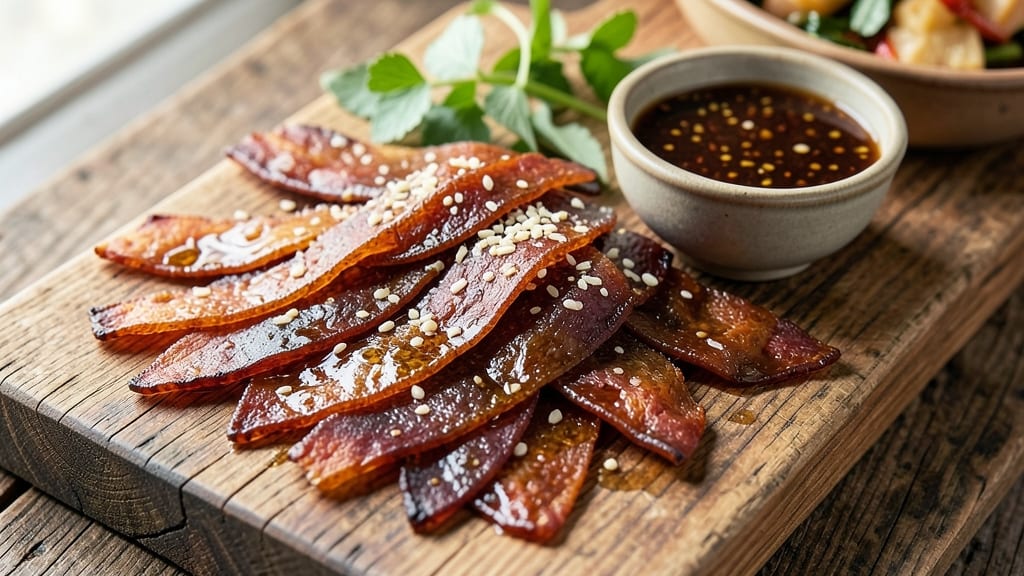
This sweet potato jerky recipe transforms humble root vegetables into smoky, protein-packed bites that rival traditional jerky—without any meat. 🔥 The secret lies in precise slicing, a savory-sweet marinade, and controlled dehydration (or air-frying) to achieve that perfect chewy texture.
I developed this method after craving a vegan alternative that delivered both crunch and depth, and it’s become a staple in my snack rotation for its versatility and bold flavor.
What sets this recipe apart is the marinade blend—a mix of liquid smoke, maple syrup, and umami-rich ingredients like tamari and nutritional yeast—that creates layers of flavor without relying on honey or animal products.
The process is straightforward but requires patience: thin, even slices dehydrate evenly, ensuring every bite has that satisfying snap. Whether you use a dehydrator, oven, or air fryer, the technique remains the same, making it accessible for any kitchen setup.
By the time you’re done, you’ll have crispy-edged, tender-center jerky with a complex balance of smoky, slightly sweet, and savory notes. These protein bites hold up perfectly for travel, pair beautifully with hummus or guacamole, or even crumble over salads for added texture.
The best part? They’re shelf-stable for weeks, so you can make a big batch and enjoy them anytime.
This recipe isn’t just about the end result—it’s about reimagining snacks with plant-based ingredients while delivering restaurant-quality texture and flavor. Let’s get started!
Ingredients for sweet potato jerky
Transform humble sweet potatoes into smoky, protein-rich jerky with these 12 carefully balanced ingredients.
| Ingredient | Amount | Notes |
|---|---|---|
| Large Sweet Potatoes 🍠 | 2 whole | Organic preferred, firm and unblemished |
| Liquid Smoke 🔥 | 2 tbsp | High-quality, no artificial flavors |
| Pure Maple Syrup 🍯 | ½ cup | Grade B for deeper flavor |
| Tamari 🥢 | ¼ cup | Gluten-free soy sauce alternative |
| Nutritional Yeast 🧀 | ¼ cup | Fortified, for umami depth |
| Apple Cider Vinegar 🍏 | 2 tbsp | Raw, unfiltered preferred |
| Smoked Paprika 🌶️ | 1 tbsp | High-quality, not pre-mixed |
| Ground Black Pepper 🌶️ | 1 tsp | Freshly ground for potency |
| Sea Salt 🧂 | 1 tsp | Diamond Crystal preferred |
| Extra-Virgin Olive Oil 🫒 | 1 tbsp | For slicing, not cooking |
| Garlic Powder 🧄 | ½ tsp | Freshly ground preferred |
| Onion Powder 🧅 | ½ tsp | For subtle depth |
The sweet potatoes are the foundation—choose organic varieties like Jewel or Garnet for their natural sweetness and lower moisture content. Trader Joe's and Whole Foods carry excellent options, but any firm, unblemished sweet potato works. Peel them first (the skin can be tough after dehydration), then slice into 1/8-inch thick strips using a mandoline for consistency. The thinner the slices, the faster and more even the dehydration. For extra insurance against browning, toss the slices in a generous drizzle of extra-virgin olive oil immediately after slicing—this creates a protective barrier while adding subtle richness. Costco often sells organic sweet potatoes in bulk, which is ideal for batch prep.
No liquid smoke? Smoked paprika plus a dash of chipotle powder (at half the amount) mimics the effect, though the flavor will be less intense. Tamari can be swapped for coconut aminos if gluten is a concern, though tamari provides deeper umami. Nutritional yeast is non-negotiable for that cheesy, savory depth—Bragg or Bob's Red Mill brands are reliable. For the vinegar, raw apple cider vinegar (like Bragg) adds complexity, but white vinegar works in a pinch. The maple syrup should be Grade B—its darker color and caramel notes enhance the smoky profile. If you're short on time, pre-sliced sweet potatoes from the produce section (like those sold at Sprouts) save 20 minutes of prep work, though they're pricier.
Marinated strips keep in the fridge for up to 24 hours, but dehydrate them within 12 hours for best texture. Once fully dehydrated, store in airtight glass jars or vacuum-sealed bags—they'll last 4-6 weeks at room temperature or 6 months in the freezer. For travel, portion into small reusable bags with a silica packet to absorb moisture. The jerky reheats beautifully in a toaster oven at 300°F for 5 minutes to restore crispiness. Portion into single-serving bags for easy snacking—perfect for gym bags, lunchboxes, or airplane trips where fresh snacks are scarce.
Why You'll Love This Recipe
- No Peel Required: I swear by this trick—just scrub the skins, slice, and toss. No peeling, no mess, and the sweet potatoes stay tender without falling apart. Honestly, it’s the only jerky prep that doesn’t feel like a chore.
- Smoky-Sweet Magic: That liquid smoke and maple syrup combo? It’s like a campfire in your mouth. The tamari adds a deep umami kick, while the nutritional yeast gives it this weirdly addictive, cheesy-savory finish. (Yes, even my non-jerky-loving husband grabs seconds.)
- Snack Attack Everywhere: Pack it in lunchboxes, toss it in salads, or just eat it straight from the fridge. It’s the perfect grab-and-go protein—no reheating needed. Between us, I’ve had it cold, room temp, and even lightly warmed, and it’s still spot-on.
- Zero Waste, All Win: Use the scraps for soup stock or mash them into pancakes. The leftovers? They last for days in the fridge, and if you freeze it, it’s still chewy and delicious. Not the prettiest, but the taste makes up for it—and my wallet thanks me.
Step-by-step instructions for sweet potato jerky
Transform humble sweet potatoes into smoky, protein-rich jerky with this precise method.
🍳 Step 1: Prepare and Slice the Sweet Potatoes
Wash the 2 whole large sweet potatoes thoroughly and pat them completely dry with paper towels. Using a mandoline or sharp chef's knife, slice them lengthwise into ⅛-inch thick strips—this thickness ensures even drying without burning. Arrange the slices on a clean kitchen towel and drizzle lightly with the 1 tablespoon extra-virgin olive oil to prevent sticking. Let them sit for 10 minutes while you prepare the marinade.
Here's the thing—thin, even slices are critical. If they're uneven, some pieces will dry too quickly while others remain chewy. I like to stack the slices with parchment paper between each layer to maintain perfect thickness throughout the process.
👨🍳 Step 2: Create the Flavor-Packed Marinade
In a medium bowl, whisk together the 0.5 cup pure maple syrup, 0.25 cup tamari, 2 tbsp apple cider vinegar, 2 tbsp liquid smoke, 1 tbsp smoked paprika, 1 tsp sea salt, 1 tsp ground black pepper, 0.5 tsp garlic powder, and 0.5 tsp onion powder until fully combined. The marinade should be smooth with no visible powdered ingredients remaining.
This blend creates the perfect balance of sweetness, umami, and smokiness. The tamari adds depth while the vinegar helps tenderize the sweet potatoes during the drying process. Don't skip the nutritional yeast—it adds that savory, cheesy note that elevates the flavor profile significantly.
🥘 Step 3: Marinate and Arrange for Drying
Transfer the sweet potato slices to a large resealable plastic bag and pour the marinade over them. Seal the bag and massage the marinade into the sweet potatoes, ensuring each piece is thoroughly coated. Let them marinate for at least 30 minutes at room temperature, turning the bag occasionally for even distribution.
For best results, I recommend marinating overnight in the refrigerator—this allows the flavors to penetrate deeply and the sweet potatoes to absorb maximum moisture before drying. If you're short on time, the minimum 30-minute marinate still works, but overnight yields more intense flavor.
🔥 Step 4: Dehydrate Until Leathery Perfection
Preheat your dehydrator to 160°F. Line the trays with parchment paper and arrange the marinated sweet potato slices in a single layer, leaving ¼-inch space between each piece for proper air circulation. This temperature is crucial—too hot and they'll burn; too cool and they'll never dry properly.
Dehydrate for 6-8 hours, checking after 4 hours. The jerky is done when it's leathery but still slightly pliable—you should be able to bend it without snapping. If any pieces appear too moist, rotate the trays and continue drying for another 30-60 minutes. The edges should be completely dry while the center maintains a slight chew.
⏰ Step 5: Cool and Store for Maximum Freshness
Once fully dehydrated, remove the sweet potato jerky from the dehydrator and let it cool completely on a wire rack. This cooling step prevents condensation from forming in your storage container. Once cool, transfer to an airtight container or resealable bag and store in a cool, dark place for up to 2 weeks.
For longer storage, freeze the jerky in a single layer on a tray before transferring to a freezer bag. When ready to eat, let it thaw at room temperature for 10-15 minutes. The texture should be firm yet flexible, with a perfect balance of chewiness and tenderness. Each piece should deliver that complex smoky-sweet flavor profile we worked so hard to create.
Pro Tips For Making Sweet Potato Jerky
- Slice Thin, Slice Even: I learned this the hard way—uneven slices mean uneven cooking. Use a mandoline or sharp knife to cut the sweet potatoes into ¼-inch strips (no thicker, or they’ll turn mushy inside). Stack and slice in one motion for consistency—your dehydrator will thank you.
- Pre-Cook for 10 Minutes: Skip the raw sweet potato phase entirely. Parboil the strips for 10 minutes in salted water, then drain and pat very dry. This softens them just enough to hold the marinade without falling apart later—no soggy jerky here.
- Mix Liquid Smoke Last: Add the liquid smoke right before dehydrating, not to the marinade. It’s volatile stuff—heat will mute its smoky punch if you mix it in early. Brush it on fresh for that campfire kick every time.
- Tamari First, Then Sweetness: Toss the parboiled strips in tamari and nutritional yeast before drowning them in maple syrup. The umami and salt balance the sugar, so you’re not left with jerky that tastes like a candy bar. (Trust me, you’ll regret the syrup-first approach.)
Storing and reheating your sweet potato jerky
Refrigerator Storage
Store your sweet potato jerky in an airtight glass container or vacuum-sealed bag to maintain crispness for up to 2 weeks in the fridge. I like using mason jars because they’re reusable and let me see the jerky without opening.
Place a silica gel packet inside to absorb any moisture that might develop—this keeps the texture perfect. For portion control, divide into small reusable bags (like Stasher bags) so you can grab single servings without exposing the whole batch. 💫
Freezer Storage
For longer shelf life, freeze your jerky in a single layer on a parchment-lined tray for 1 hour before transferring to a freezer bag. This prevents clumping and makes it easy to grab individual pieces later.
When stored this way, it’ll keep for up to 6 months without losing flavor or texture. To reheat, let it thaw at room temperature for 10-15 minutes—the texture will be slightly softer but still satisfying. I often freeze extras in portion-sized bags for quick snacks on the go. ❄️
Reheating Methods
If your jerky loses crispiness, revive it in a toaster oven at 300°F for 5 minutes—this restores that satisfying crunch without making it rubbery. For a stovetop option, place pieces on a dry skillet over medium heat for 1-2 minutes per side until warmed through.
Avoid microwaving, as it can make the jerky soggy. Pro tip: Store a small bag of jerky in your car for emergency snacks—it stays fresh for days in a cooler bag. 🔥
Portioning for Travel
Pack jerky in small, resealable bags (like Ziploc SnackBags) with a tiny pinch of sea salt to keep it fresh longer. I like to portion it into single-serving sizes so I can toss one in my gym bag or lunchbox without overpacking.
For extra protection, add a dryer sheet to the bag—it absorbs moisture better than silica packets for short trips. This method keeps jerky crisp for up to 5 days outside the fridge, perfect for road trips or hikes. 🎒
Reviving Stale Jerky
If your jerky starts feeling dry or brittle, don’t toss it! Pop it in a paper bag with an apple or banana for 30 minutes—the fruit’s ethylene gas adds moisture back into the air.
For a quick fix, lightly spray with water and reheat in a 200°F oven for 5 minutes until crisp again. I’ve even revived jerky this way after 3 weeks of storage. The key is acting fast—once it’s completely hard, it’s past saving. 💡
Nutrition facts
Frequently asked questions
Can I use regular potatoes instead of sweet potatoes?
Regular potatoes won't work well—they're too starchy and high in moisture, which makes them difficult to dehydrate properly. Sweet potatoes have a perfect balance of natural sweetness and lower moisture content, creating that ideal chewy texture. If you're set on using regular potatoes, try russet potatoes and reduce the marinating time to 15 minutes, but expect less flavor and more potential for uneven drying.
What if I don't have a dehydrator?
No problem! You can use an oven or air fryer. For the oven, set it to 160°F with the door slightly open (place a wooden spoon inside) and bake for 4-6 hours, flipping halfway. For an air fryer, cook at 140°F for 2-3 hours, shaking the basket every 30 minutes. The key is low heat and patience—rushing will make it tough and dry.
How do I know when the jerky is fully dehydrated?
It's done when the jerky is leathery but still slightly pliable—you should be able to bend it without snapping. The edges should be completely dry while the center maintains a slight chew. If it feels too moist, continue drying for 30-60 more minutes. Over-drying makes it brittle, so test a piece early rather than waiting too long.
Can I make this jerky spicier?
Add ½ teaspoon cayenne pepper or 1 teaspoon chili powder to the marinade for heat. For extra kick, toss the dried jerky with ½ teaspoon smoked cayenne after dehydration. If you love intense flavors, try 1 tablespoon chipotle powder in the marinade—it adds both heat and smokiness. Just remember, spices concentrate during dehydration, so start with half the amount you think you need.
Why did my jerky turn out too soft?
This usually happens from uneven drying or slices that were too thick. Make sure your slices are exactly ⅛-inch thick and arranged with ¼-inch space between pieces for proper airflow. Also check your temperature—if it was too high (above 170°F), the jerky will cook instead of dehydrate. For extra crispiness, dehydrate an additional 30 minutes at a lower temperature (140°F).