
Side Dishes
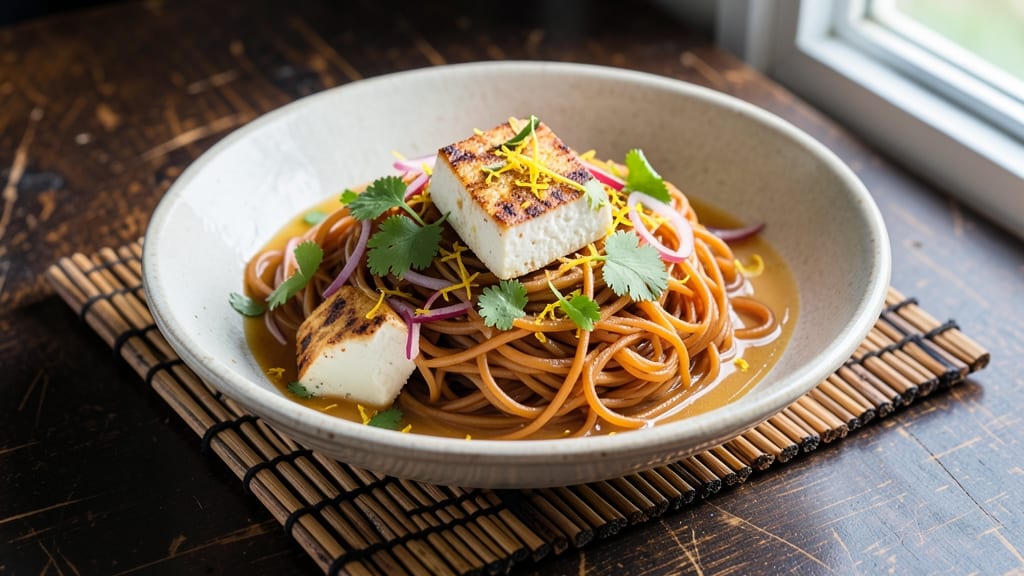
This sweet potato vermicelli noodles recipe transforms humble ingredients into silky, naturally sweet strands that balance perfectly with savory flavors. 🌟 The secret lies in roasting the sweet potatoes first—this caramelizes their natural sugars, creating a depth that store-bought noodles simply can't match.
What starts as a simple side dish becomes a vibrant, plant-based main when paired with crispy tofu or fresh herbs.
For an authentic touch, we'll use a simple yet flavorful vegan broth—coconut milk and miso create a rich, umami base that complements the sweetness without overpowering it. The noodles cook in just 3 minutes, making this dish quick enough for weeknight dinners yet impressive enough for guests.
Every bite delivers that perfect harmony of texture and flavor, proving that plant-based meals can be just as satisfying as their meat-heavy counterparts.
This recipe works beautifully as a standalone dish or alongside grilled proteins, making it versatile for any meal. The roasted sweet potatoes add a subtle caramelized sweetness that pairs wonderfully with tangy lime zest, fresh cilantro, or chili flakes for a bright finish.
Whether you're adapting a Vietnamese-inspired bún riêu or creating a fusion dish, this method ensures restaurant-quality results at home.
Ready in under 30 minutes, this dish is perfect for meal preppers and quick-cooking enthusiasts alike. The best part? No fancy equipment is needed—just a baking sheet, a pot, and your favorite vegan protein. Let's get cooking!
Ingredients for sweet potato vermicelli noodles
Roasted sweet potatoes and silky tofu transform into restaurant-quality noodles with these vibrant ingredients.
| Ingredient | Amount | Notes |
|---|---|---|
| Sweet Potatoes 🍠 | 2 lbs | Medium-sized, organic preferred |
| Extra-Firm Tofu 🥬 | 1 block | Pressed and cubed |
| Coconut Milk 🥥 | 1 can | Full-fat, unsweetened |
| White Miso Paste 🧄 | 2 tbsp | High-quality, fermented |
| Lime Zest 🍋 | 1 tbsp | Freshly grated |
| Fresh Cilantro 🌿 | ¼ cup | Chopped, stems removed |
| Red Chili Flakes 🌶️ | 1 tbsp | Adjust for heat preference |
| Olive Oil 🫒 | 2 tbsp | Extra-virgin for roasting |
| Vegetable Broth 💧 | 1 cup | Low-sodium preferred |
| Sesame Oil 🫒 | 1 tbsp | Toasted for aroma |
| Garlic Cloves 🧄 | 4 cloves | Minced, fresh preferred |
| Salt 🧂 | 1 tsp | Kosher or sea salt |
| Black Pepper 🌶️ | ½ tsp | Freshly ground |
| Lime Juice 🍋 | 2 tbsp | Freshly squeezed |
Sweet potatoes are the star here—organic or heirloom varieties have the best natural sweetness. Trader Joe's and Whole Foods carry excellent options, or grab the brightest orange ones at your local market. Roasting them first caramelizes the sugars, creating that deep, rich flavor that sets these noodles apart. For extra crispiness, slice the edges before roasting. The tofu? Extra-firm is non-negotiable—it holds shape beautifully when pressed and fried. Press it for at least 20 minutes with a heavy weight to remove excess water, then cube it for that perfect crispy exterior.
No coconut milk? Cashew cream (blend soaked cashews with water) works beautifully, though it'll be slightly lighter. Miso paste can be tricky to find—Marukome or Hessle are my go-tos, but check the Asian aisle at Walmart or Target for affordable options. Fresh lime zest is a game-changer, but if you're short on time, bottled lime juice (like ReaLime) works in a pinch. The chili flakes can be swapped for gochugaru (Korean red pepper flakes) for a different depth of flavor. And if you're missing cilantro, fresh basil or mint adds a bright contrast.
Roasted sweet potatoes keep in the fridge for 5 days, so make extra—toss them into grain bowls or salads. The tofu cubes stay crispy for 3 days if stored in a sealed container with paper towels to absorb moisture. The miso broth freezes perfectly for 3 months, so double the batch if you're planning ahead. For meal prep, assemble the noodles fresh but store the components separately—roasted sweet potatoes, tofu, and broth can be prepped 2 days ahead. The noodles themselves? Cook them fresh for that signature silky texture, but they'll hold in hot water for up to 10 minutes if you're serving a crowd.
Why You'll Love This Recipe
- No-Fuss Prep: I’ll be real—this recipe only needs four key ingredients beyond basics. Roast the sweet potatoes ahead, press the tofu in 10 minutes, and stir-fry while the miso and coconut milk simmer. Honestly, it’s the kind of meal that doesn’t demand your full attention—just a little time.
- Umami Bomb: That white miso paste? It’s the secret weapon here. One spoonful dissolves into the coconut milk, and suddenly you’ve got this deep, savory richness that balances the natural sweetness of the sweet potatoes. The lime zest at the end? Chef’s kiss—brightens everything without overpowering.
- Lunchbox Hero: Between us, this is my go-to for meal prep. The noodles hold up for days in the fridge, and the tofu stays tender if you store it separately. Pack it cold or reheat it—either way, it’s a satisfying bowl that doesn’t require a thermos or fancy containers. (Yes, even on a Tuesday night.)
- Budget Flex: Sweet potatoes and tofu are my pantry’s best friends—they’re cheap, shelf-stable, and stretch into multiple meals. Coconut milk feels fancy, but a can lasts forever, and miso? A little goes a long way. Not the prettiest, but the taste makes up for it—plus, your wallet stays happy.
Step-by-step instructions for sweet potato vermicelli noodles
Transform humble sweet potatoes into silky, golden noodles with this bold fusion technique—where roasted sweetness meets umami depth.
🔥 Step 1: Roast Sweet Potatoes Until Caramelized
Preheat oven to 425°F and line a baking sheet with parchment paper. Peel the 2 lbs sweet potatoes, then cut them into ¼-inch thick half-moons. Toss immediately with 1 tbsp olive oil, ½ tsp salt, and ¼ tsp black pepper—this prevents sticking and ensures even browning.
Roast for 25-30 minutes, flipping halfway, until edges are deep golden brown and the flesh becomes tender when pierced with a fork. The caramelization here builds the noodles' natural sweetness—don't rush it. For extra depth, broil for 2-3 minutes at the end if your oven supports it, watching closely to prevent burning.
🍳 Step 2: Create the Vermicelli Noodles
Transfer the roasted sweet potatoes to a food processor fitted with the S-blade. Pulse until you achieve a fine, gritty texture—think somewhere between hummus and wet sand. Add ½ cup vegetable broth and pulse again until the mixture forms a sticky, dough-like consistency that clings to the blade. If too dry, add 1 tsp more broth at a time.
Here's the magic: press the dough through a vermicelli noodle maker (or the smallest setting on your pasta maker) directly into a pot of boiling, salted water. The heat will transform the dough into delicate, translucent strands. Cook for 2-3 minutes until they float to the surface—this ensures they're properly cooked but still hold their shape.
👨🍳 Step 3: Build the Umami-Coconut Sauce
While the noodles cook, heat 1 tbsp sesame oil in a wok over medium-high heat. Add the pressed tofu cubes and sear for 3-4 minutes until golden brown on all sides. Remove and set aside. In the same wok, add 2 tbsp olive oil and sauté the 4 minced garlic cloves for 30 seconds until fragrant—don't let them brown.
Pour in the 1 can coconut milk and stir in 2 tbsp white miso paste, scraping up any browned bits. Simmer for 5 minutes until slightly thickened. The sauce should coat the back of a spoon with a velvety texture. Season with ½ tsp salt, ¼ tsp black pepper, 1 tbsp lime zest, and 1 tbsp red chili flakes. Return the tofu to the wok and toss gently to coat.
🥘 Step 4: Assemble and Finish with Bright Flavors
Drain the noodles and immediately toss them with the coconut-tofu sauce in the wok. Add 2 tbsp lime juice and ¼ cup chopped fresh cilantro, tossing vigorously for 1-2 minutes until everything is evenly coated and the noodles absorb the sauce's richness. The acidity from the lime brightens the sweet potatoes while the cilantro adds fresh contrast.
Taste and adjust seasoning—you might need a pinch more salt or chili flakes depending on your preference. Serve immediately over a bed of steamed jasmine rice or with grilled shrimp for extra protein. The noodles should be silky yet hold their shape, with each bite delivering that perfect balance of roasted sweetness and umami depth.
Pro Tips For Making Sweet Potato Vermicelli Noodles
- STEAM DON’T BOIL: The sweet potato’s texture is everything—if you boil it, you’ll end up with mush. Cut into even ½-inch slices, steam for 12-15 minutes until fork-tender but still holding shape. I learned this the hard way when my first batch turned into a sad, waterlogged puree.
- PRESS TOFU DRY: Extra-firm tofu still hides moisture—wrap it in a towel and press for 20 minutes with a heavy pan. This prevents soggy noodles later. I was skeptical until I tried it; the difference in crispiness is night and day.
- SIMMER MISO LOW: White miso paste burns faster than you’d think. Stir it into the coconut milk sauce on lowest heat, and let it melt in for 3-4 minutes—no rushing. After scorching my first batch, I now treat it like a temperamental baby.
- ZEST FIRST, JUICE LATER: Add lime zest to the sauce before the tofu and sweet potato go in—it infuses better. Save the juice for finishing, or your noodles will turn bitter. Sounds weird, but it works: the aroma sticks to the tofu like glue.
Flavor customization for these flavors
Sweet & Smoky Roast
For a deeper, caramelized flavor, swap the coconut milk for ½ cup smoked paprika-infused coconut milk (simmer 1 tbsp smoked paprika with the coconut milk for 5 minutes). Add 1 tbsp maple syrup to the sauce for a subtle sweetness that complements the roasted sweet potatoes.
Finish with toasted pecans for crunch and texture—about 2 tbsp per serving. This variation works beautifully with a side of avocado slices for extra creaminess. 🔥
Spicy Thai-Inspired
Transform this dish into a Thai-inspired bowl by adding 1 tbsp fish sauce (or soy sauce for vegan) and 1 tsp palm sugar to the sauce. Stir in 1 tbsp fresh lemongrass paste (or 2 tbsp minced lemongrass) and 1 tsp shrimp paste (optional, for non-vegan versions).
Top with thinly sliced Thai basil and a drizzle of chili oil for an authentic kick. 🌶️
Creamy Peanut Sauce
Swap the coconut milk for a peanut sauce by blending ½ cup smooth peanut butter, ¼ cup peanut oil, 2 tbsp soy sauce, 1 tbsp lime juice, 1 tsp grated ginger, and 1 tsp sriracha.
Simmer this sauce with the tofu for 3-4 minutes until it thickens slightly. Garnish with crushed peanuts and bean sprouts for a fresh, crunchy contrast. This version is a crowd-pleaser for peanut lovers! ✨
Herb-Infused Bright
For a lighter, herb-forward dish, infuse the vegetable broth with 1 bunch fresh thyme and 2 sprigs rosemary while simmering. Add 2 tbsp chopped tarragon or dill to the sauce and garnish with extra fresh herbs.
A squeeze of yuzu juice (or more lime) brightens the flavors perfectly. This variation pairs wonderfully with a side of roasted Brussels sprouts. 🌿
Tangy Miso-Lime
Boost the umami with 3 tbsp white miso paste and 1 tbsp rice vinegar in the sauce. Add 1 tsp grated ginger and 1 minced shallot for extra depth.
Finish with a sprinkle of toasted sesame seeds and pickled red onions for a tangy crunch. This version is refreshing yet packed with flavor, ideal for warm weather. 💛
Creamy Cashew-Curry
Replace the coconut milk with a cashew-curry sauce by blending ½ cup soaked cashews, ¼ cup water, 1 tbsp curry powder, and ½ tsp turmeric. Simmer with the tofu and add 1 tsp garam masala at the end.
Garnish with toasted coconut flakes and cilantro. This creamy, aromatic version feels indulgent yet remains vegan-friendly. 💫
Nutrition facts
Frequently asked questions
Can I make these noodles without a food processor or noodle maker?
If you don't have a food processor, use a potato ricer or the grater attachment on a food mill to create a fine, gritty texture from the roasted sweet potatoes. For noodle-making, try rolling the dough by hand into thin sheets (about ⅛-inch thick) and cutting with a sharp knife. If you're short on time, substitute with store-bought rice vermicelli and simmer them in the coconut-miso sauce for 2-3 minutes—they'll absorb the flavors beautifully.
How do I store leftovers to keep the noodles from getting mushy?
Store the cooked noodles separately from the sauce in an airtight container in the fridge for up to 3 days. Reheat the sauce first, then toss the noodles in for just 1-2 minutes to warm through. For longer storage, freeze the sauce separately—it keeps for 3 months. When reheating, add a splash of water or broth to restore the silky texture. The key is never overcooking the noodles initially, as they'll absorb moisture over time.
What's the best way to adjust the spice level for sensitive palates?
Start by reducing the red chili flakes to ½ tbsp or omit them entirely. For a milder kick, add 1 tsp honey or maple syrup to the sauce to balance the heat. If you prefer no spice at all, swap the chili flakes for extra lime zest (1 tbsp) and ½ tsp ground white pepper for a bright, aromatic finish. Always taste as you go—you can always add more spice later, but you can't remove it!
Can I use regular potatoes instead of sweet potatoes?
Not ideal—sweet potatoes have a naturally sweet, earthy flavor that caramelizes beautifully when roasted, while regular potatoes will taste starchy and bland. If you're out of sweet potatoes, try purple or orange-fleshed yams for a similar texture and sweetness. For a quick fix, add 1 tsp cinnamon or nutmeg to the roasted regular potatoes to mimic sweetness, but the results won't be as rich or flavorful.
How do I make this dish gluten-free?
This recipe is naturally gluten-free, but double-check your ingredients: use tamari or gluten-free soy sauce if substituting, and ensure your miso paste is certified gluten-free. For extra insurance, verify that your vegetable broth and sesame oil are also gluten-free. The noodles themselves are safe as long as they're made from sweet potatoes and water—no wheat or rice flour is needed! Always read labels, especially for miso and broth, as cross-contamination can occur.